James Monroe
Original title: James Monroe
kurzbeschreibung
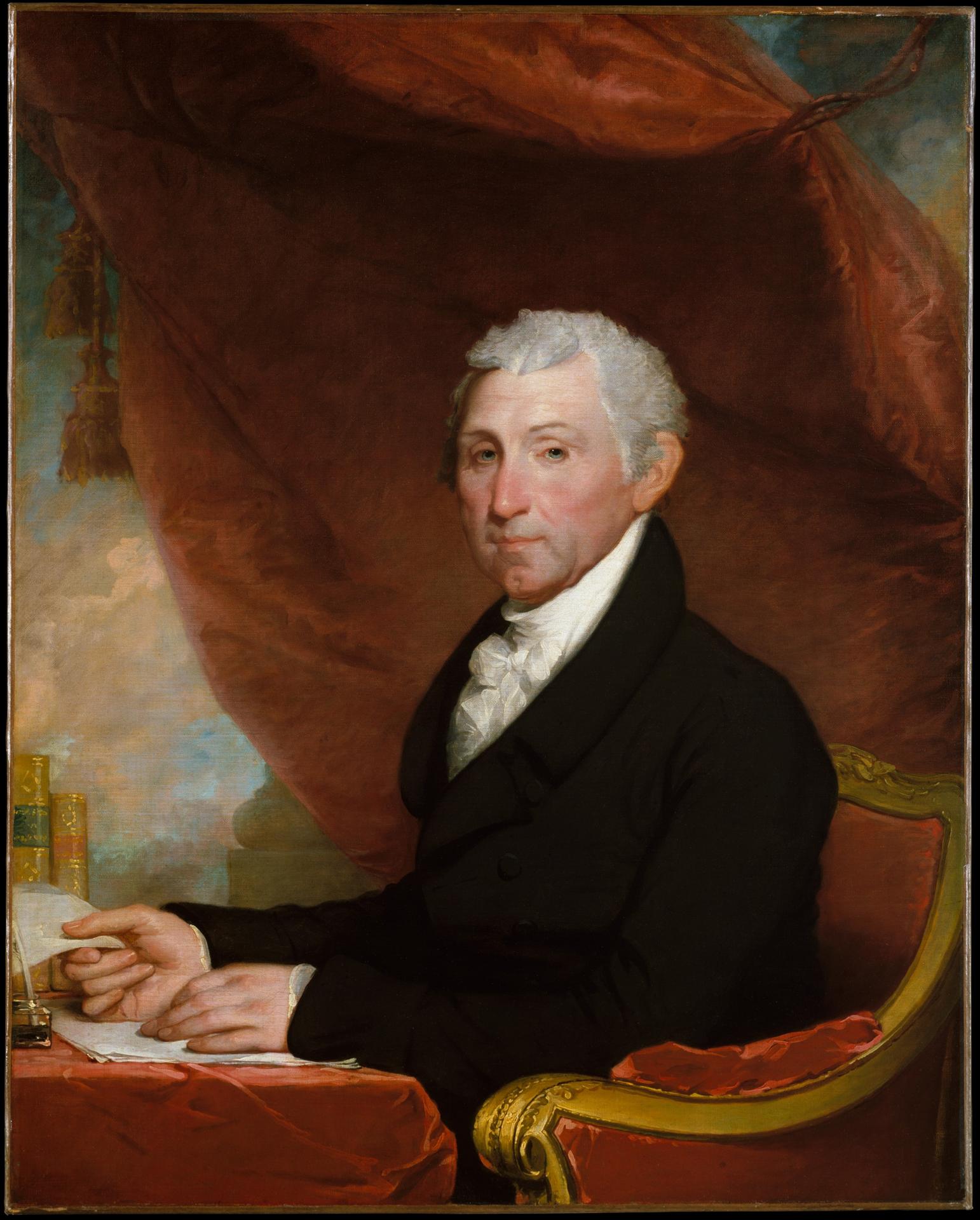
Gilbert Stuart painted James Monroe, the fifth president of the United States, around 1820–22 in a formal bust portrait. The oil on canvas (40 1/4 x 32 in.) shows Monroe in elegant attire, against a red curtain and a window; books and a glass vessel stand in the background.
Description
Monroe sits on a red chair with gold ornaments, dressed in an elegant black suit, white shirt, and white cravat. He holds a sheet of paper in his hands. Behind him falls a large dark red curtain, interrupted by a window through which bright light enters. On the left, books and a glass vessel are visible. Warm, muted colors, especially red and gold, set the tone and create a formal, dignified mood.
Context
Between 1820 and 1822, Gilbert Stuart painted this portrait of James Monroe, then president of the United States (in office 1817–1825). Stuart was among the most renowned portraitists of his time and portrayed many leading figures of the American Revolution and the early republic. The picture belongs to a series of presidential portraits that Stuart made for various patrons. Monroe's presidency was marked by the 'Era of Good Feelings,' which finds expression in the dignified rendering of the statesman.
Impact
The warm coloring of red and gold gives the portrait a dignified and formal air that underscores Monroe's rank as a statesman. The light falling through the window draws attention to the sitter's face and emphasizes seriousness and authority.
Technique
The painting is executed in oil on canvas, a technique common for nineteenth-century portraits. With fine brushstrokes, Stuart carefully worked out details such as the fabrics and facial features to achieve a realistic rendering. The layout follows the classical pattern of a bust portrait with a decorative background, presenting the person in their social role.
AI-generated description text
Source: Metropolitan Museum of Art · Public Domain (CC0 1.0)