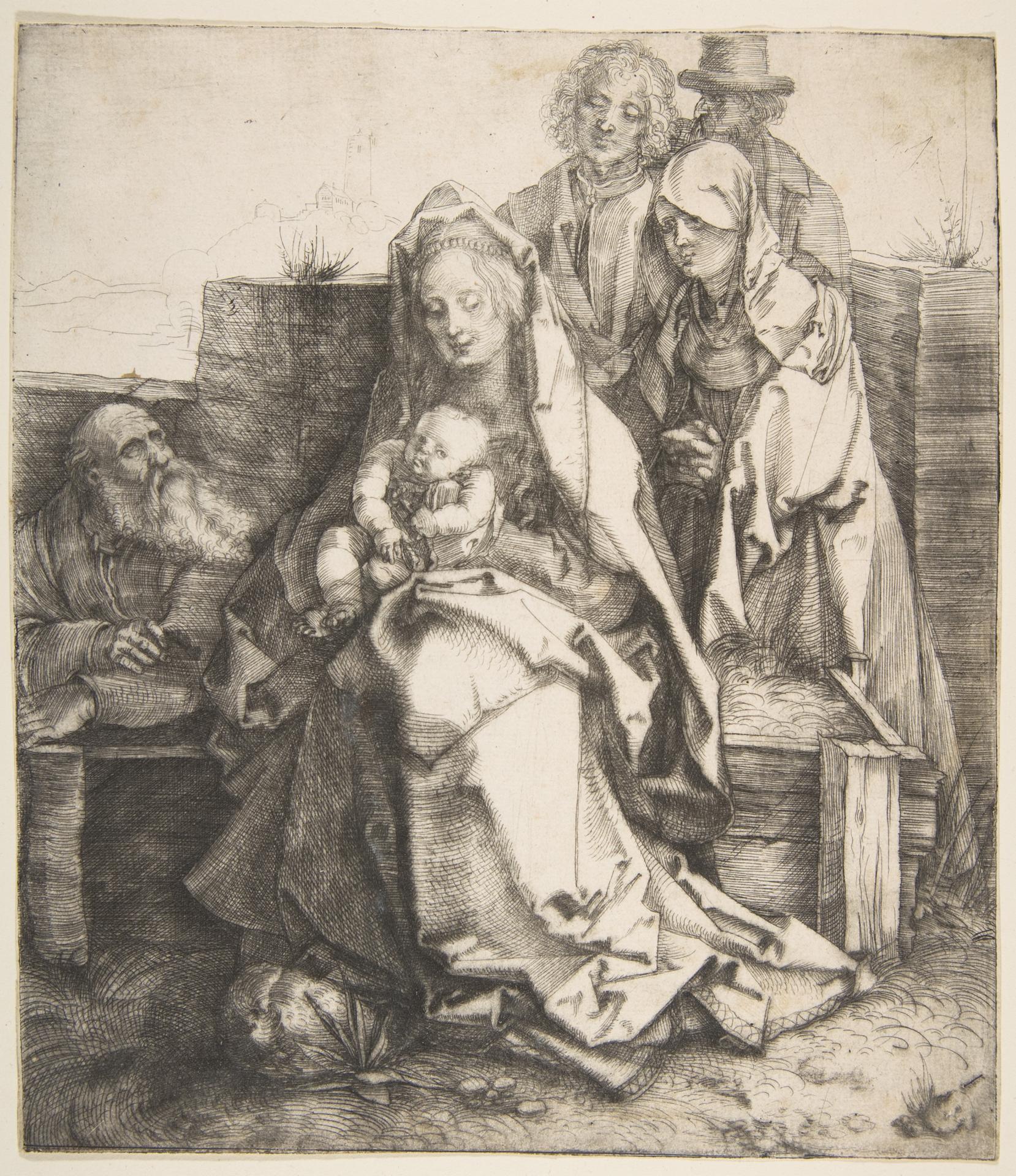
The Holy Family
Original title: The Holy Family
kurzbeschreibung
The Holy Family, a drypoint by Albrecht Dürer dated 1512–13, depicts the Virgin Mary seated with the Christ Child, surrounded by four additional figures. The monochromatic print showcases Dürer's meticulous linework and balanced composition.
Description
The composition centers on Mary, who holds the infant Jesus on her lap while seated on a simple wooden bench. To the left sits a bearded elderly man gazing downward, while on the right stand a curly-haired man and a woman in an apron, both looking toward the other figures. In the background, structures resembling a town or castle are visible. The scene is symmetrical, with even lighting and no strong shadows, emphasizing the detailed engraving.
Context
Dürer created this drypoint during a period when he was experimenting with intaglio techniques, particularly the direct engraving method that allows for rich, velvety lines. The work reflects the Renaissance interest in sacred subjects rendered with naturalistic detail and human emotion. The identity of the additional figures is not specified, but they may represent saints or donors, a common practice in religious art of the era.
Impact
The print conveys a serene and intimate atmosphere, drawing the viewer into the holy scene through its balanced arrangement and gentle gazes. Dürer's precise lines lend a sense of texture and depth, making the monochrome image feel both monumental and tender.
Technique
The work is a drypoint, a technique where the artist scratches the design directly onto a copper plate, creating burrs that hold ink and produce soft, rich lines. This method allows for greater spontaneity than engraving, and Dürer's use of it here results in a distinctive, expressive quality.
AI-generated description text
Source: Metropolitan Museum of Art · Public domain (CC0)