The Entombment (1567)
Original title: The Entombment
kurzbeschreibung
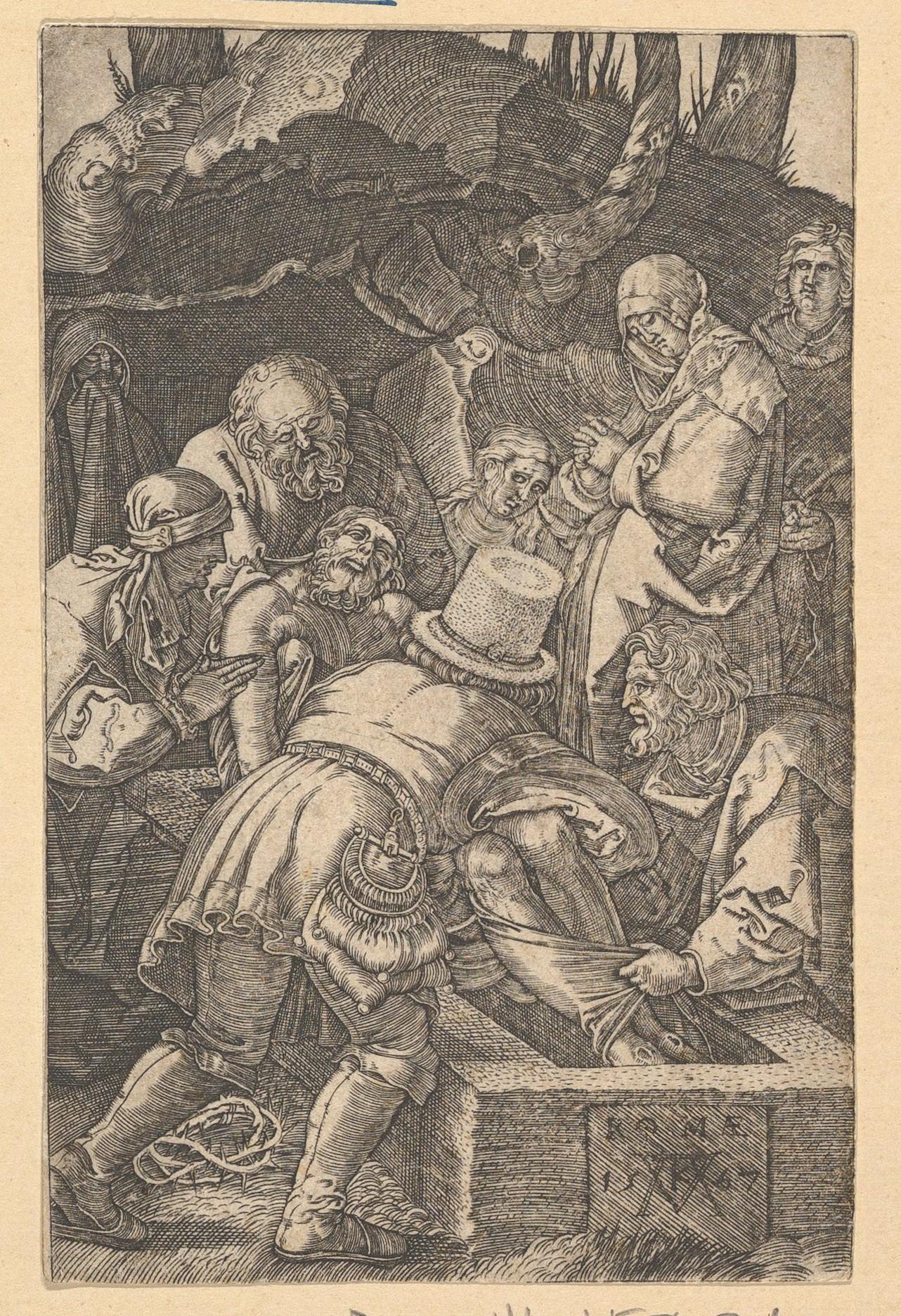
Mario Cartaro's engraving of the Entombment dates to 1567. The print lays the biblical scene before our eyes in delicate lines: Christ is being placed in the tomb, surrounded by mourners and soldiers. The engraving technique allows figures and landscape to be rendered with great precision.
Description
The layout is symmetrical, with the lifeless body of Christ at the center, being laid into a pit. Around him stand several figures in traditional garments; some wear helmets and armor, suggesting soldiers or guards. Their gestures indicate a mourning or burial ceremony. Trees and a gloomy sky appear behind them, reinforcing the dark mood. The monochrome execution and subdued light heighten the serious character of the event.
Context
Mario Cartaro, an Italian engraver, worked in Rome and Orvieto in the second half of the 16th century. His engraving of 1567 falls at a time when religious printmaking gained importance after the Council of Trent (1545–1563). The Entombment of Christ was among the common motifs of the Renaissance and often served as a devotional image. At only about 11.4 × 7.3 cm, the print points to private use or its function as a devotional image.
Impact
The symmetrical arrangement and central placement of the body direct the gaze immediately to the action. Fine lines and hatching create a calm but insistent effect that matches the quiet sorrow of the scene. The dark landscape and restrained contrasts heighten the solemn, almost melancholic mood of the print.
Technique
Cartaro worked in engraving: the motif is incised into a copper plate and then printed on paper. With fine lines and cross-hatching he modeled forms and shadows. The precise execution attests to the artist's high manual skill in rendering garments, armor, and landscape elements.
AI-generated description text
Source: Metropolitan Museum of Art · Public Domain (CC0 1.0)