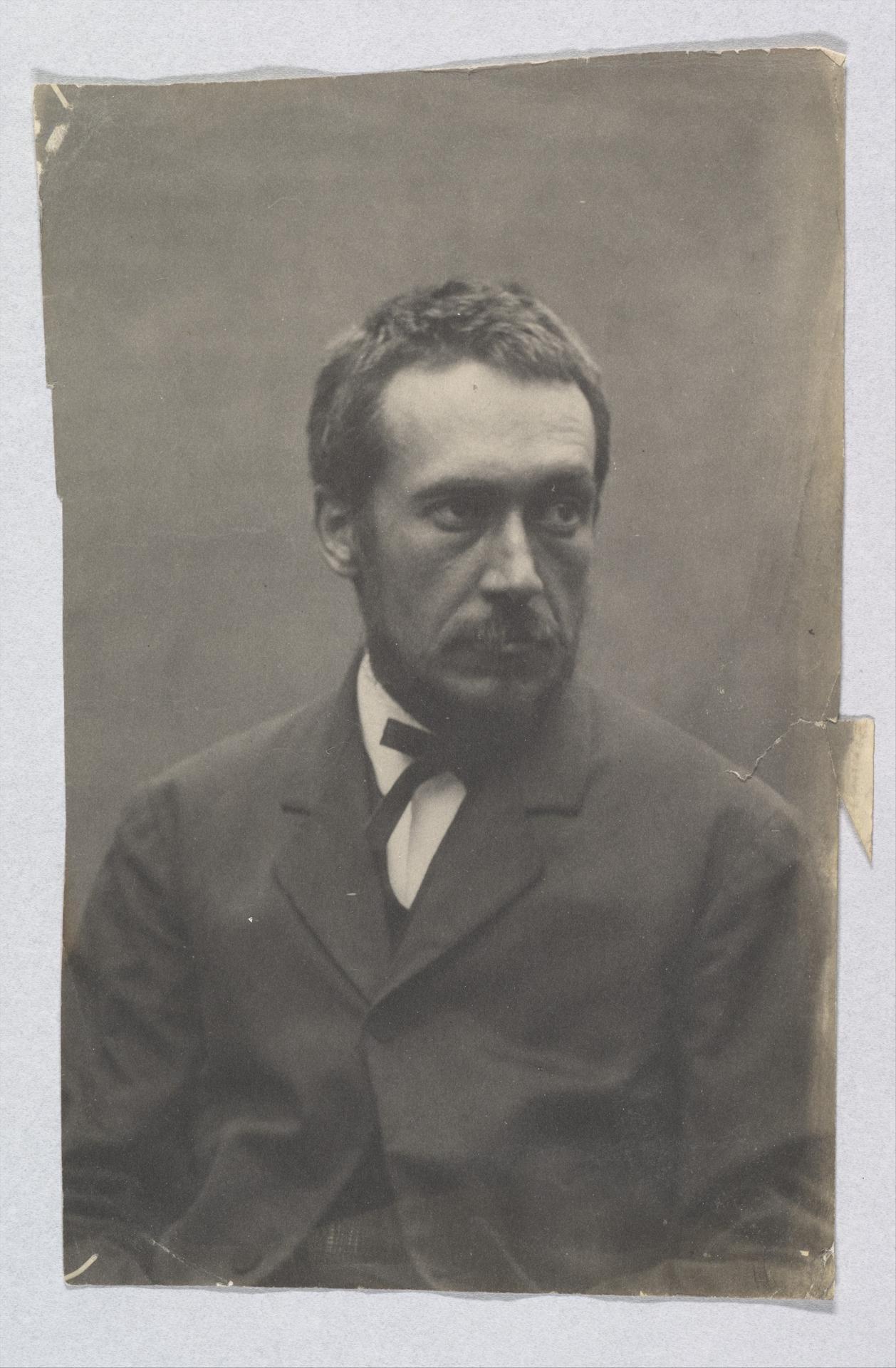
Self-Portrait (ca. 1880)
Original title: [Self-Portrait]
kurzbeschreibung
Thomas Eakins presents himself around 1880 in a platinum print measuring 15.7 by 10 cm. The artist appears in a bust-length view, formally dressed against a dark ground. With this image, Eakins demonstrates his interest in photography as a means of artistic expression.
Description
A man with short hair and a neat mustache looks out from the image; he wears a suit, shirt, and tie. The evenly dark background makes the figure stand out clearly. The head is tilted slightly to the left, and the arrangement is centered. Frontal light falls on the face and brings out its features. The monochrome tone matches the character of platinum prints from those years.
Context
Thomas Eakins, an American painter and photographer, is known for realistic depictions. Around 1880 he devoted himself intensively to photography and also used it for portrait studies. The self-portrait falls in a period when Eakins was teaching at the Pennsylvania Academy of Fine Arts and trying out new processes of image-making. Platinum prints were then considered durable and valued for their fine tonal values.
Impact
The frontal lighting and dark background give the self-portrait something immediate and concentrated. A calm, self-confident presence speaks directly to the viewer. The fine gradations of the platinum print lend the image a soft, almost painterly quality.
Technique
The platinum print is a noble printing process known for its matte surface and high permanence. Platinum is applied to the paper and exposed to UV light. The fine tonal gradations arise from the chemical reaction of the platinum salt with the paper.
AI-generated description text
Source: Metropolitan Museum of Art · Public Domain (CC0 1.0)