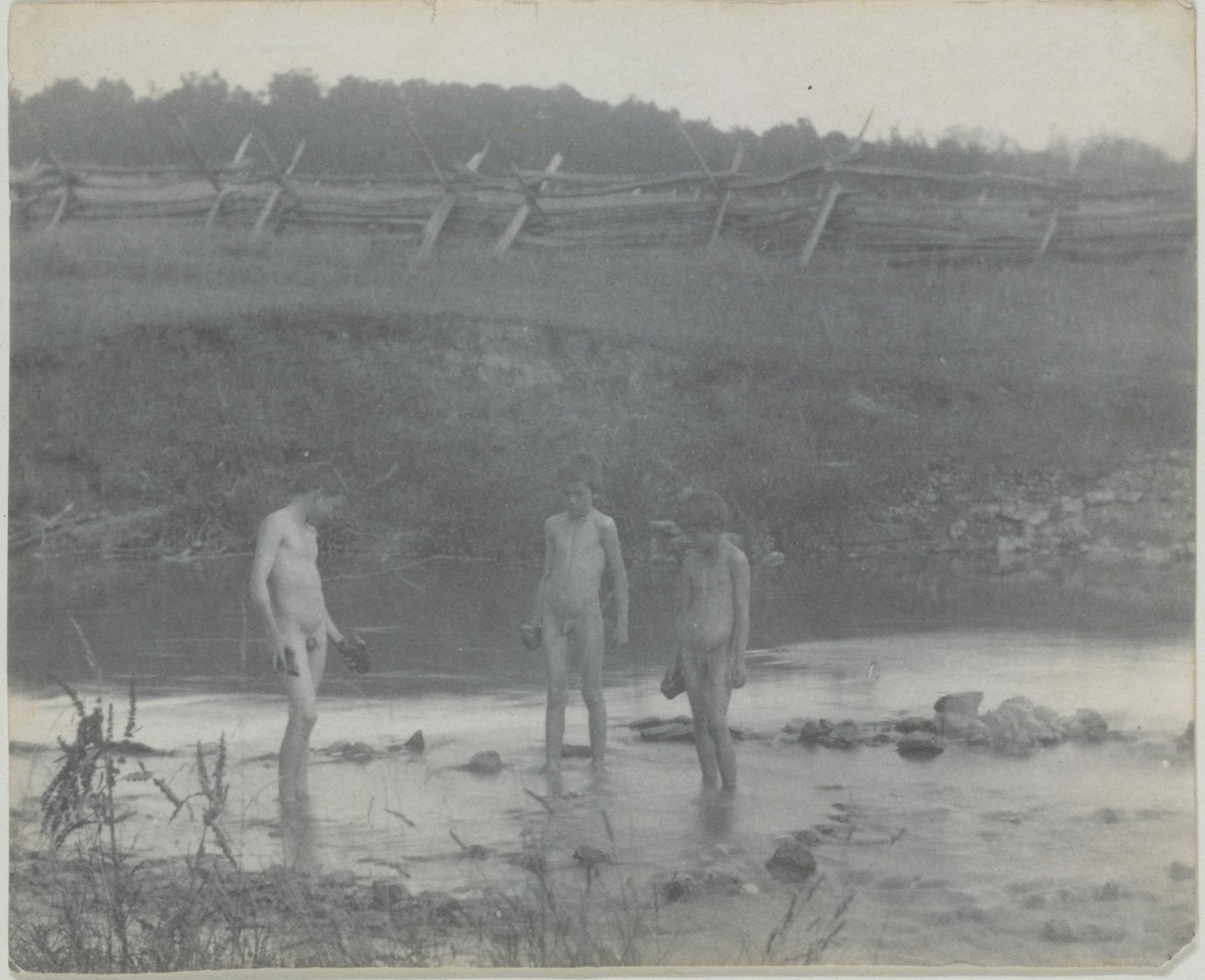
Three Boys Wading in a Creek
Original title: [Three Boys Wading in a Creek]
kurzbeschreibung
Thomas Eakins made this platinum print in 1883, titled Three Boys Wading in a Stream. It shows three naked boys in calm water, with a rural setting of wooden fence and trees framing them.
Description
Three naked boys stand side by side in the water of a river or cove. Behind them runs a wooden fence, with trees and bushes in between. The water is still, and the surroundings feel rural and untouched. The image is monochrome, the light even and without noticeable shadows—a sign of daylight.
Context
In 1883 Eakins worked extensively with photography, both as an artistic and a scientific tool. He used it for motion studies and as preparation for paintings. The rural scene fits his interest in the human body in natural surroundings, which also recurs in paintings such as The Swimming Hole (1884–85). Platinum prints were valued at the time for their durability and fine tonal gradations.
Impact
The calm, documentary way the boys stand in the water evokes a sense of carefree ease and idyll. Even light and the fine gradations of the platinum print give the image a soft, almost painterly quality that draws the viewer into the scene.
Technique
In the platinum print—a noble printing process—platinum salts are applied to the paper and exposed to light. This allows a wide range of tonal values and a matte surface that sets it apart from silver-based photographs. The picture was probably taken with a large-format camera, which explains its detail and sharpness.
AI-generated description text
Source: Metropolitan Museum of Art · Public Domain (CC0 1.0)