Arcadia
Original title: Arcadia
kurzbeschreibung
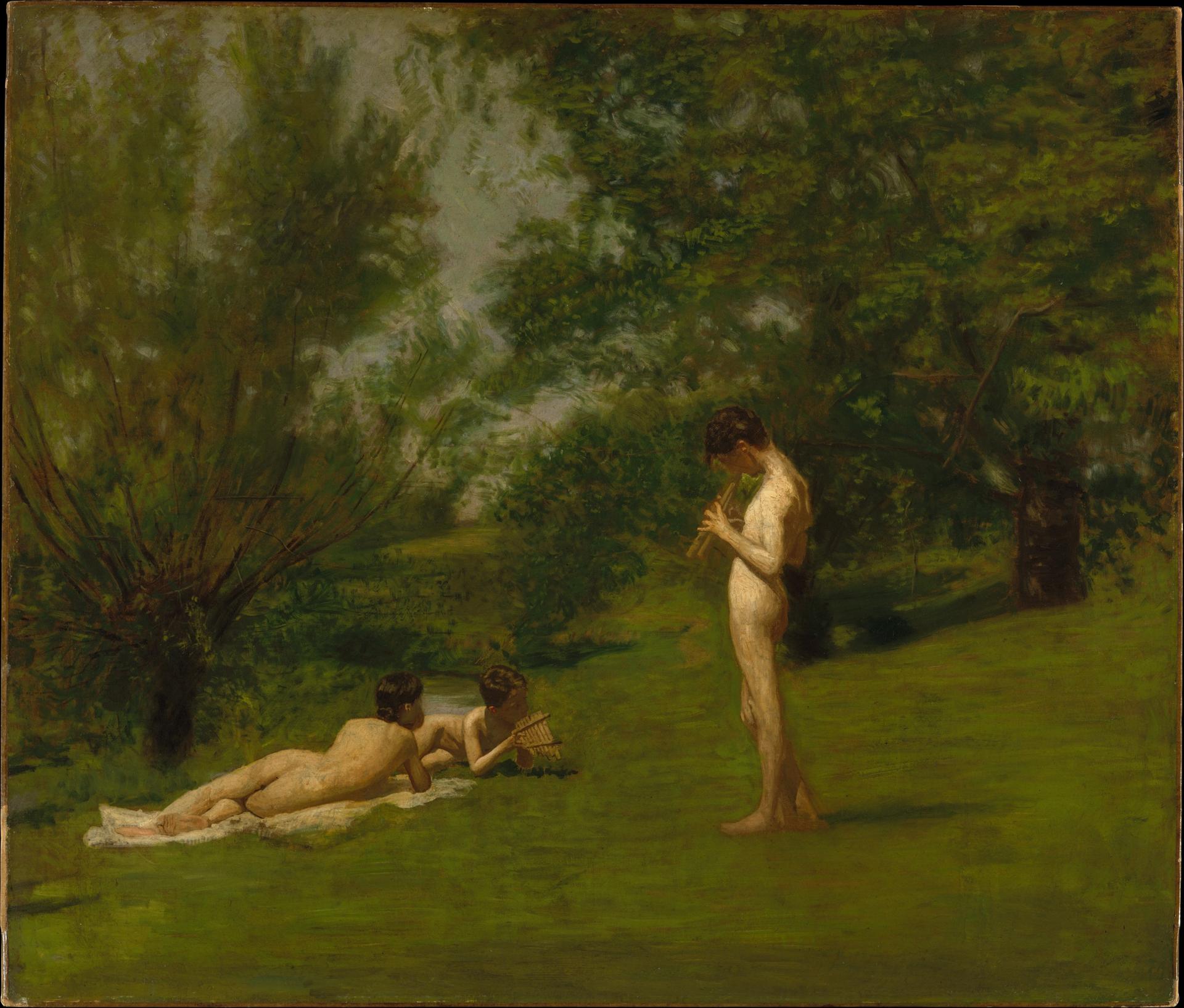
Thomas Eakins painted Arkadien around 1883, drawing on the ancient vision of a carefree shepherd's life. Three unclothed men lounge and make music in an untamed setting. The oil picture ties the Arcadian ideal to ideas of leisure and music under the open sky.
Description
Three bare figures populate a green landscape edged with trees and shrubs. Two have settled comfortably on a blanket and seem deep in conversation; the third stands upright and blows a flute. Greens and browns dominate the picture, and the light falls soft and diffuse, bathing the scene in a peaceful mood.
Context
In these years Eakins was studying the human body and its place in nature in depth. The motif takes up the Arcadian tradition of antiquity, which evokes a golden age of shepherds. The artist, committed to academic realism, linked this classical idea with his leaning toward open-air painting. The picture was made after his time in Paris and during his teaching at the Pennsylvania Academy of Fine Arts.
Impact
The gentle lighting and harmonious colors create a quiet, thoughtful atmosphere. Nude figures in nature feel here both classical and immediate, and the viewer is transported into a timeless world. The picture radiates a calm that invites lingering.
Technique
Oil on canvas, executed with fine brushstrokes and glazing, allows soft transitions and a lifelike rendering of light and shadow. The realistic style, with touches of impressionism, shows in the loose handling of natural details and the emphasis on atmospheric effects.
AI-generated description text
Source: Metropolitan Museum of Art · Public Domain (CC0 1.0)