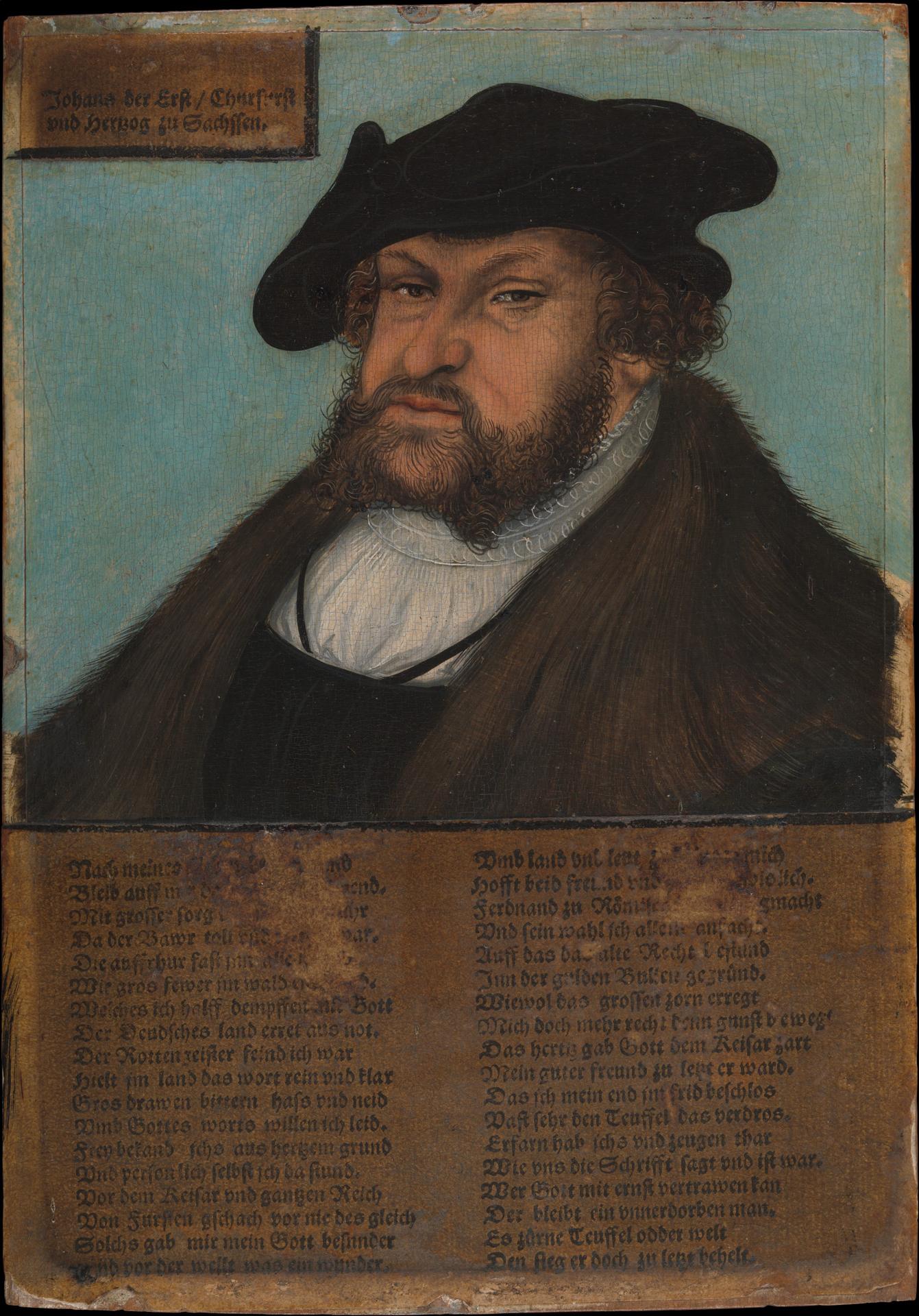
Johann I (1468–1532), the Constant, Elector of Saxony (1532–33, Met-Objekt 2434)
Original title: Johann I (1468–1532), the Constant, Elector of Saxony
kurzbeschreibung
This small panel shows Johann I, Elector of Saxony, in a bust-length portrait. Lucas Cranach the Elder and his workshop painted it around 1532–33 in oil on beech wood and added printed paper labels. The modest format of 20.3 x 14.3 cm suggests it was meant for private use or as a representative token.
Description
The viewer's eye is drawn first to the sitter's serious, thoughtful face, framed by dense dark stubble. Johann wears a black cap, a brown coat, and white neckwear. The background is a plain blue, and a small shield with a Latin inscription sits at the upper left. Below, a text field with printed lines in German script is visible. The layout concentrates on head and upper body, and the colors are muted.
Context
Johann the Steadfast ruled as Elector of Saxony from 1525 to 1532 and was close to Martin Luther. The portrait was made shortly after his death in 1532, which may point to a posthumous memorial image. Cranach the Elder served as court painter to the Saxon electors and portrayed many Reformation princes. The combination of painting and printed paper labels is unusual and may indicate an early form of reproduction or labeling.
Impact
A calm, dignified presence emanates from the portrait, carried by the serious expression and plain clothing. The muted colors and clear layout direct attention to the sitter's face. The mix of painting and printed elements creates a remarkable union of individual portrayal and typographic information.
Technique
The painting is executed in oil on beech wood, as was typical for the Cranach workshop. The letters and text fields were printed on paper by letterpress and then applied to the image. This combination of painting and printing is rarely seen and shows the workshop's experimental spirit.
AI-generated description text
Source: Metropolitan Museum of Art · Public Domain (CC0 1.0)