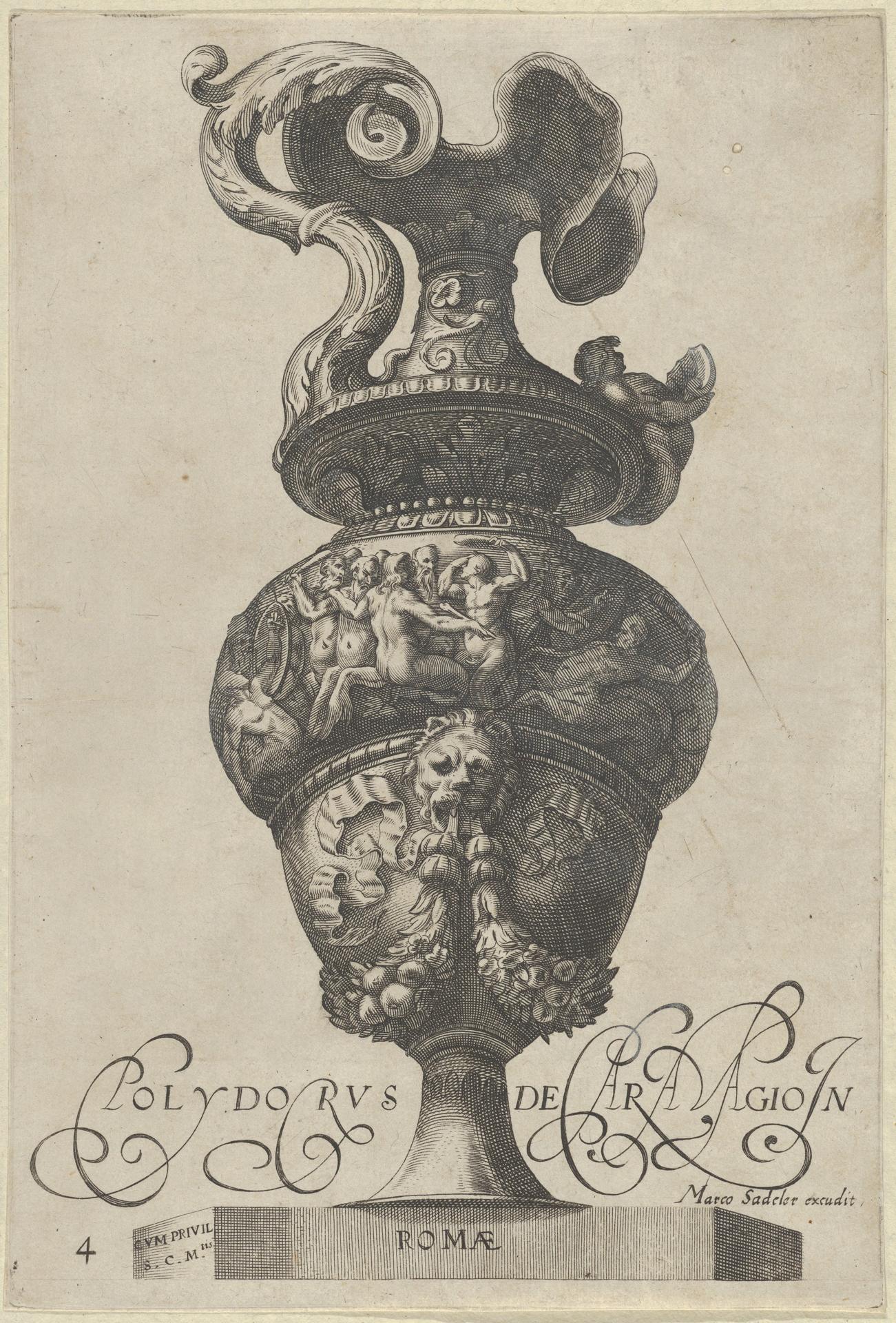
Plate 4: Vase or Ewer with a Frieze containing mermaids and centaurs, and below a lion's head with garlands and ribbons, from "Antique Vases" (Vasa a Polydoro Caravagino)
Original title: Plate 4: Vase or Ewer with a Frieze containing mermaids and centaurs, and below a lion's head with garlands and ribbons, from "Antique Vases" (Vasa a Polydoro Caravagino)
kurzbeschreibung
Aegidius Sadeler II made this etching with engraving in 1605. It shows an antique vase or jug whose body carries a frieze of mermaids and centaurs, while below sits a lion's head with garlands and ribbons. The sheet belongs to the series 'Antique Vases' (Vasa a Polydoro Caravagino) and measures 23.5 × 15.8 cm.
Description
Layout and design follow a clear axis of symmetry: the ornate vase or jug has a continuous frieze in which mermaids and centaurs interact with lively movement. Beneath this frieze sits a lion's head, entwined with garlands and ribbons. Dense ornaments and reliefs with numerous figures and motifs spread across the vessel's surface. The image remains monochrome; even light brings out the details of vessel and frieze clearly.
Context
This 1605 print belongs to the series 'Antique Vases', which goes back to designs by Polidoro da Caravaggio. The Flemish engraver Aegidius Sadeler II was known for his reproductive prints after Renaissance artists. Published in Antwerp, the series helped make antique ornamental motifs known throughout Europe.
Impact
Precisely guided lines and the mirror-like arrangement give the sheet a calm, balanced aesthetic. The densely set ornaments and figures create a noble, classicizing mood and draw the viewer into the world of Renaissance ornament.
Technique
Etching and engraving are combined here, allowing for fine lines and exact details. The present impression is the second of three states (Bartsch), which suggests careful reworking of the plate.
AI-generated description text
Source: Metropolitan Museum of Art · Public Domain (CC0 1.0)