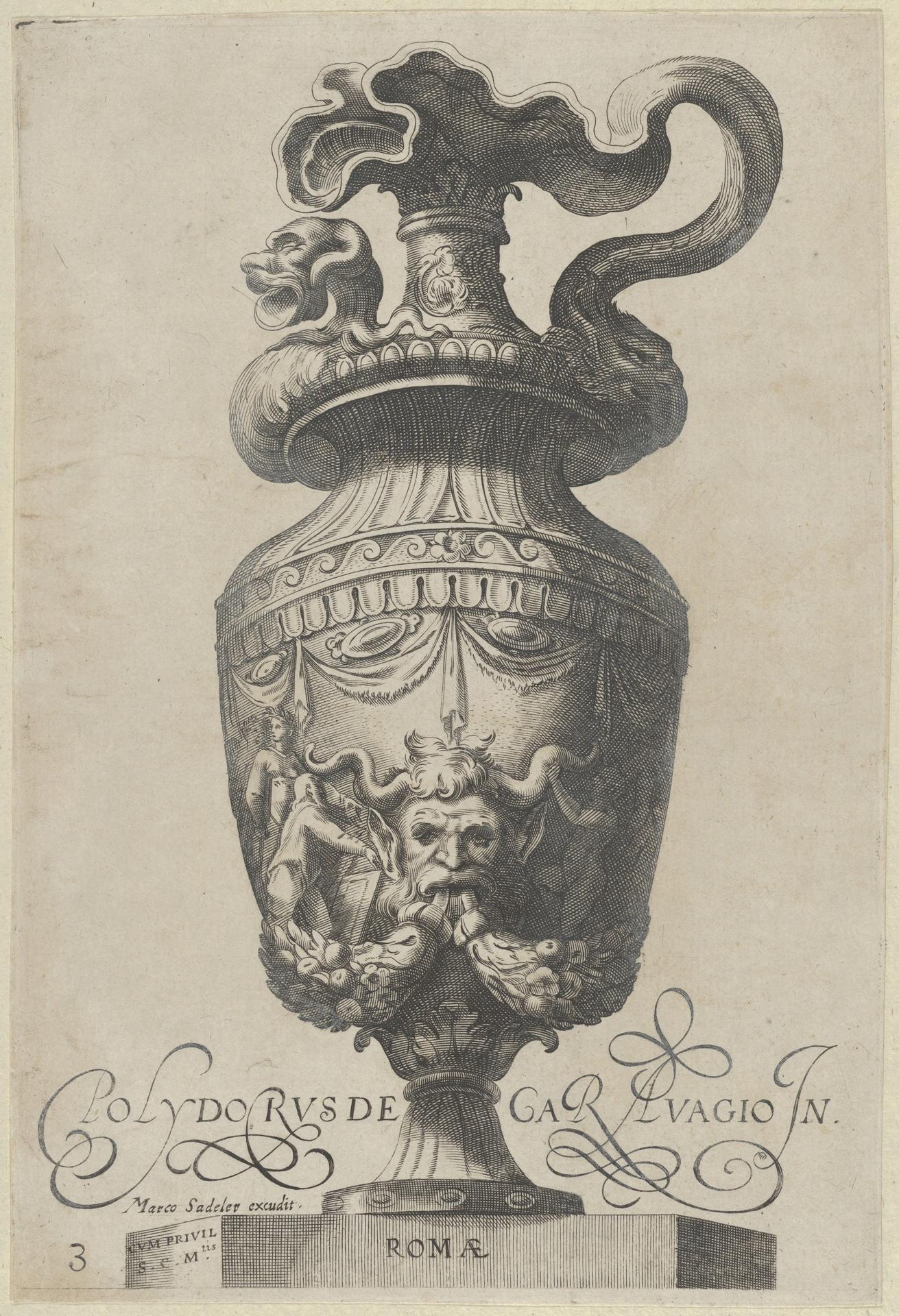
Plate 3: Vase with a satyr's mask and garlands, from "Antique Vases" (Vasa a Polydoro Caravagino)
Original title: Plate 3: Vase with a satyr's mask and garlands, from "Antique Vases" (Vasa a Polydoro Caravagino)
kurzbeschreibung
A vase with a satyr mask and encircling garlands takes center stage in this 1605 print by Aegidius Sadeler II. It belongs to the series 'Antique Vases' and survives in the second of three states as described by Bartsch. The sheet measures 23.6 × 16 cm.
Description
Above the body of the vase, a spiral lid twists upward in fluid motion. A bearded satyr head with long ears wraps around the neck, framed by leaves and blossoms that gather into a wreath. To the left appears a small, animated figure resembling a putto. Ornamental patterns on the vase recall Greek and Roman vessels. Along the bottom edge are the inscriptions 'Polydorus de Caravaggio', 'Marco Sadeler excudit', and 'Roma'.
Context
For the 'Antique Vases' series, Aegidius Sadeler II drew on designs by Polidoro da Caravaggio, a Renaissance artist prized for his antiquarian motifs. The print was published by Marco Sadeler in Rome, as the inscriptions 'Marco Sadeler excudit' and 'Roma' indicate. Images of vases like this were sought-after collector's items in the seventeenth century and provided useful models for craftsmen.
Impact
Precisely guided lines give the vessel a sculptural quality, almost like an ancient relief. Ornamental richness and classical form combine to lend the sheet a calm, timeless elegance and direct the viewer toward the Renaissance reception of antiquity.
Technique
Etching and additional engraving allow for fine, detailed linework. This makes it possible to reproduce the ornamental details and shading with accuracy. The present example is the second of three states, suggesting that the plate was reworked.
AI-generated description text
Source: Metropolitan Museum of Art · Public Domain (CC0 1.0)