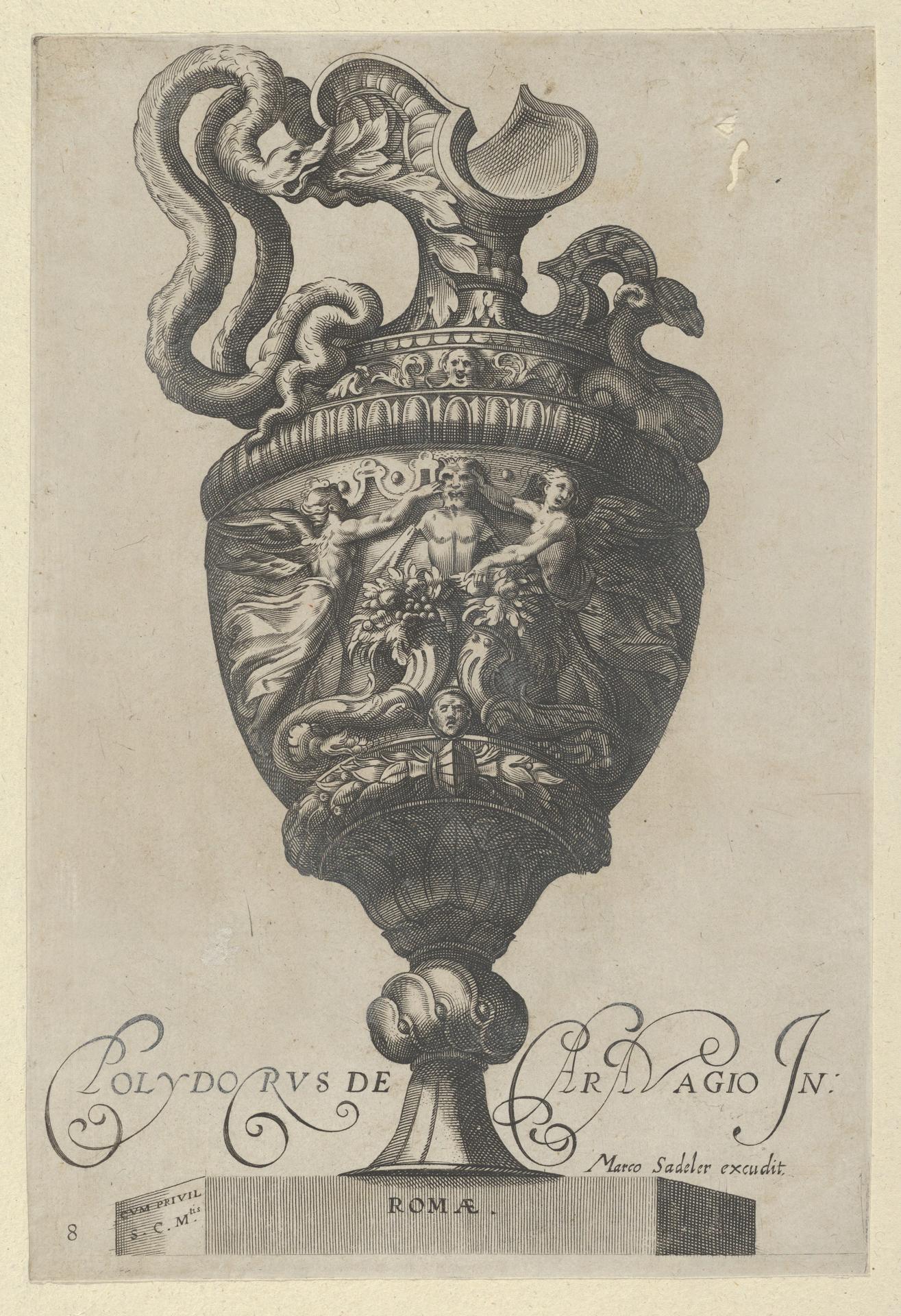
Plate 8: Vase or Ewer Decorated with a Satyr Figure, Behind Two Cornucopias, and Two Winged Victory Figures, from "Antique Vases" (Vasa a Polydoro Caravagino)
Original title: Plate 8: Vase or Ewer Decorated with a Satyr Figure, Behind Two Cornucopias, and Two Winged Victory Figures, from "Antique Vases" (Vasa a Polydoro Caravagino)
kurzbeschreibung
Aegidius Sadeler II made this etching and engraving in 1605, depicting a richly ornamented vase or jug. A satyr forms the central motif, framed symmetrically by two cornucopias and two winged victory figures.
Description
At the heart of the vessel, a satyr is surrounded by two pairs of wings in lively poses. Above, two cornucopias burst forth with fruits and flowers. Leaves and tendrils twine as complex ornaments around the upper part of the vessel. The layout is symmetrical, rendered in black and white. At the bottom appear the signature and publisher's details.
Context
This print belongs to the series 'Antique Vases' (Vasa a Polydoro Caravagino), which draws on ancient models. The Flemish engraver Sadeler created the series around 1605, at a time of great European interest in antique art and mythology. Satyrs and victory figures are classical motifs frequently taken up in the Renaissance and early Baroque.
Impact
The precise linework and symmetrical arrangement give the sheet a calm, balanced effect. The detailed ornaments invite close looking and demonstrate the engraver's technical virtuosity.
Technique
Etching and engraving are combined here, evident in the sharp contours and fine lines. This is the second state of three (after Bartsch), indicating that the plate was reworked. The even distribution of light is typical of this printmaking technique.
AI-generated description text
Source: Metropolitan Museum of Art · Public Domain (CC0 1.0)