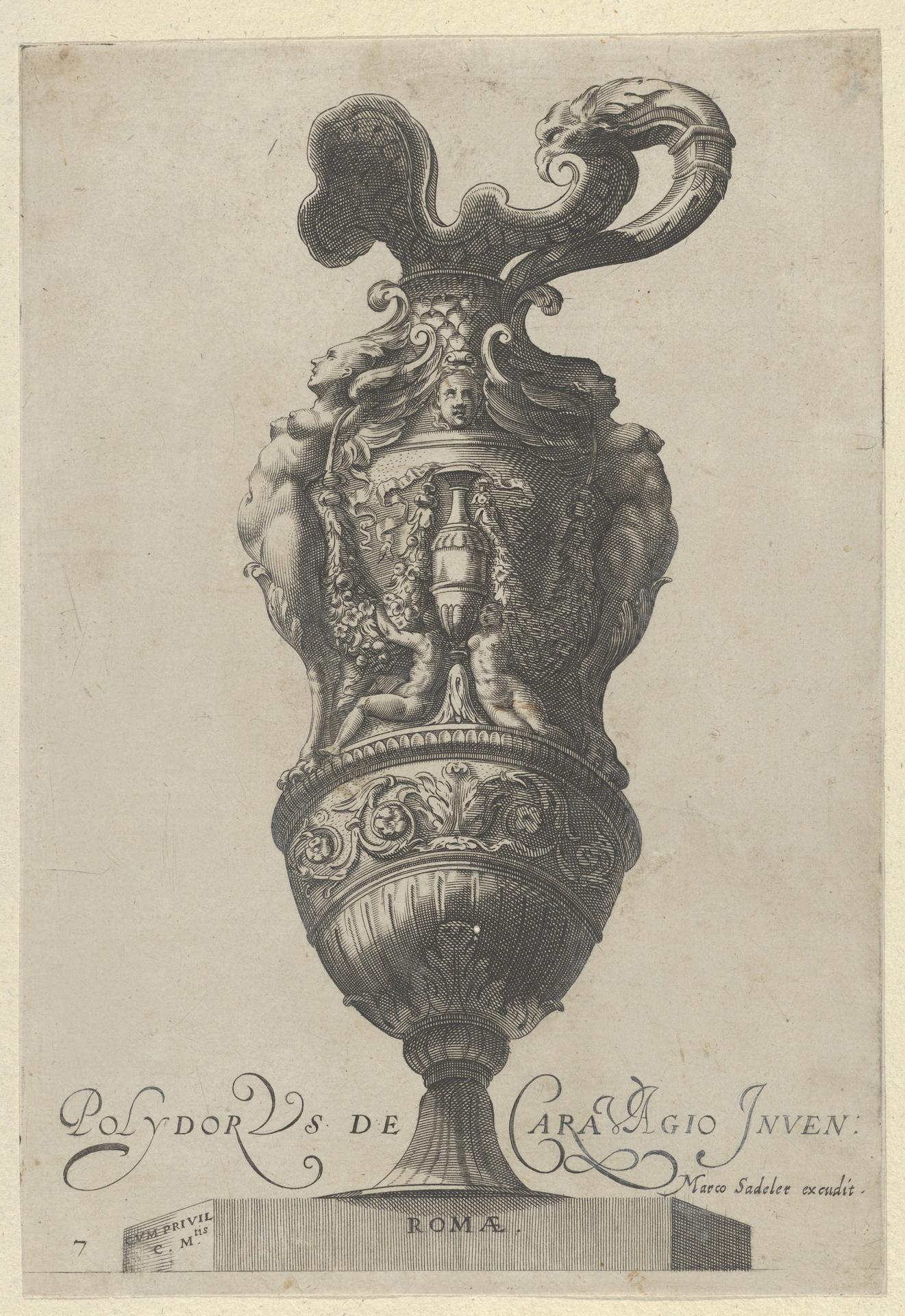
Plate 7: Vase or Ewer Decorated With a Vase Flanked by Putti and Two Large Female figures whose legs morph into griffin claws, from "Antique Vases" (Vasa a Polydoro Caravagino)
Original title: Plate 7: Vase or Ewer Decorated With a Vase Flanked by Putti and Two Large Female figures whose legs morph into griffin claws, from "Antique Vases" (Vasa a Polydoro Caravagino)
kurzbeschreibung
Unlike related vase prints in the series, this design ties the vessel to two putti and two large female figures whose legs end in griffin claws. Aegidius Sadeler II made the sheet in 1605 as an etching and engraving; it survives in the second of three states.
Description
An elaborately decorated vase forms the focal point, flanked by two putti with human upper bodies and sturdy arms, their lower limbs ending as claw-like griffin feet. Below stand two large female figures, also with griffin claws instead of feet. Flowers and further ornament embellish the vessel, while the ground remains unworked. Along the bottom edge appear the names of the engraver and publisher.
Context
The motif goes back to designs by Polidoro da Caravaggio and belongs to a series of antique vases that circulated widely across Europe. Sadeler, a Flemish engraver, worked in Prague at the court of Rudolf II. Such series passed on forms from antiquity and the Renaissance.
Impact
The dense, precisely guided linework gives the sheet a sculptural, almost monumental quality. Human and animal parts interlock, producing a strain of the exotic that nonetheless feels ordered and calm.
Technique
Etching and engraving were used together. This combination allowed hair-fine contours and graded shading, so that the ornaments and figures are rendered with great precision.
AI-generated description text
Source: Metropolitan Museum of Art · Public Domain (CC0 1.0)