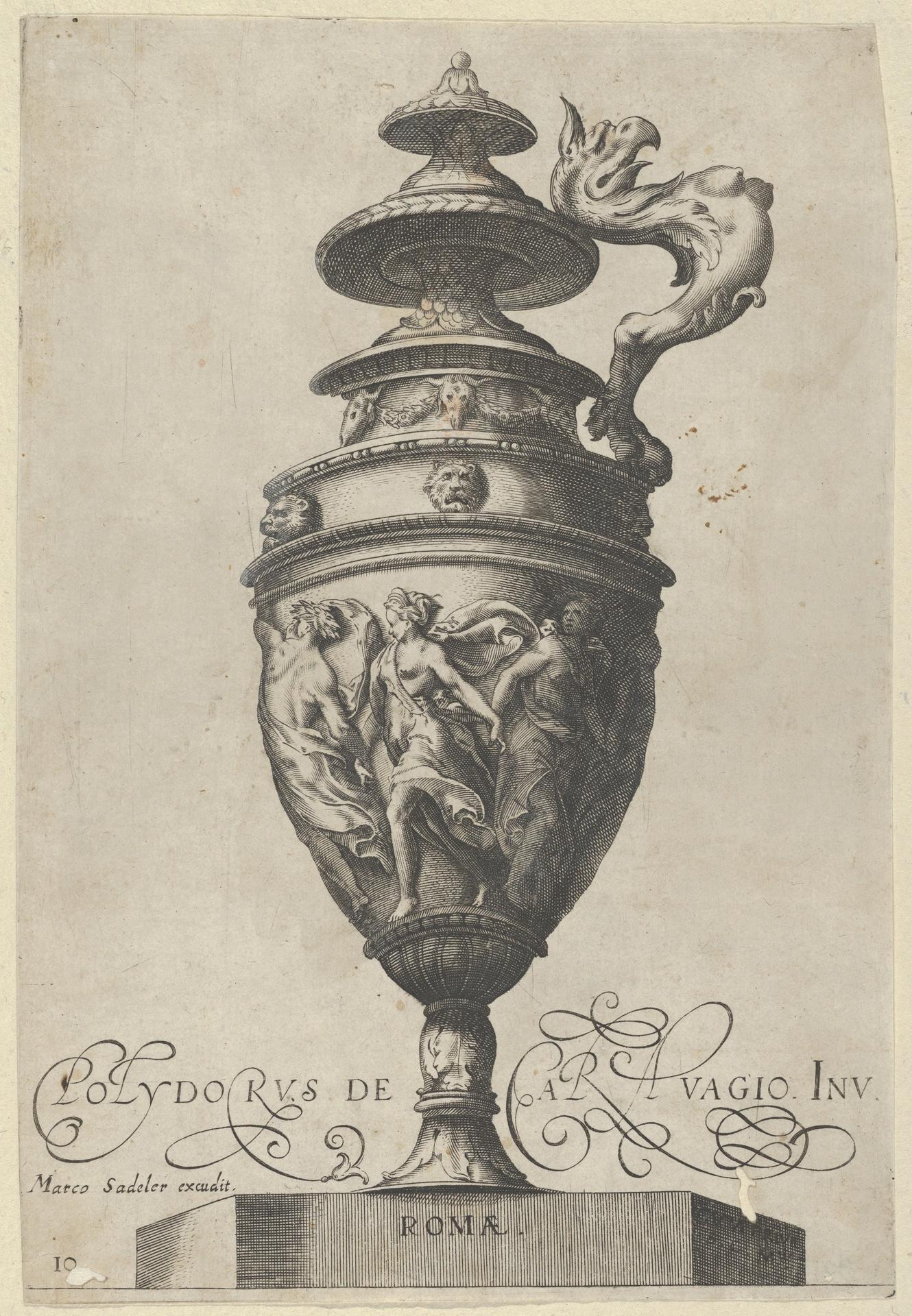
Plate 10: Lidded Vase With a Handle in the Shape of a Griffin and A Frieze With Draped Dancing Figures, from "Antique Vases" (Vasa a Polydoro Caravagino)
Original title: Plate 10: Lidded Vase With a Handle in the Shape of a Griffin and A Frieze With Draped Dancing Figures, from "Antique Vases" (Vasa a Polydoro Caravagino)
kurzbeschreibung
A winged griffin forms the lid of an antique vase, whose body is encircled by a frieze of dancing figures. Aegidius Sadeler II captured this motif in etching and engraving in 1605; the sheet belongs to the series 'Antique Vases' and bears the number 10.
Description
The vessel stands at the center, crowned by a griffin, while another mythical creature sits on the handle and a dragon motif also appears on the lid. Around the vase's body, several dancers in flowing garments move, their drapery folds bringing motion to the image. At the bottom margin are the name Polydorus de Caravaggio, the publisher Marco Sadeler, the inscription 'ROMA', and the numeral 10. Kept in grisaille, the rendering remains evenly lit and knows no shading.
Context
The series 'Antique Vases' is based on designs by the painter Polidoro da Caravaggio, renowned for his decorations that draw on antiquity. The Flemish engraver Aegidius Sadeler II produced the prints in Rome for the publisher Marco Sadeler. Artists and collectors of the Renaissance used such sheets to transmit antique forms and ornaments.
Impact
Cleanly drawn lines and a symmetrical layout give the sheet a calm, classical quality. The moving figures work against the rigid form of the vessel, and this contrast creates a tension that draws the eye to the details.
Technique
Etching and engraving were combined here, allowing for fine lines and precise details. According to Bartsch, the impression is from the second of three states and reveals Sadeler II's careful working method.
AI-generated description text
Source: Metropolitan Museum of Art · Public Domain (CC0 1.0)