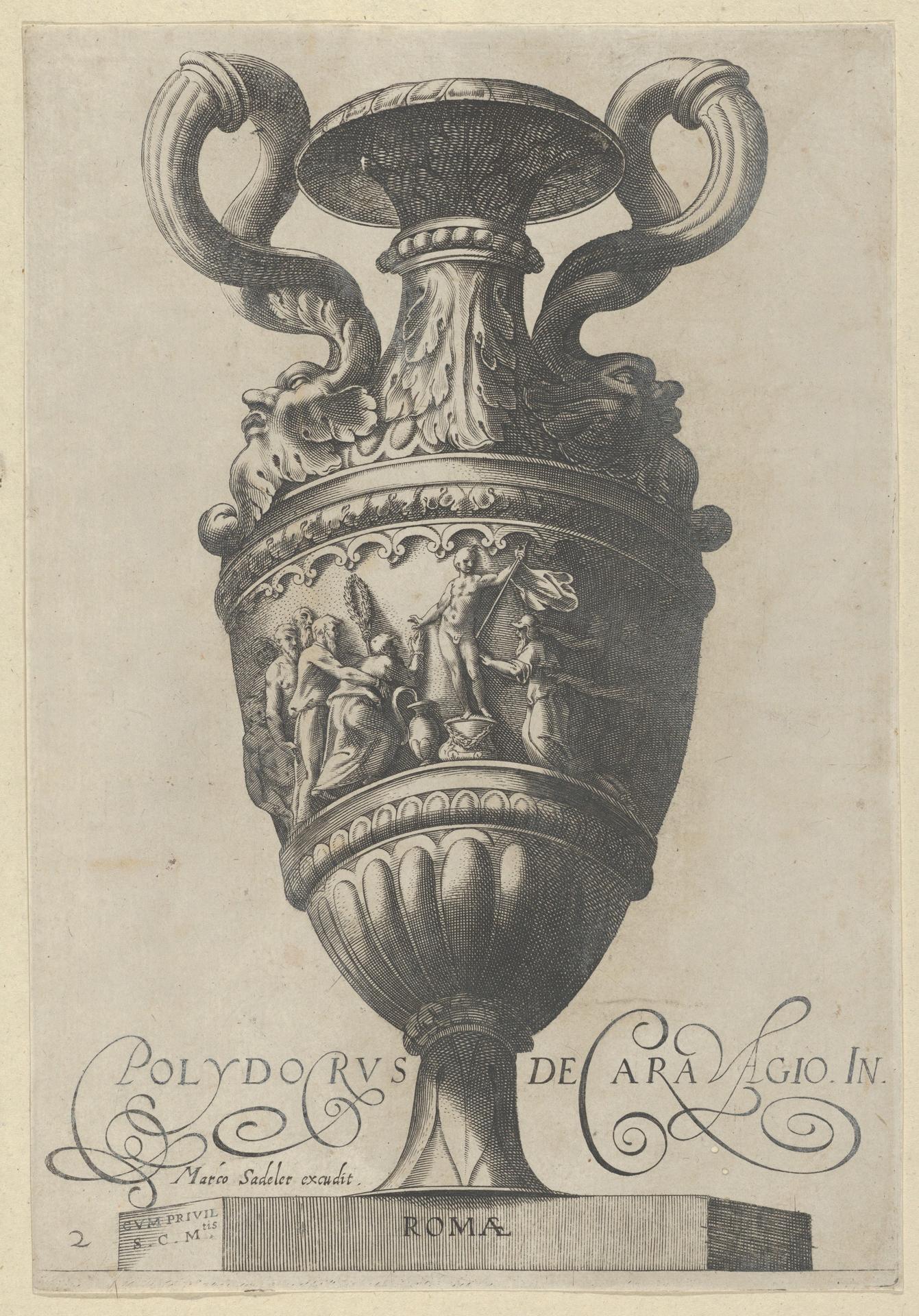
Plate 2: Two-handled vase with a nude figure on a pedestal at center, from "Antique Vases" (Vasa a Polydoro Caravagino)
Original title: Plate 2: Two-handled vase with a nude figure on a pedestal at center, from "Antique Vases" (Vasa a Polydoro Caravagino)
kurzbeschreibung
Aegidius Sadeler II made this print in 1605 as part of the series 'Antique Vases'. It shows a two-handled vase resting on a pedestal, with a naked figure at its center. The print is an etching and engraving and belongs to the collection of the Metropolitan Museum of Art; it is the second of three states.
Description
On a pedestal stands the two-handled vase, its body carrying a figure scene. A naked figure stands elevated on a base, flanked left and right by two further figures who seem to react to one another; one of them holds an object or a flag. Ornaments and reliefs cover the vessel, recalling ancient art and architectural forms. Along the lower edge run the inscriptions 'POLYDORVS DE CARAVGIO IN' and 'Marco Sadeler excudit'.
Context
The series 'Antique Vases' is based on designs by Polidoro da Caravaggio, a Renaissance painter. Aegidius Sadeler II, a Flemish engraver, worked on the prints during a stay in Rome, where he studied ancient art. The publisher's note 'Marco Sadeler excudit' names the firm that issued the sheets. Through these prints, motifs from ancient vases spread widely across Europe.
Impact
Clear lines and rich detail give the sheet an antique, distinguished character. The layout feels balanced and still, with the central figure clearly emphasized. The ornamentation creates a ceremonial mood that almost resembles an archaeological record.
Technique
Etching and engraving are combined here, allowing fine lines and graded shading. This method provided the high precision needed to reproduce the many-part ornaments and figures. The present impression is the second of three states, indicating that the plate was reworked.
AI-generated description text
Source: Metropolitan Museum of Art · Public Domain (CC0 1.0)