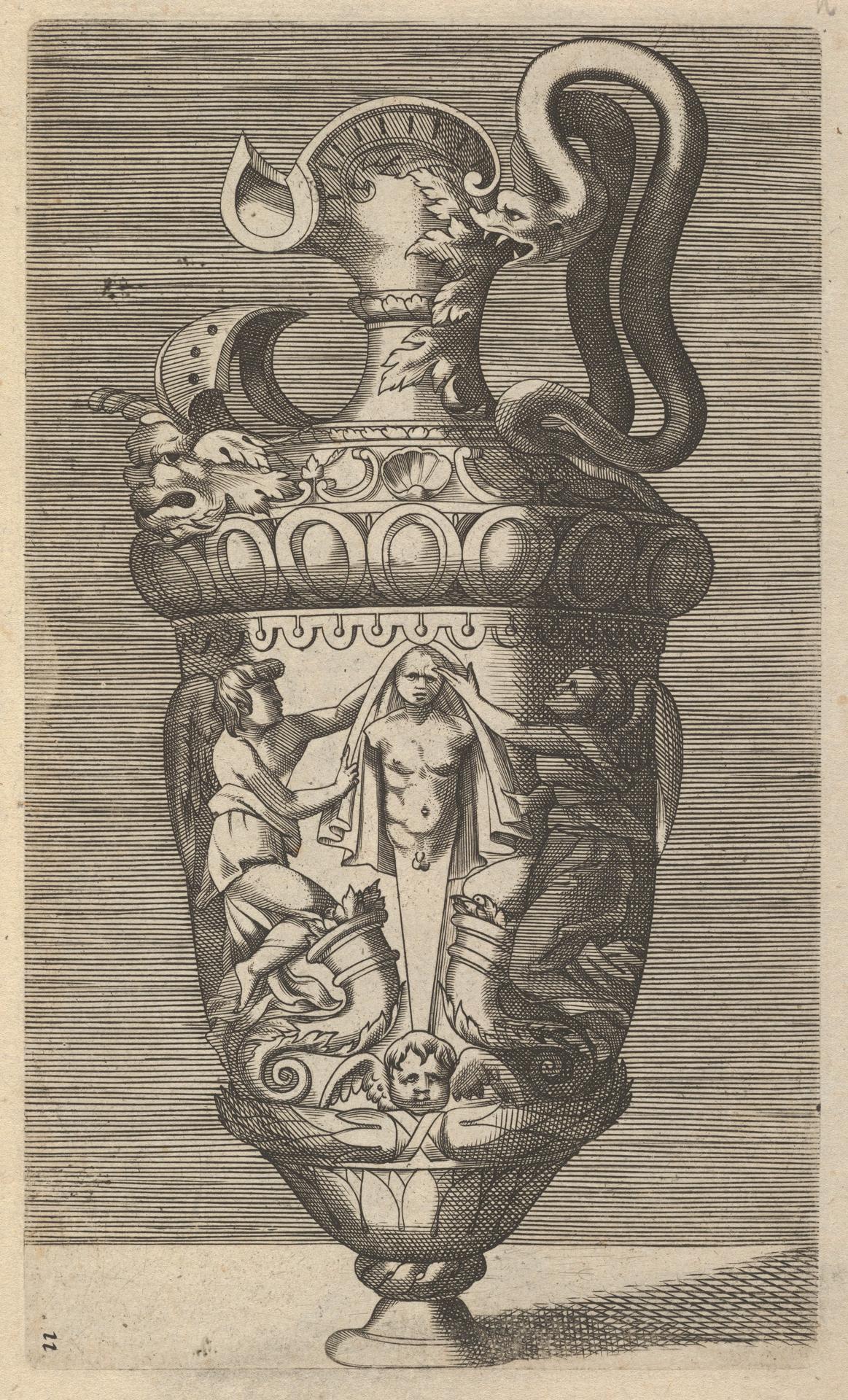
Vase with Two Winged Figures Draping a Term (17th century (late))
Original title: Vase with Two Winged Figures Draping a Term
kurzbeschreibung
René Boyvin's engraving Vase with Two Winged Figures Crowning a Term dates from the late 17th century. The sheet presents a symmetrically arranged vase adorned with mythological scenes and ornamental elements, and it stands among the examples of careful, detail-rich printmaking of its period.
Description
The vessel widens at the top and narrows toward the base, its surface overrun with foliage and scrolling vine. At mid-height, two winged figures hoist a term aloft, their wings and arms caught in a lively pose. Rendered in monochrome, the print is governed by an even line structure that yields balanced light, while the symmetrical layout underscores the formal rigor of the motif.
Context
René Boyvin, a French copperplate engraver of the Renaissance, is known above all for his ornamental prints. This work was made in the late 17th century, when antique and mythological subjects were widely taken up in decorative art. Prints of this kind often served craftsmen—goldsmiths or cabinetmakers, for instance—as models.
Impact
Through its delicate linework and clear symmetry, the engraving radiates calm and equilibrium. The animated posture of the figures, however, brings a lively tension to the image that softens its formal severity.
Technique
The work is a copperplate engraving, a process in which lines are cut into a copper plate. These lines hold the ink, which is then transferred to paper, allowing a precise and richly detailed reproduction. The even hatching produces fine gradations of tone and a sculptural effect.
AI-generated description text
Source: Metropolitan Museum of Art · Public Domain (CC0 1.0)