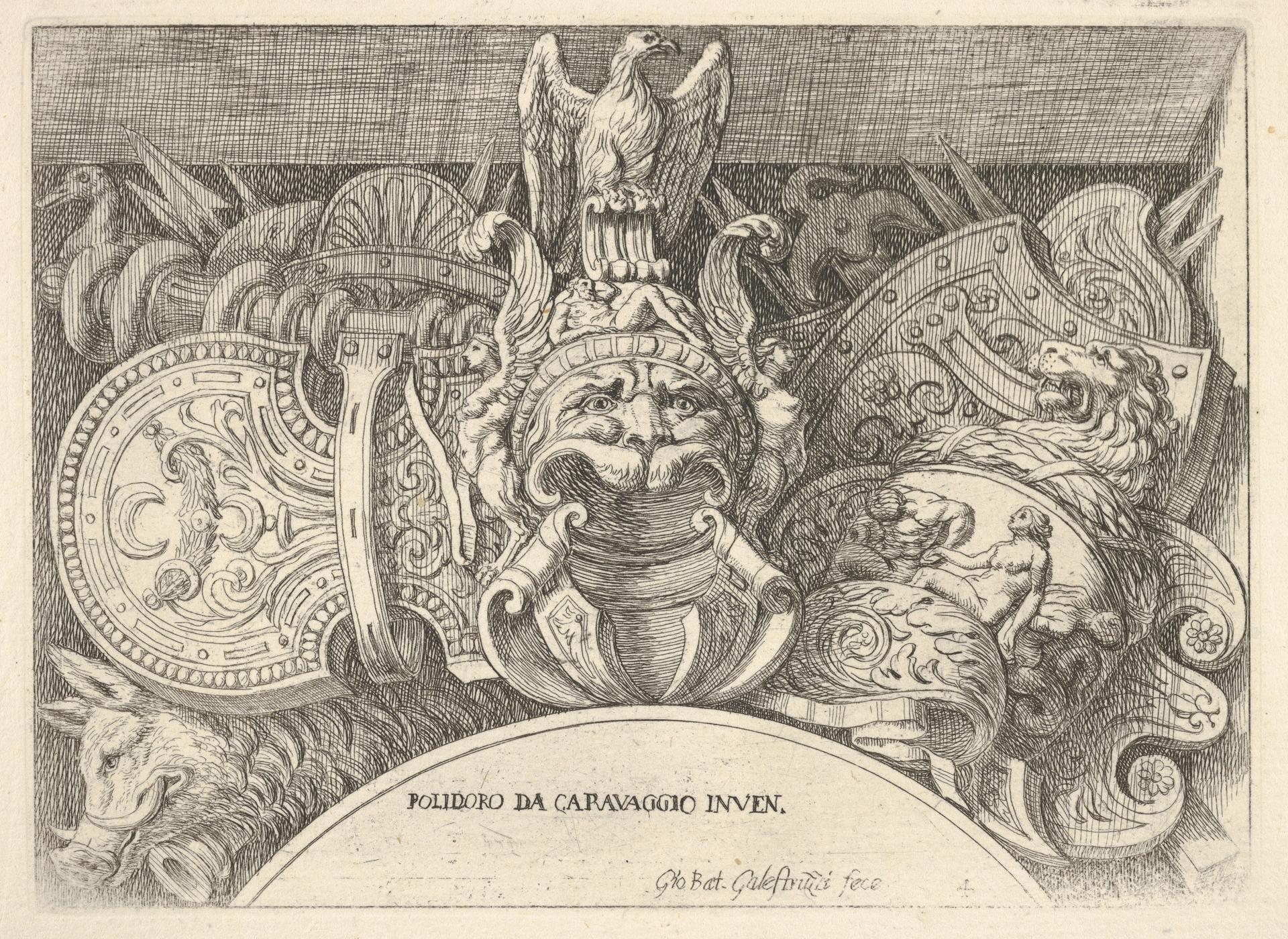
Plate 4: Trophies of Roman Arms from Decorations above the Windows on the Second Floor of the Palazzo Milesi in Rome
Original title: Plate 4: trophies of Roman arms from decorations above the windows on the second floor of the Palazzo Milesi in Rome
kurzbeschreibung
In this etching of 1656–58, Giovanni Battista Galestruzzi records the Roman weapon trophies that once adorned the windows of the second floor of the Palazzo Milesi in Rome. Measuring 19 x 25.1 cm, the sheet is the fourth print in a series. Weapons and shields gather symmetrically around an eagle at the centre.
Description
An eagle perches high on a plinth, flanked by a human body and a lion's head. Weapons and shields spread outward around it, among them a patterned shield crowned by a horse and a human head. Lower down, another lion's head appears, surrounded by a horse and further figures. The layout is mirror-symmetrical, and each figure is drawn with great care. Fine hatching and linework build light and shadow across the monochrome print.
Context
The facade of the Palazzo Milesi in Rome carried a decoration in antique style that served many artists of the 17th century as a model. Galestruzzi, an Italian etcher, devoted himself chiefly to reproducing antique and Baroque art. The series to which this plate belongs records the palace's ornamental scheme and was probably made for collectors and connoisseurs. The years 1656–58 fall in the High Baroque, a period when the reception of antiquity and triumphal motifs were widespread.
Impact
The print feels solemn and triumphal, reinforced by the mirror-like arrangement and the charged symbols of the eagle and lion's head. The precise line invites close looking and brings out the ornamental character of the source.
Technique
Galestruzzi worked here as an etcher; the second state points to reworking of the plate. The process allows the finest lines and hatching, with which details and shading can be captured. The paper format is larger than the plate, suggesting a wide margin.
AI-generated description text
Source: Metropolitan Museum of Art · Public Domain (CC0 1.0)