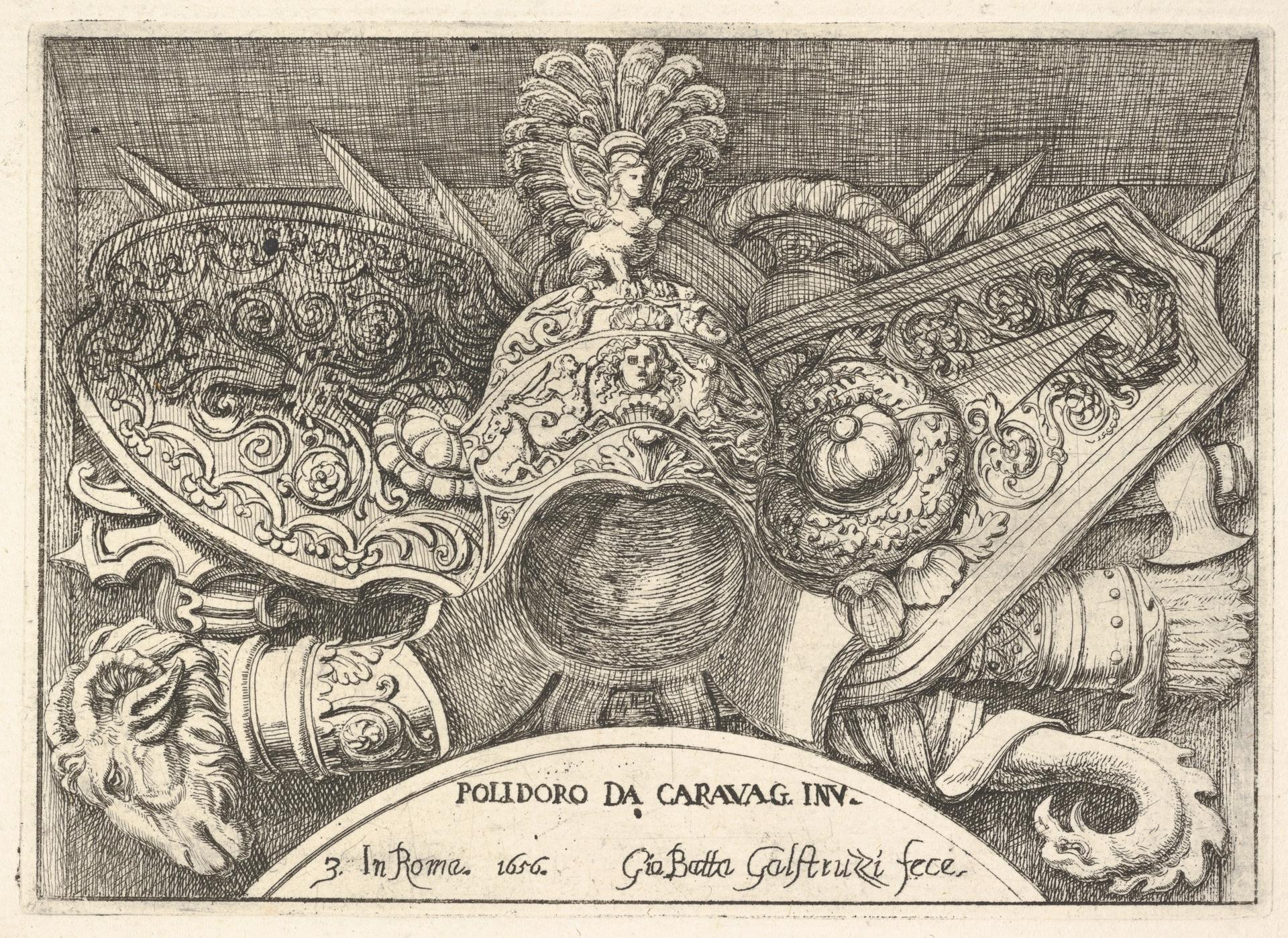
Plate 3: trophies of Roman arms from decorations above the windows on the second floor of the Palazzo Milesi in Rome
Original title: Plate 3: trophies of Roman arms from decorations above the windows on the second floor of the Palazzo Milesi in Rome
kurzbeschreibung
Giovanni Battista Galestruzzi etched this strictly symmetrical arrangement of Roman weapon trophies in 1656. The sheet belongs to a series in which he reproduced the window decorations on the second floor of the Palazzo Milesi in Rome. This impression is the second state of the print.
Description
A figure sits on an elaborately ornamented shield, flanked by a lion and a dragon. Above hovers another figure wearing a feather boa. Weapons of every kind and ornamental fragments surround this centre, and the arrangement is mirrored so precisely that the group of trophies becomes the natural focal point. Fine hatching and crisp contours give structure to the monochrome image.
Context
The Palazzo Milesi in Rome was known for its Renaissance facade decorations. Galestruzzi, a seventeenth-century Italian artist, recorded them in a series of prints. His etching of 1656 came about roughly a century after the palace was built. Reproductions of this kind helped spread antique and Renaissance motifs.
Impact
The sheet reads as calm and well balanced, thanks to its mirrored order and the abundance of ornament. Delicately drawn lines give it a stately, historical mood and carry the viewer back to ancient Rome.
Technique
This is an etching, its lines bitten into a copper plate. In the second state, reworking or corrections to the plate may be visible. The paper is larger than the plate, as was usual for collectors' prints of the period.
AI-generated description text
Source: Metropolitan Museum of Art · Public Domain (CC0 1.0)