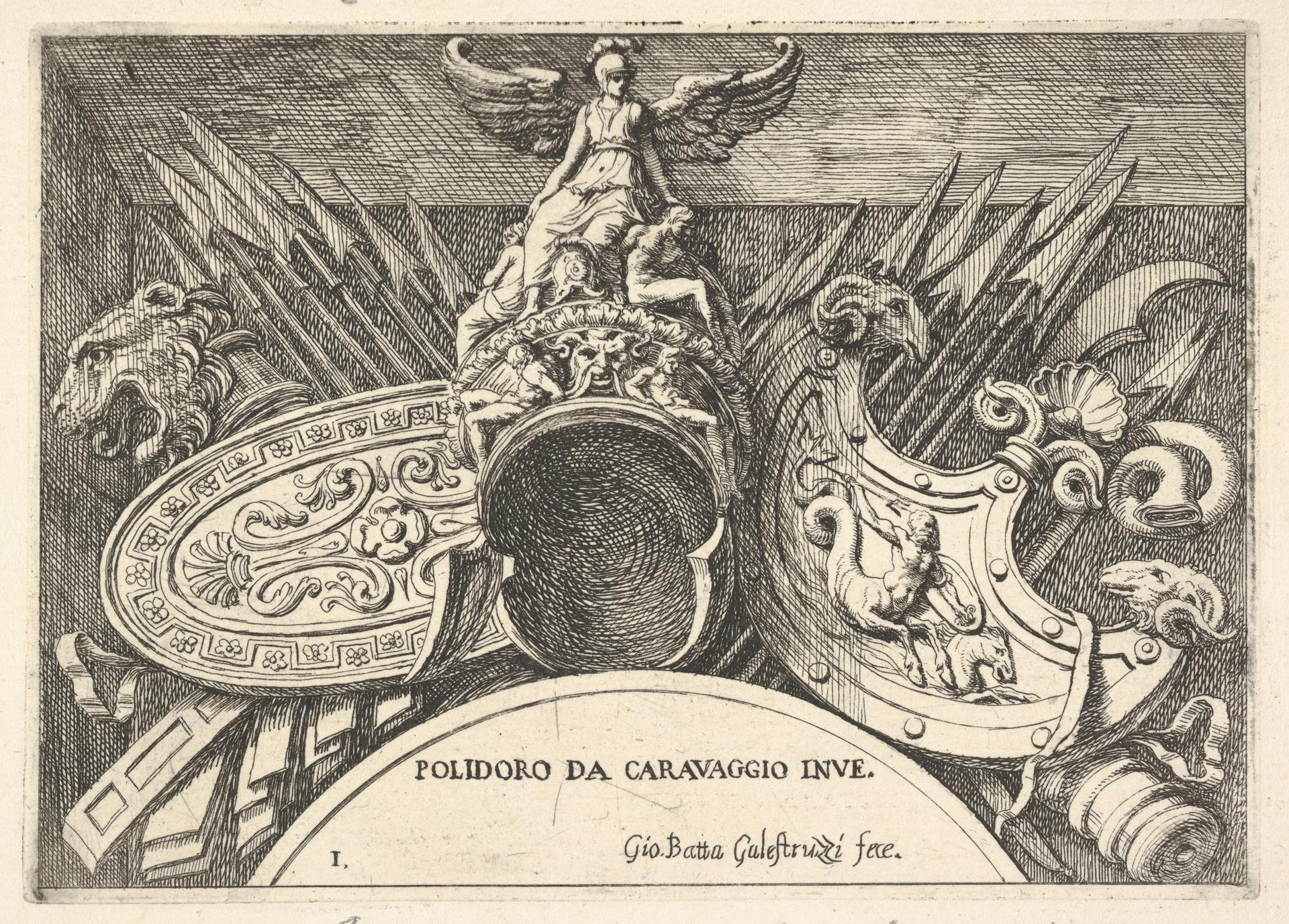
Plate 1: trophies of Roman arms from decorations above the windows on the second floor of the Palazzo Milesi in Rome
Original title: Plate 1: trophies of Roman arms from decorations above the windows on the second floor of the Palazzo Milesi in Rome
kurzbeschreibung
Between 1656 and 1658, Giovanni Battista Galestruzzi made this etching featuring Roman military trophies as an ornamental motif. It belongs to a series that records the window decorations of the Palazzo Milesi in Rome, drawing on designs by Polidoro da Caravaggio.
Description
A victorious warrior on horseback dominates the image, holding a laurel wreath in his hand. Beside him stands an angel with wings spread. Masks and other ornament frame the scene on the left and right. Geometric forms suggest a backdrop in the distance. At the bottom edge is a shield inscribed 'POLIDORO DA CARAVAGGIO INVE' and below it 'Gio. Batta Galestruzzi fece.'
Context
The etching was made in 1656–58 and belongs to a series documenting the window decorations of the Palazzo Milesi in Rome. The designs were based on drawings by Polidoro da Caravaggio, whose facade paintings were regarded as exemplary in the seventeenth century. Galestruzzi translated these decorations into print to make them known to a wider audience.
Impact
The even arrangement of the ornaments and the careful linework give the sheet a calm balance. The motif reads as a dignified, classicizing decoration that underscores the noble character of Roman palazzo architecture.
Technique
An etching in the second state, executed with great precision. The plate measures 11.3 x 15.7 cm, the sheet 20.4 x 27.4 cm. The process allows for fine lines and details characteristic of ornamental designs.
AI-generated description text
Source: Metropolitan Museum of Art · Public Domain (CC0 1.0)