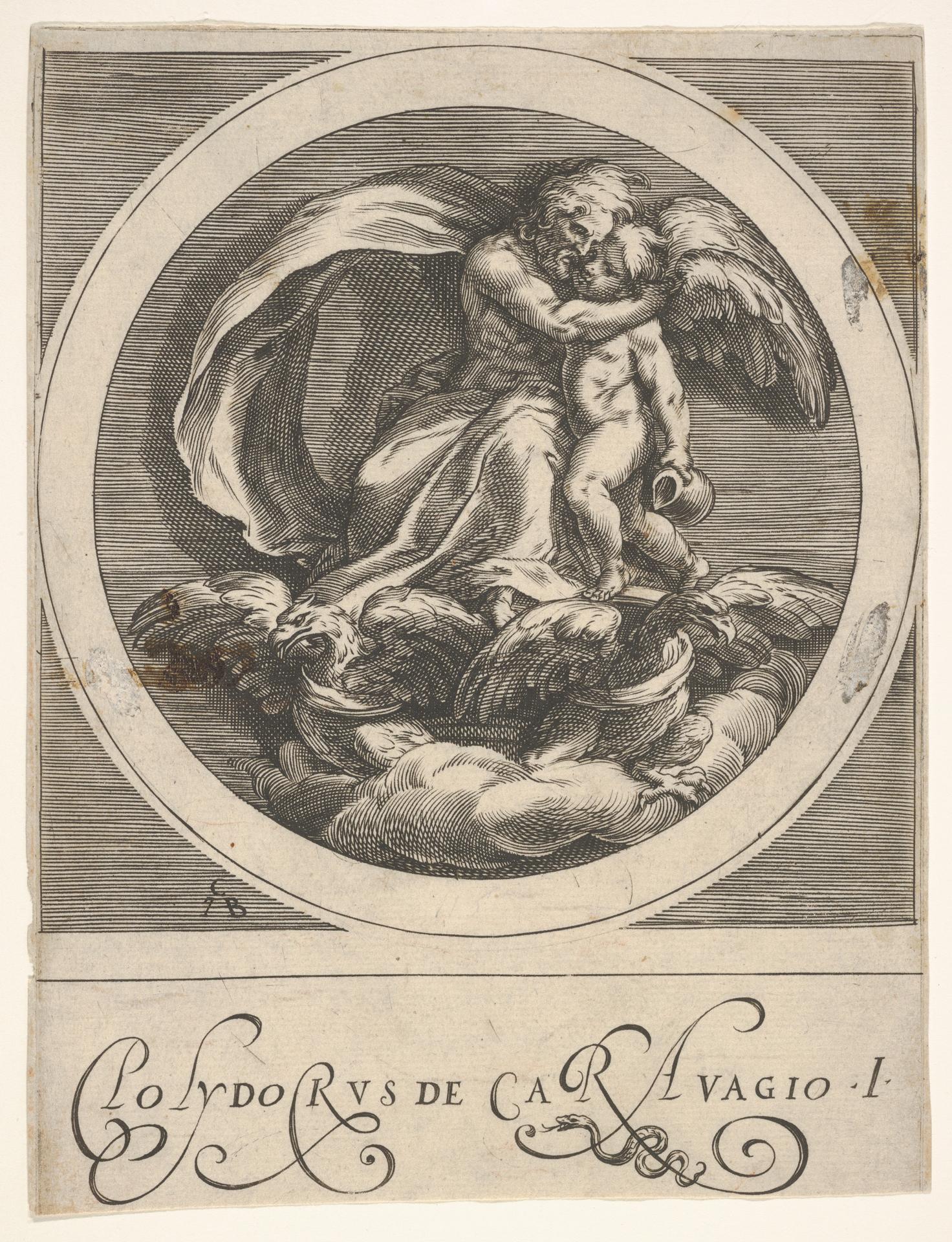
Jupiter, seated above two eagles and embracing Cupid
Original title: Jupiter, seated above two eagles and embracing Cupid, a round composition from a series of mythological scenes after Polidoro da Caravaggio
kurzbeschreibung
Cherubino Alberti (Zaccaria Mattia) made this engraving around 1590. It shows Jupiter enthroned above two eagles and embracing Amor, the god of love. The sheet belongs to a series of mythological scenes after designs by Polidoro da Caravaggio and is executed in copperplate engraving.
Description
Jupiter appears in a heroic pose within a round field, his drapery flanked by the eagles. Amor, holding bow and arrow, nestles against him. Beneath the seat the two eagles spread their wings, which lend the image a sense of movement. A plain ground keeps attention on the main figures. The symmetrical arrangement stresses the stature of those depicted, and the precise linework gives the sheet its classical character.
Context
Alberti produced this copperplate around 1590 as a contribution to a series of mythological motifs based on designs by the Renaissance artist Polidoro da Caravaggio. Polidoro was known for his facade decorations in Rome, and his pictorial ideas spread through prints. Alberti, himself an esteemed engraver and painter, helped circulate Polidoro's compositions through reproductions such as this one. The signature along the lower edge names Polidoro as the source.
Impact
The clear, symmetrical layout and exact linework give the figures a monumental presence. The close embrace between Jupiter and Amor joins lofty divinity with human affection. The monochrome print draws attention to the drawing quality and the drama of the scene.
Technique
For this engraving the lines were cut into a metal plate and then printed onto paper. Fine, parallel hatching models bodies and draperies and produces a sculptural effect. The black and white of the print is typical of the period's printmaking and emphasizes the precision of the linework.
AI-generated description text
Source: Metropolitan Museum of Art · Public Domain (CC0 1.0)