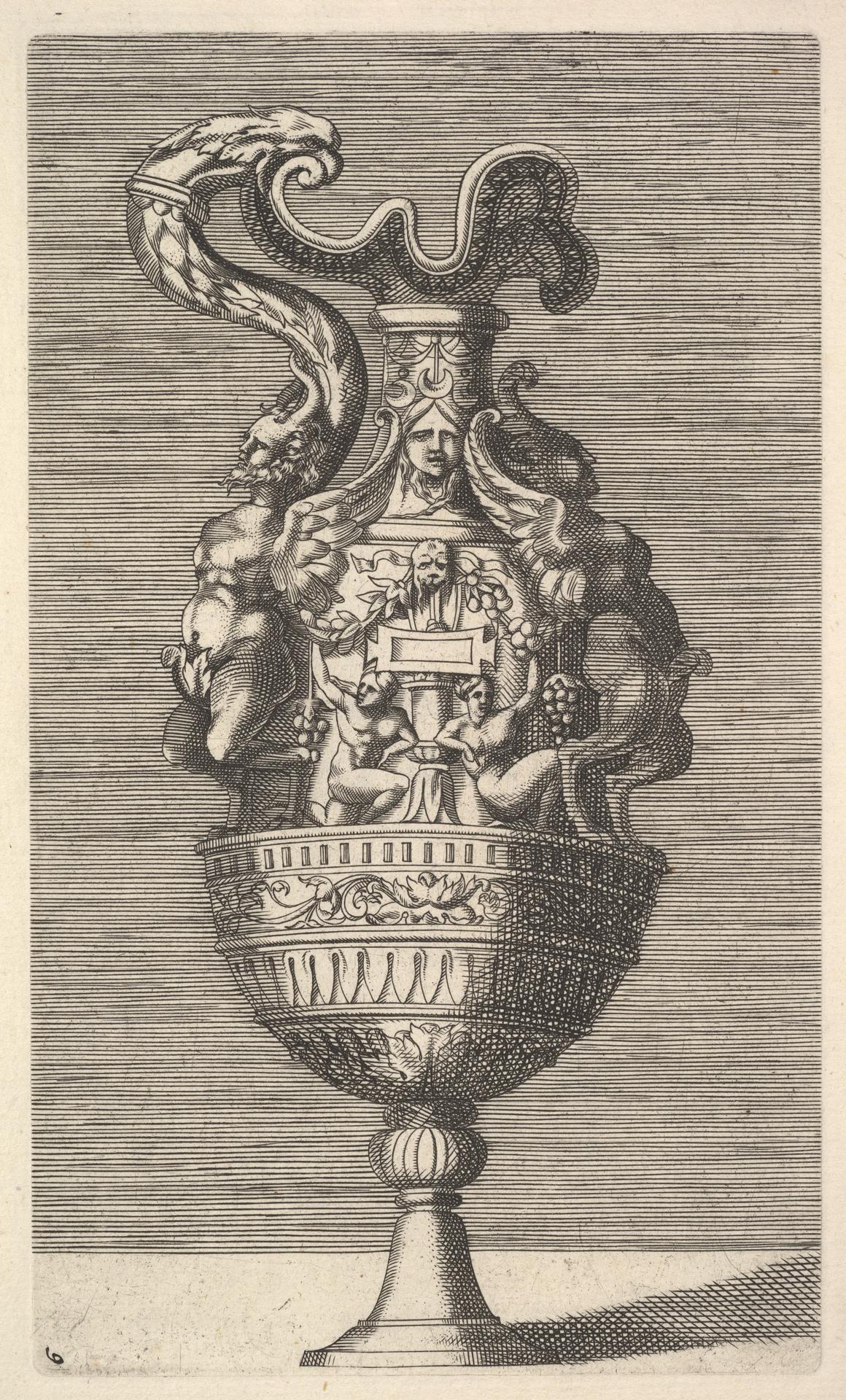
Vase with Two Winged Satyrs (17th century)
Original title: Vase with Two Winged Satyrs
kurzbeschreibung
This 17th-century engraving by René Boyvin presents an elaborately decorated antique vessel adorned with mythological figures. The upright sheet measures 27 x 18.8 cm (plate: 18.8 x 11.1 cm) and belongs to the ornamental printmaking of the Renaissance.
Description
A horned, bearded satyr dominates the middle of the vessel, gripping a long crescent-shaped object that twists upward and ends in a snake. Below him appear several smaller figures, likely also mythical beings such as putti or satyrs. Dense patterns and reliefs cover the vase itself, among them flowers and further ornaments. A plain ground of horizontal lines sets off the vessel's outline, while delicate strokes and hatching draw out the details of vase and figures.
Context
René Boyvin (c. 1525–1598) was a French copperplate engraver known for his ornamental prints after designs by artists such as Rosso Fiorentino. Although Boyvin worked in the 16th century, this sheet is dated to the 17th, so it may be a later copy or an impression taken from his design. Prints of vases like this often served goldsmiths and other craftsmen as models.
Impact
The symmetrical arrangement and the wealth of ornament give the sheet a calm elegance. Mythological figures lend the vessel a lively, almost narrative quality and carry the viewer into the ancient imagination. Precise draughtsmanship produces a noble, precious impression.
Technique
The lines were incised into a wax-coated copper plate and then etched — the process of etching. Fine hatching and exact linework allow great detail in ornaments and figures. The print was taken on paper; the plate measures 18.8 x 11.1 cm.
AI-generated description text
Source: Metropolitan Museum of Art · Public Domain (CC0 1.0)