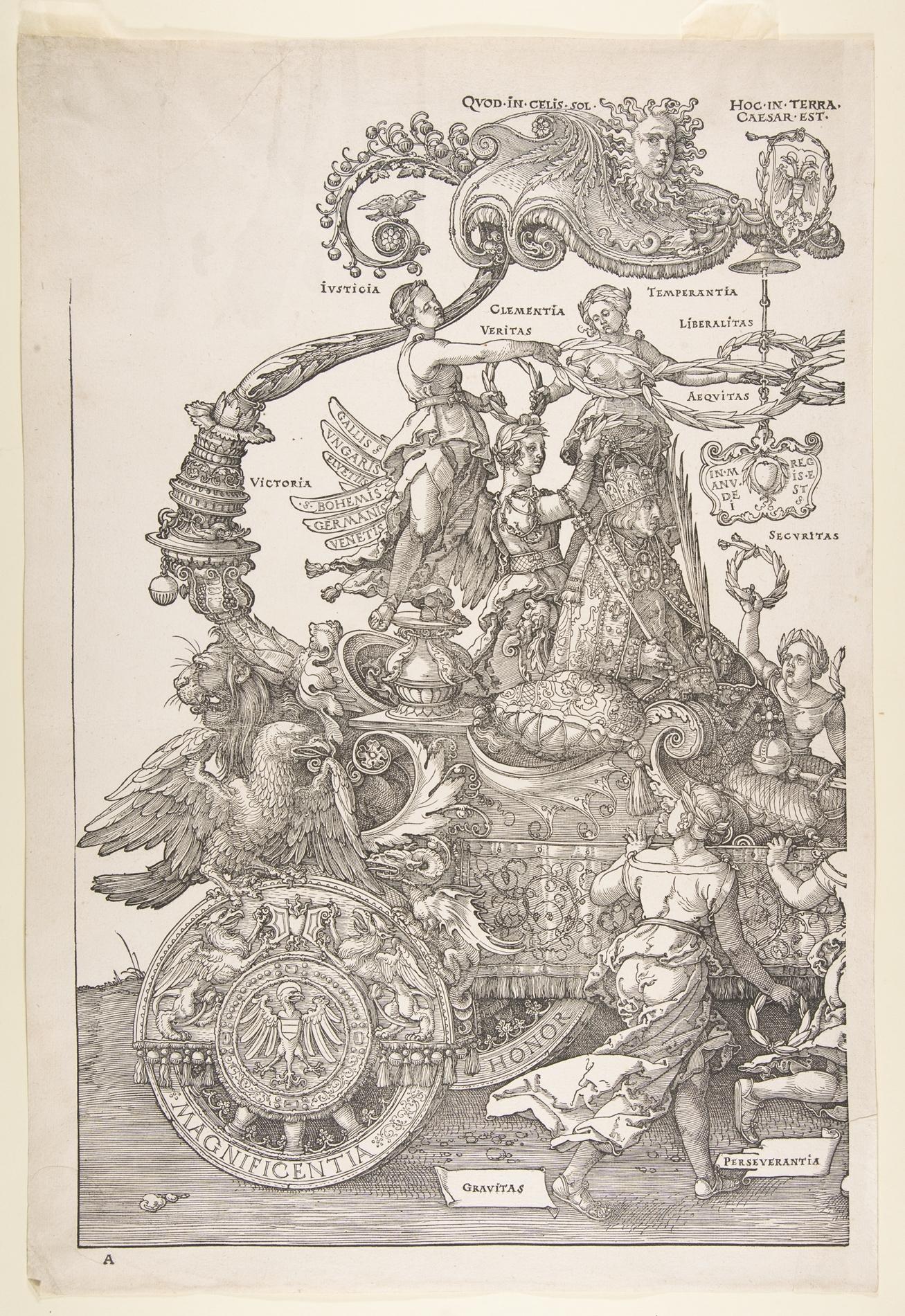
The Triumphal Chariot of Maximilian I (The Great Triumphal Car)
Original title: The Triumphal Chariot of Maximilian I (The Great Triumphal Car)
kurzbeschreibung
Albrecht Dürer's monumental woodcut, probably finished around 1518 and published in 1522, depicts the triumphal chariot of Holy Roman Emperor Maximilian I. The print is a masterpiece of Renaissance graphic art, showcasing intricate detail and allegorical richness.
Description
The composition centers on an ornate chariot carrying Maximilian I, surrounded by allegorical figures, including representations of Clemency, Truth, and Justice. The chariot is lavishly decorated with ornaments, coats of arms, and symbols, and is crowned by an eagle, a symbol of power and victory. The lower edge bears the inscriptions 'MAGNIFICENTIA' and 'PERSEVERANTIA', highlighting the values of magnificence and perseverance.
Context
Maximilian I commissioned this work as part of a larger series of imperial propaganda prints, intended to glorify his reign and legacy. Dürer was one of the leading artists of the Northern Renaissance, and his collaboration with the emperor reflects the close ties between art and political power in early 16th-century Europe. The woodcut was part of a larger triumphal procession project, which was never fully realized.
Impact
The print exudes a sense of grandeur and imperial authority through its monumental scale and intricate detail. The precise lines and dense ornamentation draw the viewer's eye across the composition, creating a feeling of awe and reverence for the emperor.
Technique
This is a woodcut, a relief printing technique where the image is carved into a wooden block, inked, and transferred to paper. Dürer's mastery of the medium is evident in the fine, controlled lines and the complex layering of figures and ornaments, which were achieved with exceptional skill.
AI-generated description text
Source: Metropolitan Museum of Art · Public domain (CC0)