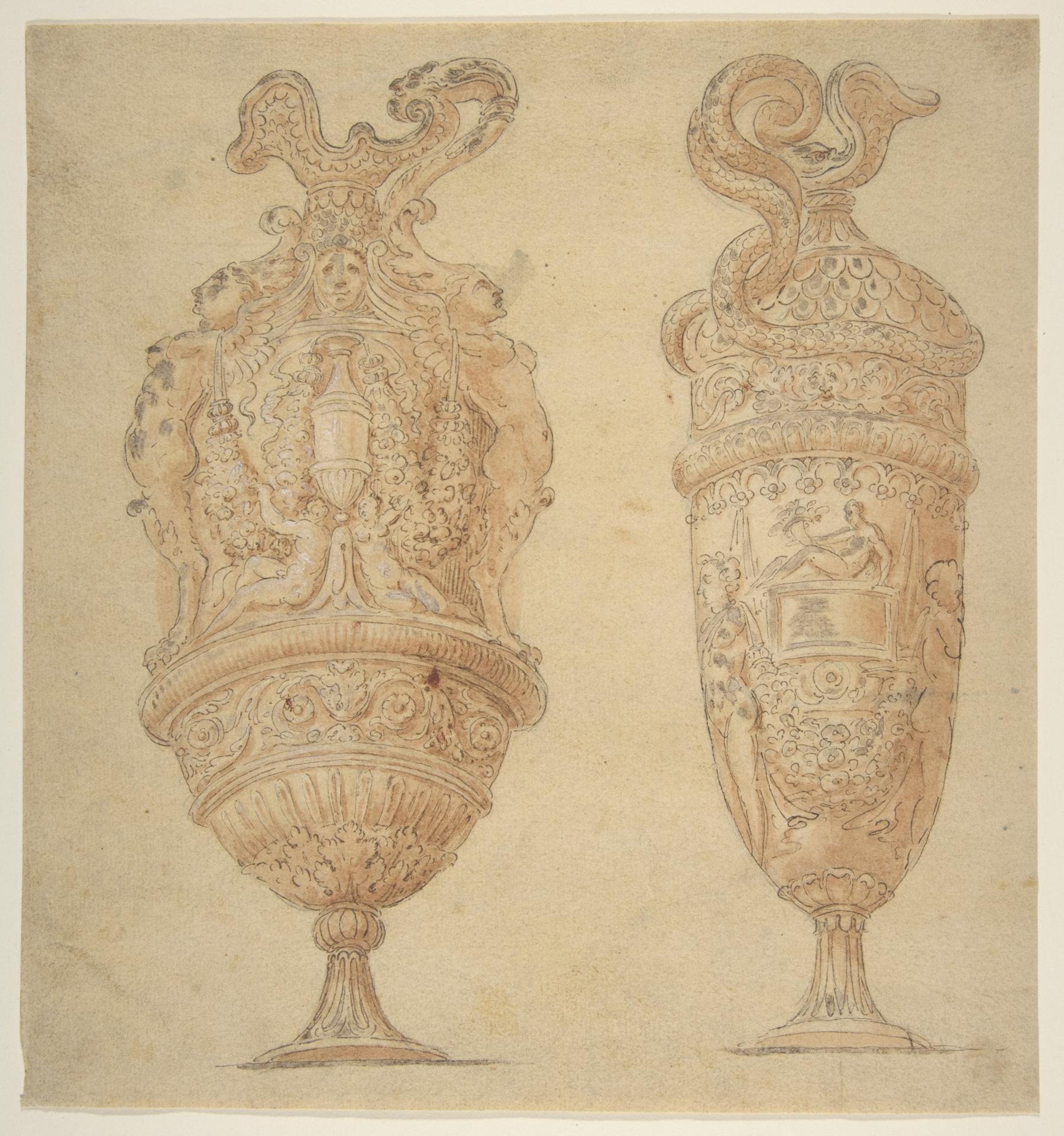
Two Urns Decorated with Human Figures, Animals and Garlands
Original title: Two Urns Decorated with Human Figures, Animals and Garlands
kurzbeschreibung
Pen in brown ink, brush with brown and gray wash, and white heightening over traces of graphite: with these means Polidoro da Caravaggio set two elaborately decorated urns down on paper. The sheet presents the vessels adorned with human figures, animals, and leafy scrollwork.
Description
The left urn comes out broader and richer: two figures twist around a central pillar, framed by flowers and tendrils, with an ornament of two heads set above. The right vessel looks slimmer — a figure stands on a pedestal holding flowers, and a snake motif appears at the rim of its mouth. Both rest on a base covered in a many-part pattern and foliage. Brown and gray tones govern the sheet, while white accents catch the light.
Context
Polidoro da Caravaggio, a Renaissance painter from Italy, became known above all for his facade decorations in Rome. This drawing probably came out of his workshop, where he drew on antique models for ornamental designs. Urns of this kind often served in the Renaissance as inspiration for decorative work.
Impact
The paired, symmetrical placing of the two urns and the abundance of ornament give the sheet a calm, elegant balance. Where brown and gray washes meet the white heightening, the drawing takes on bodily weight — almost like a sculpture.
Technique
For the outlines Polidoro used pen and brown ink; brush washes in brown and gray build the shadows. White gouache sets bright accents at chosen points, and graphite lines prepared the structure. The paper matches the usual drawing material of the period.
AI-generated description text
Source: Metropolitan Museum of Art · Public Domain (CC0 1.0)