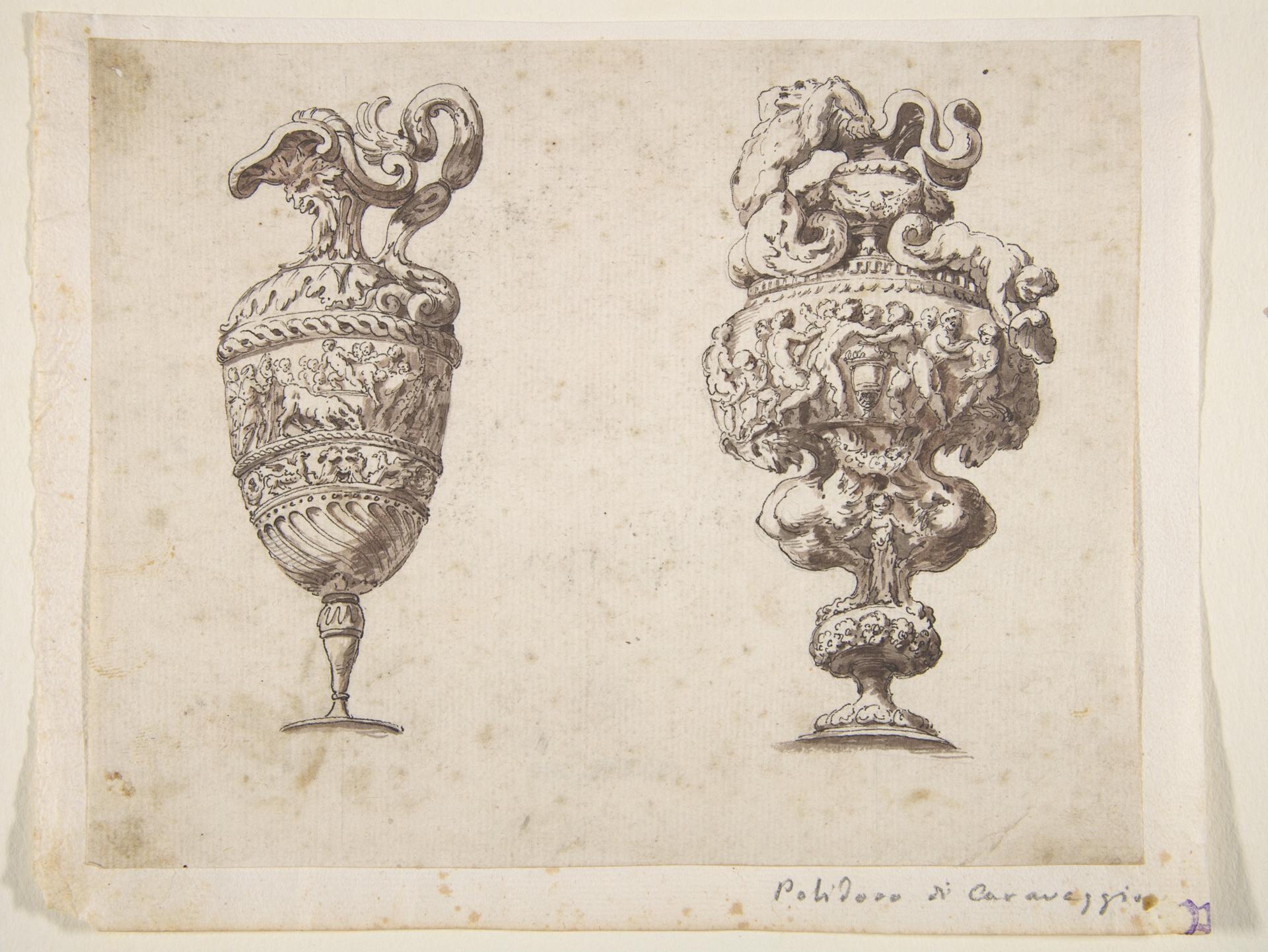
Two Designs for Ewers
Original title: Two Designs for Ewers
kurzbeschreibung
Polidoro da Caravaggio is associated with this sheet, which combines two designs for ornate jugs and is dated between 1600 and 1800. It is executed in black ink and grey-brown wash, with a preliminary drawing in pencil or graphite. The paper measures 15.2 x 19.2 cm and bears two vessel studies in Baroque forms with figurative decoration.
Description
On the left stands a jug with a long, curving spout adorned with an eagle; figures and ornaments spread across the body. Beside it follows a second vessel with an elaborate lid that incorporates figures and a coat of arms. This jug rests on a broad, flat base and appears slender and delicate in silhouette. At the lower right of the sheet is the inscription 'Polidoro di Caravaggio'.
Context
Behind the name is Polidoro Caldara (c. 1499–1543), an Italian Renaissance painter known chiefly for his facade paintings in Rome. The wide date range 1600–1800 suggests a later copy or a work from his circle. Designs of this kind could serve goldsmiths or bronze founders as models. The signature is an attribution, of the sort often placed on drawings in the art trade of the 17th and 18th centuries.
Impact
Two dissimilar vessel shapes stand side by side here, their appeal arising from the wealth of ornament. Clean draughtsmanship and the wash give the designs physical presence, making visible the sumptuous ambition of the objects. The layout feels balanced and reveals how confidently the designer handled decorative details.
Technique
Pen and black ink determined the execution, supplemented by brush and a grey-brown wash. Pencil or graphite served as an underdrawing, suggesting a considered design process. The combination of precise penwork and soft washing produces both clear outlines and atmospheric shading.
AI-generated description text
Source: Metropolitan Museum of Art · Public Domain (CC0 1.0)