Trophy with Two Vases and a Cuirass
Original title: Trophy with Two Vases and a Cuirass
kurzbeschreibung
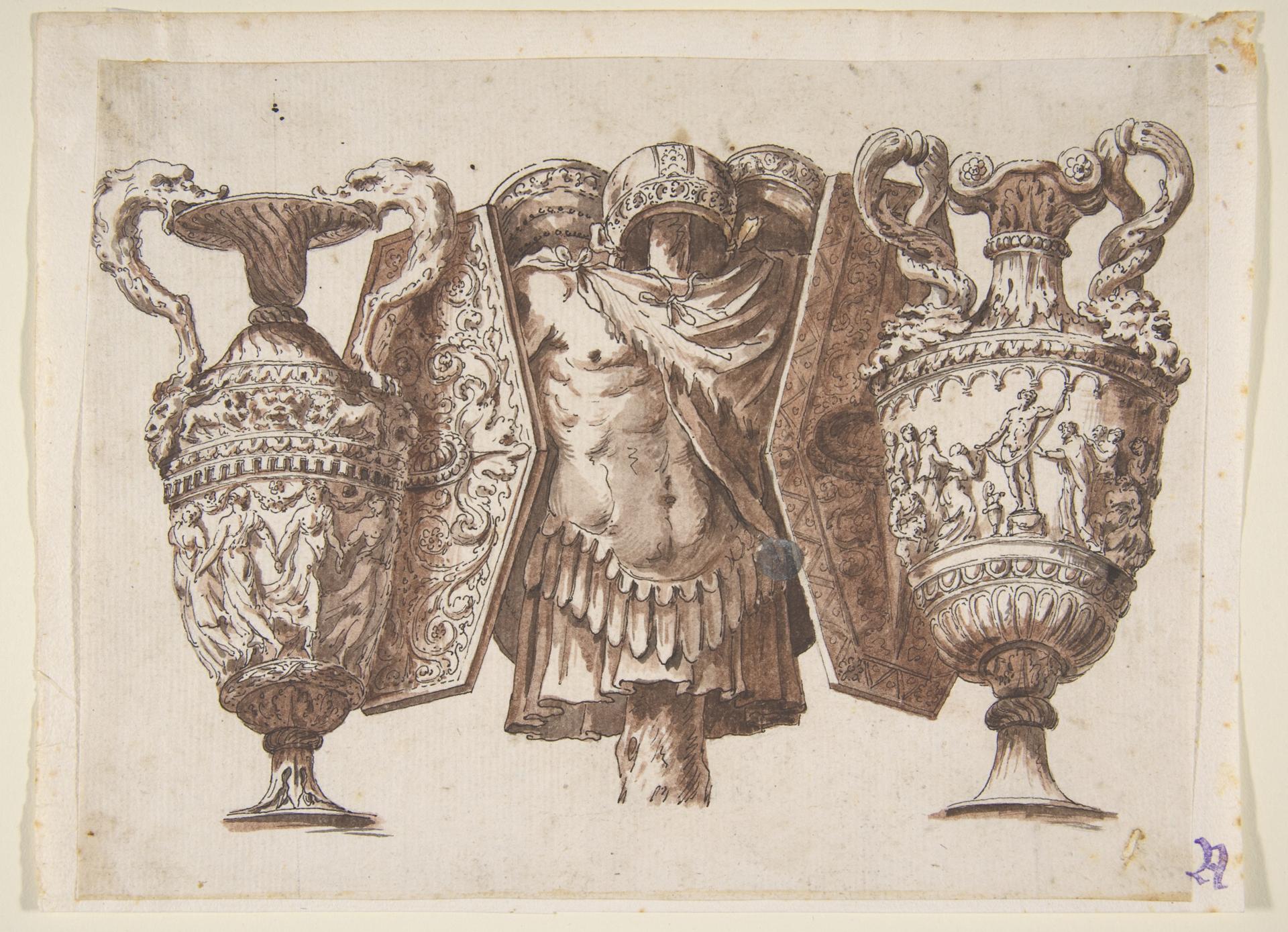
Drawn sometime between 1600 and 1800, this sheet by Polidoro da Caravaggio sets two richly ornamented antique vases in symmetry around a breastplate at the centre. Pen and black ink, brush and reddish-brown wash over graphite bring together ornamental detail and small figure scenes.
Description
A breastplate sits between two flanking vases. On the left vessel two figures embrace; on the right a group appears to dance or fight. Ornament covers the armour, whose surface suggests fabric or some similar material. Brown and grey tones dominate the sheet, lit evenly with no visible shadows, and the layout holds to a strict symmetry.
Context
Polidoro da Caravaggio (around 1499–1543), an Italian Renaissance painter, was known for grotesques and all'antica decoration. A motif like this was probably intended as a model for decorative work, since trophies often appeared on facades or in interior schemes of the period. The Met records the dating 1600–1800 as uncertain, allowing for a later copy or follower. Such trophies commonly stood for war and victory.
Impact
The symmetrical arrangement and calm, even light give the sheet a balanced, almost monumental air. Precise contours and the wash create a noble, antiquarian mood that recalls Roman triumphal art.
Technique
Pen and black ink were used together with brush and reddish-brown wash over an underdrawing in graphite. Contours stay precise, while soft tonal gradations lend added depth to the ornamental details and the figure scenes.
AI-generated description text
Source: Metropolitan Museum of Art · Public Domain (CC0 1.0)