Military Procession
Original title: Military Procession
kurzbeschreibung
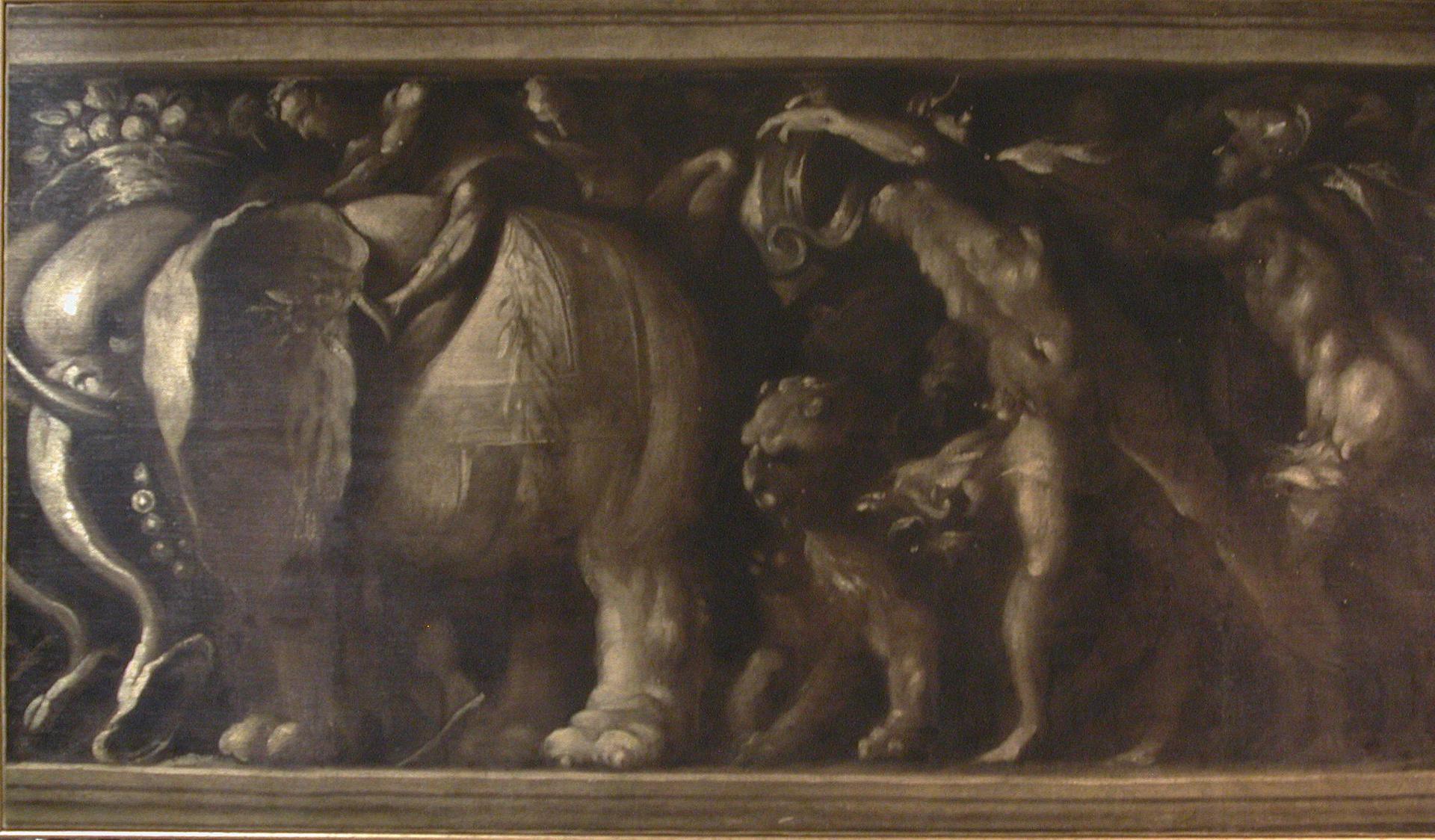
This oil painting, Militärische Prozession, comes from the hand of Polidoro da Caravaggio and was made in the second half of the 16th century. What sets it apart from related triumph scenes is the unusual weight given to two elephants, each led by riders in armour. The canvas measures 94.9 × 165.1 cm and is executed in oil.
Description
Two elephants dominate the foreground, each carrying a soldier in armour and helmet; beside them stand two more armed figures. The layout runs horizontally across the full width of the canvas. Light falling from the left picks out the contours of both people and animals. The palette stays muted, built on dark, earthy tones.
Context
Behind the name Polidoro da Caravaggio stands the Italian Renaissance painter Polidoro Caldara, known above all for his façade decorations in Rome. Since this work is dated to the second half of the 16th century, after his death in 1543, it was probably made by the workshop or as a later copy. The motif of a military procession with elephants likely refers to ancient Roman triumphs, a subject taken up often in the Renaissance.
Impact
The restrained colour and the raking side light create a grave, dignified mood. The careful rendering of animals and soldiers feels realistic and draws the viewer into the historical event.
Technique
Painted in oil on canvas, a technique common in the Renaissance, the work's fine brushwork allows detailed treatment of armour and animal hides. Glazes produce the muted tonality.
AI-generated description text
Source: Metropolitan Museum of Art · Public Domain (CC0 1.0)