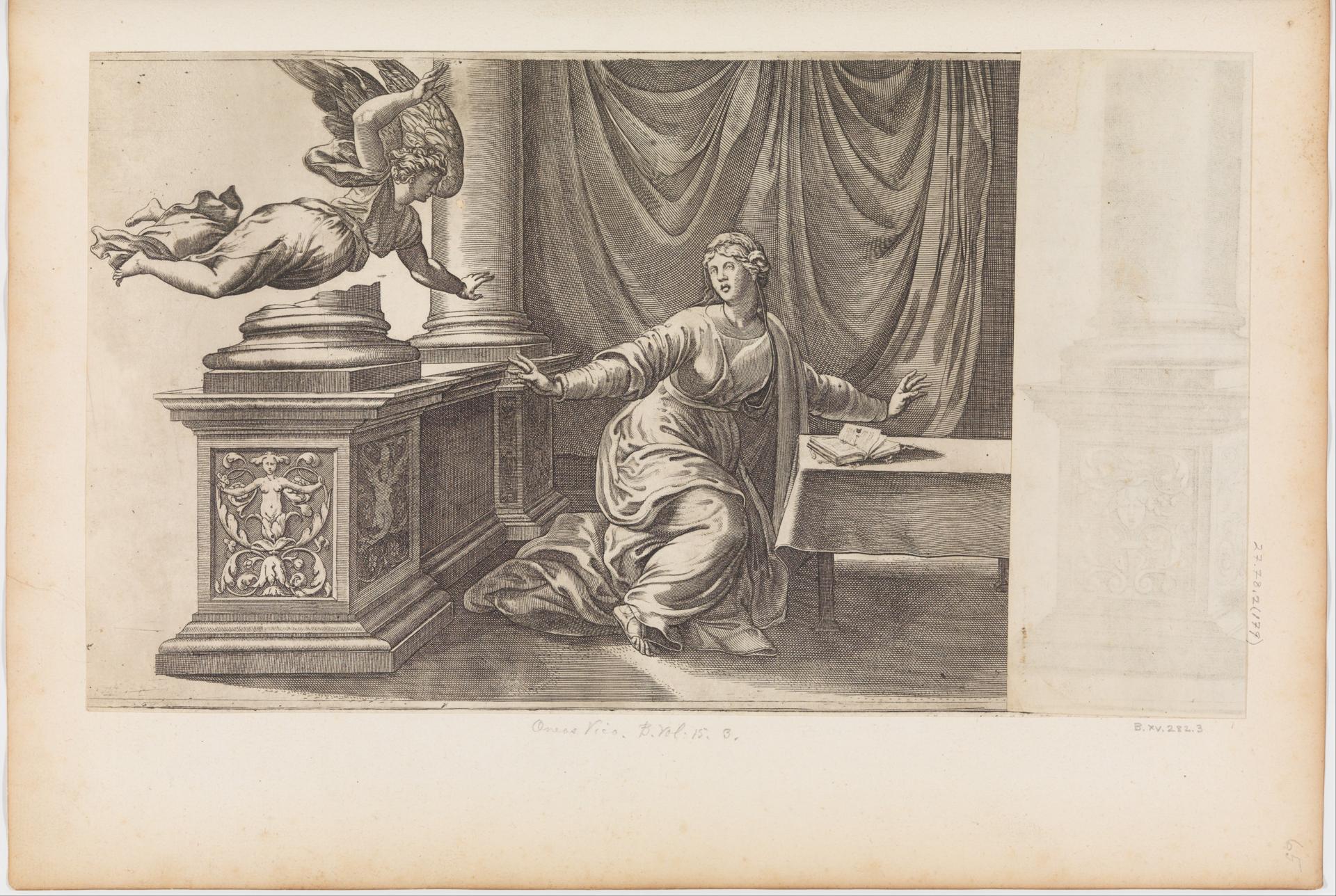
The Annunciation with Flying Angel
Original title: The Annunciation with Flying Angel
kurzbeschreibung
Enea Vico's 1548 engraving presents the Annunciation to Mary: she kneels in the foreground while the angel Gabriel sweeps in from above in a dynamic flight. The print exemplifies Renaissance graphics with its nuanced line work and strong contrasts of light and dark.
Description
A kneeling woman in a long, traditional gown receives an angel who has descended from heaven. Gabriel appears in a lively flight pose, wearing classical-style drapery and extending one hand as if delivering a message. The woman responds with an expression of surprise and awe. Columns and curtains frame the event in the background, lending it a solemn, sacred atmosphere. Before the woman, on a table, lies a book or scroll; the layout is clear and symmetrical, with the angel on the left and the woman on the right.
Context
Enea Vico, an Italian engraver of the Renaissance, was known for his precise and richly detailed prints. This engraving was made in 1548, during a flourishing period of printmaking in Italy when biblical subjects were widespread. Vico worked in various Italian cities and drew influence from Michelangelo and other masters, as seen in the animated figure depiction.
Impact
The clear, symmetrical arrangement and the vivid rendering of the Annunciation scene define the print. The angel's dynamic flight pose gives it a lively, almost theatrical note, while the monochrome palette directs attention to the line work and the contrasts of light and shadow. Overall, the image conveys a solemn, awe-inspiring mood characteristic of Renaissance religious art.
Technique
Engraving is an intaglio process in which the drawing is cut into a metal plate. Vico used fine lines and hatching to bring out details and shading, creating a clear contrast between light and shadow. The monochrome printing technique allowed for accurate reproduction of the complex composition as well as the delicate drapery and architectural motifs.
AI-generated description text
Source: Metropolitan Museum of Art · Public Domain (CC0 1.0)