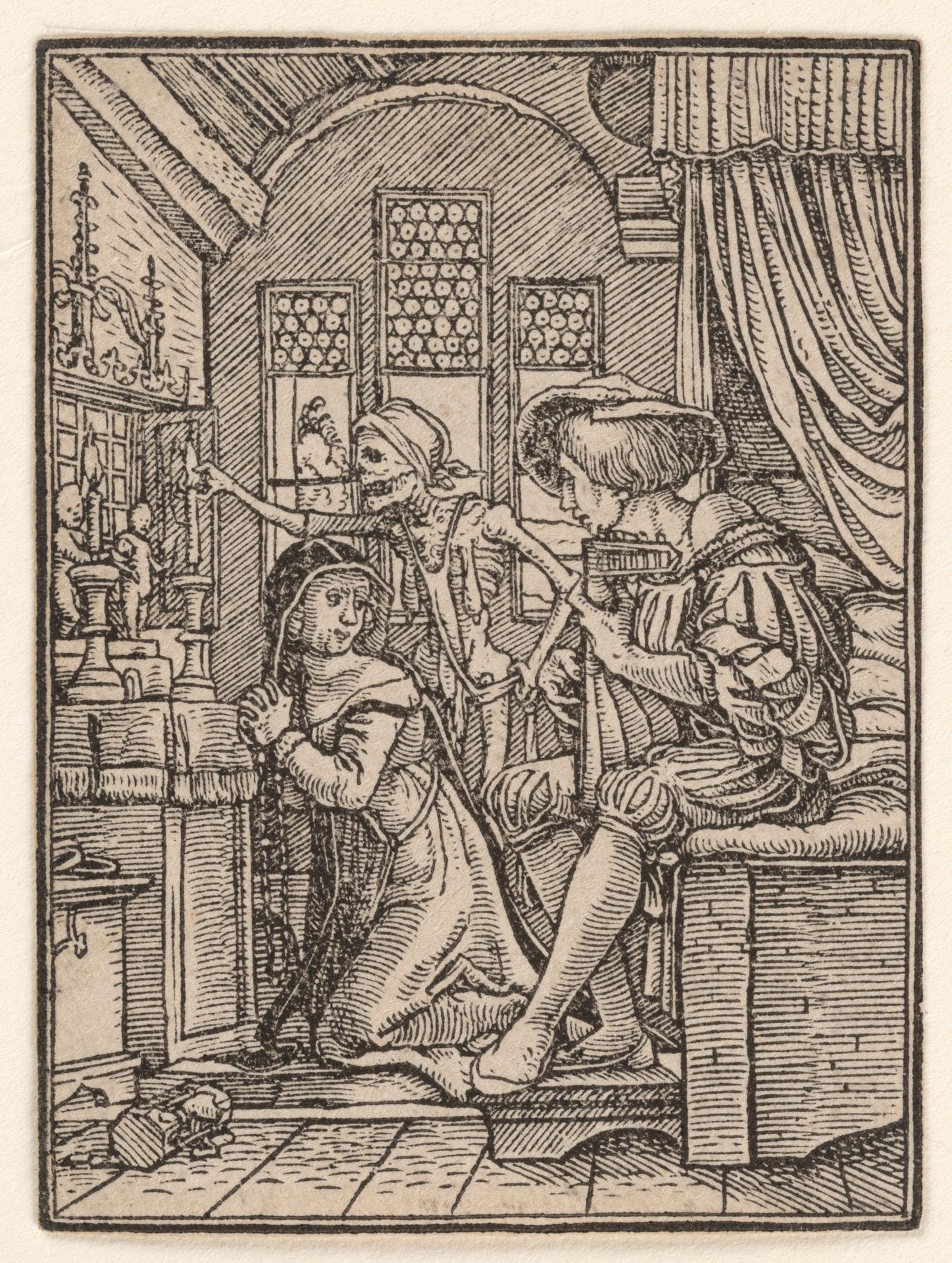
The Nun, from "The Dance of Death"
Original title: The Nun, from "The Dance of Death"
kurzbeschreibung
Created around 1526 and first published in 1538, this woodcut titled 'The Nun' comes from Hans Holbein the Younger's Dance of Death cycle. It shows a praying sister surprised by a skeletal figure.
Description
A woman in a religious habit kneels in the middle of a bed, her expression betraying unease. A skeleton wearing a crown made of skulls steps close, holds a candle, and touches the nun. To one side sits another person, also disturbed, holding a book. A window with diamond-paned glass, a curtain, and on the left a fireplace with a candlestick indicate the room. Fine, densely set lines, monochrome, shape the figures and space through incoming light and the shadows it casts.
Context
The Dance of Death series was made in the 1520s, when Europe was shaken by religious conflict. The prints first appeared in Lyon in 1538 and quickly spread widely. With the figure of the nun, Holbein takes up the common complaint of the time about the worldly ways of the clergy, often voiced during the Reformation.
Impact
The layout of the print spreads a grave, heavy mood, heightened by the delicate linework and the calm arrangement of the figures. That death enters the nun's private chamber without warning feels immediate and insistent.
Technique
For printing, the drawing was transferred to a woodblock and pulled with ink onto paper. The thin lines and hatching reveal Holbein's sure command of this process, which can reproduce even the smallest details.
AI-generated description text
Source: Metropolitan Museum of Art · Public Domain (CC0 1.0)