Crucifixion
Original title: Crucifixion
kurzbeschreibung
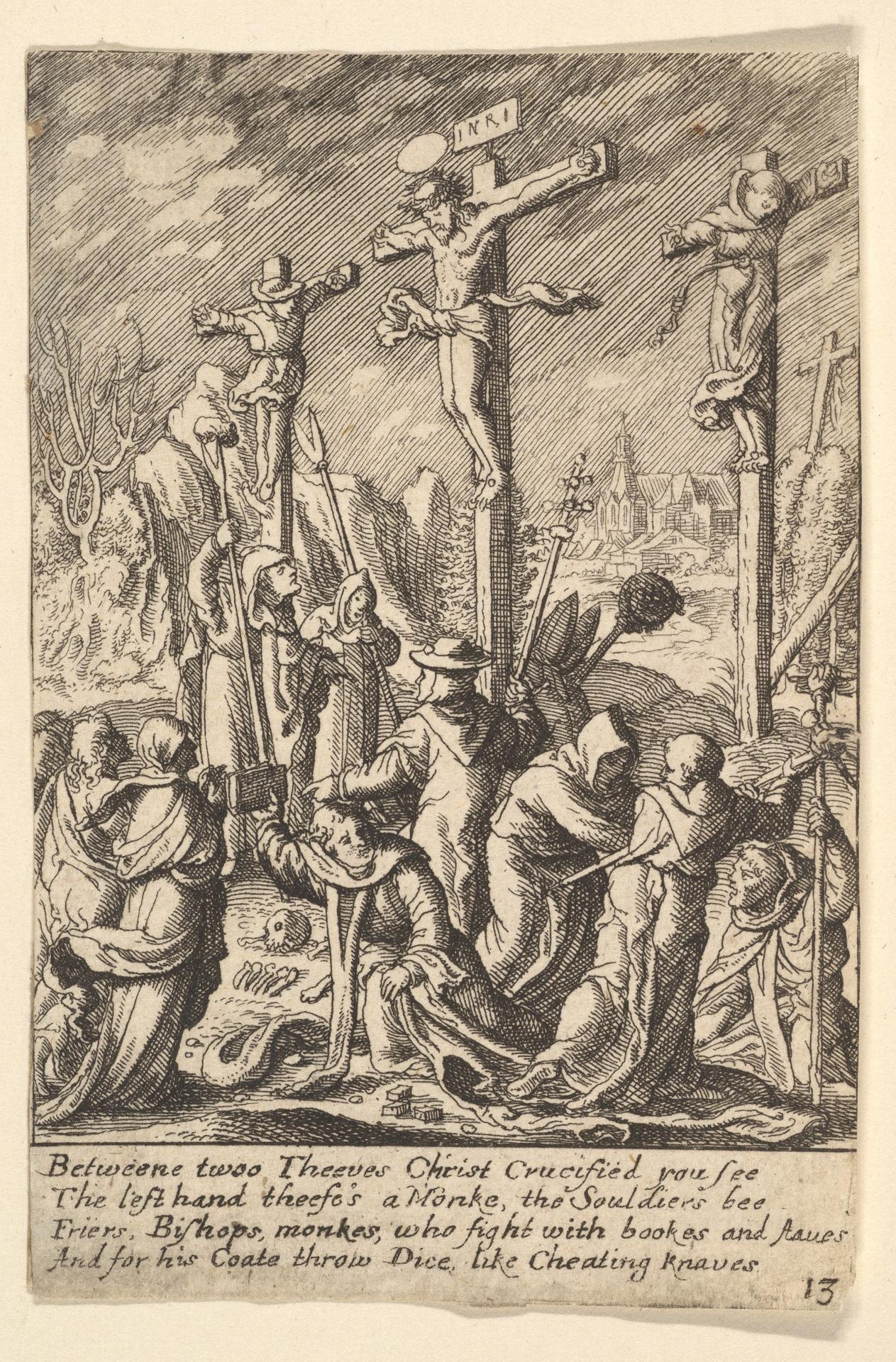
Wenceslaus Hollar's Crucifixion was made between 1644 and 1652 as an etching, of which only a single state is known. It shows Christ on the cross between the two thieves, set within a lively scene of onlookers and soldiers.
Description
Christ hangs at the centre, the INRI sign above him, with the other two crucified figures flanking him left and right. The figures wear Renaissance-style garments, and the layout feels restless: spectators gather on the left, soldiers crowd around the dying man on the right. Black on white, gradations and lines build spatial depth, while cleanly laid hatching and crisp contours give the sheet its structure.
Context
Hollar, a Bohemian printmaker active in the seventeenth century, made this sheet in England or during his exile on the Continent. It belongs to a busy period in which he worked for various collectors and publishers. The subject follows the conventions of Crucifixion iconography widespread since the Renaissance and shows Hollar's interest in religious themes alongside his better-known topographical and portrait work.
Impact
The nuanced linework and the figures set in motion give the print a dramatic yet familiar character. Thanks to the careful hatching, the scene gains a quiet, reflective depth that invites the viewer to linger.
Technique
Hollar worked here in etching: the lines were drawn into an etched ground. This technique shapes the sharp, precise strokes and the varied hatching used to model shadow and volume. At the small format of 9 × 6 cm, it becomes clear how Hollar could capture a layered event even on a tiny scale.
AI-generated description text
Source: Metropolitan Museum of Art · Public Domain (CC0 1.0)