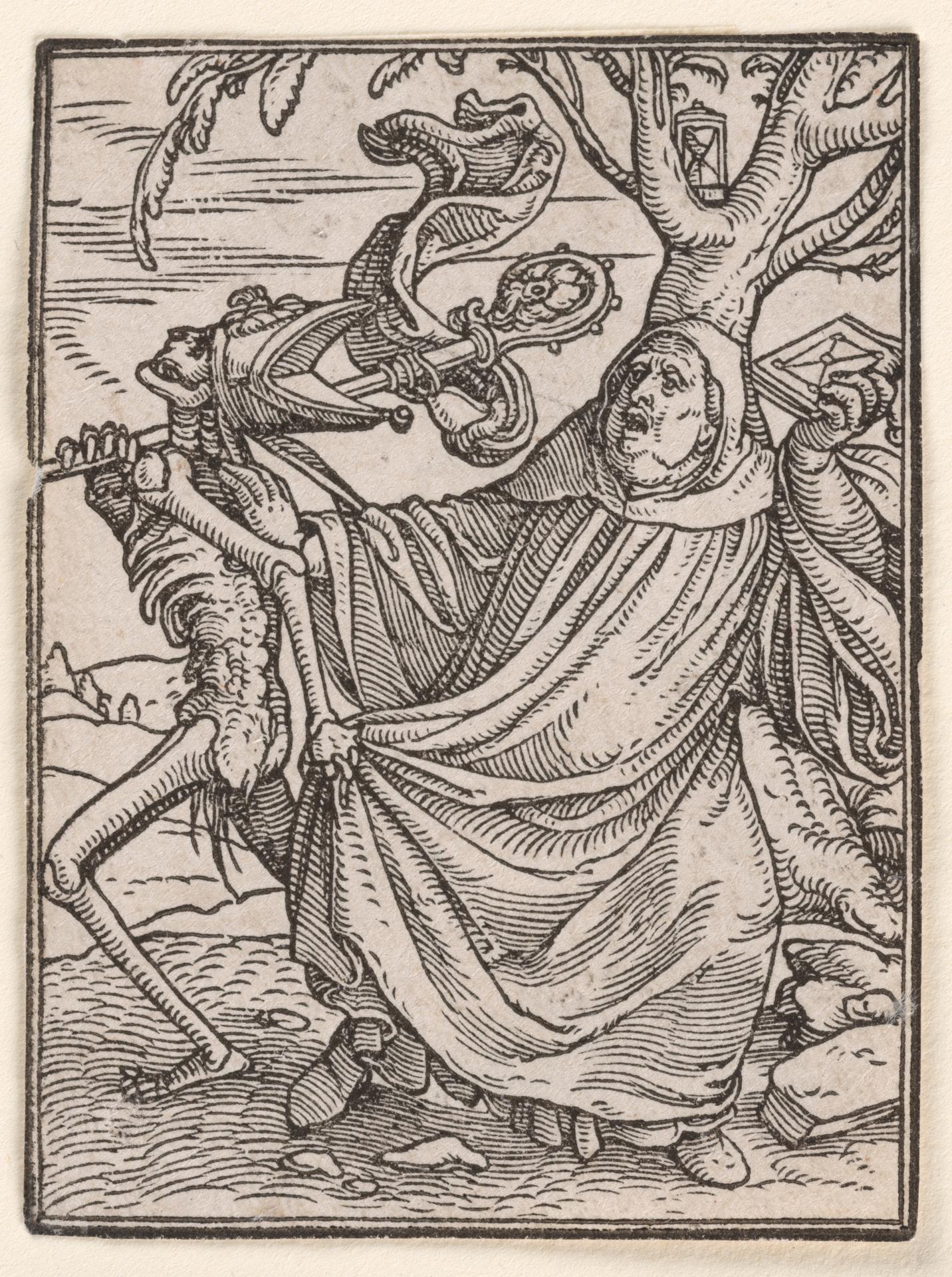
The Abbot, from "The Dance of Death"
Original title: The Abbot, from "The Dance of Death"
kurzbeschreibung
Designed around 1526 and published in 1538, this woodcut by Hans Holbein the Younger belongs to the well-known 'Dance of Death' series. It presents an abbot confronted by Death as a skeleton.
Description
A skeleton with a flute steps toward a seated abbot, who reacts with alarm. Both figures wear robes, the skeleton in something like a monk's habit. Trees and an hourglass in the background point to mortality. The layout is symmetrical, with the two figures at the center. The late Gothic style shows detailed lines and clear contours.
Context
The 'Dance of Death' series emerged during the religious upheavals and reformist movements in Europe. Holbein drew the designs around 1526, but they were printed and published only in 1538 in Lyon. With the figure of the abbot, the print criticizes worldly power and the failings of the clergy—a theme frequently taken up in the Reformation era.
Impact
The woodcut carries a forceful memento mori message: it reminds viewers of the inevitability of death. The skeleton seems calm yet threatening, creating an oppressive mood; the clear contours reinforce this impression.
Technique
The woodcut as a relief printing process uses a wooden block into which the design is cut and then printed on paper. The detailed rendering with its fine lines and even distribution of light is characteristic of this technique and allows for rich internal drawing.
AI-generated description text
Source: Metropolitan Museum of Art · Public Domain (CC0 1.0)