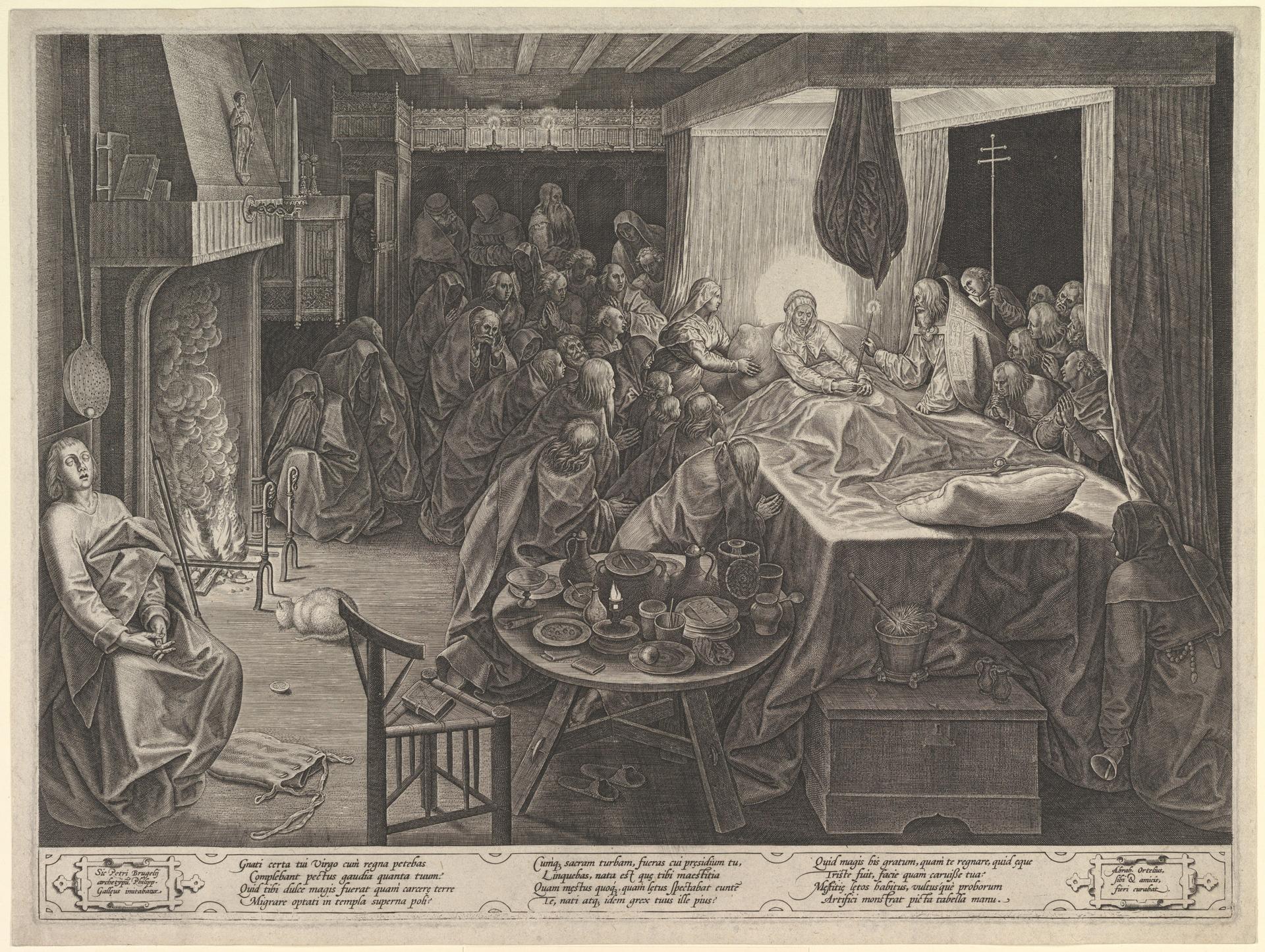
The Death of the Virgin (1574)
Original title: The Death of the Virgin
kurzbeschreibung
Philips Galle engraved Der Tod der Jungfrau Maria in 1574; this impression is the second state of two. Mary lies dying, surrounded by the apostles in a closed room. The densely populated sheet served as a narrative devotional image of the Renaissance.
Description
Mary lies on a bed at the center, encircled by mourning figures in conventional dress. The layout feels symmetrical, with a table holding various objects, an open door emitting smoke, and a figure hanging on the wall. Diffuse light creates a subdued atmosphere. The execution is detailed, combining realistic traits with symbolic references.
Context
The death of Mary was a frequent subject in 16th-century Catholic art, linking her earthly end with her assumption into heaven. Philips Galle, a Flemish engraver, was known for reproductive prints after works by famous artists. This sheet was made in 1574 in Antwerp, a center of European printmaking. The second state suggests the plate was reworked for a further edition.
Impact
The symmetrical arrangement and diffuse light direct the gaze to Mary as the central figure. Because realistic detail and symbolic elements come together, the scene gains a solemn, devotional mood. Viewers feel drawn into the mourning community and prompted to reflect on death.
Technique
The image was made as an engraving: lines are cut into a metal plate with a burin, then printed with ink on paper. The second state shows that the plate was reworked after the first printing—a sign of correction or refinement of the lines.
AI-generated description text
Source: Metropolitan Museum of Art · Public Domain (CC0 1.0)