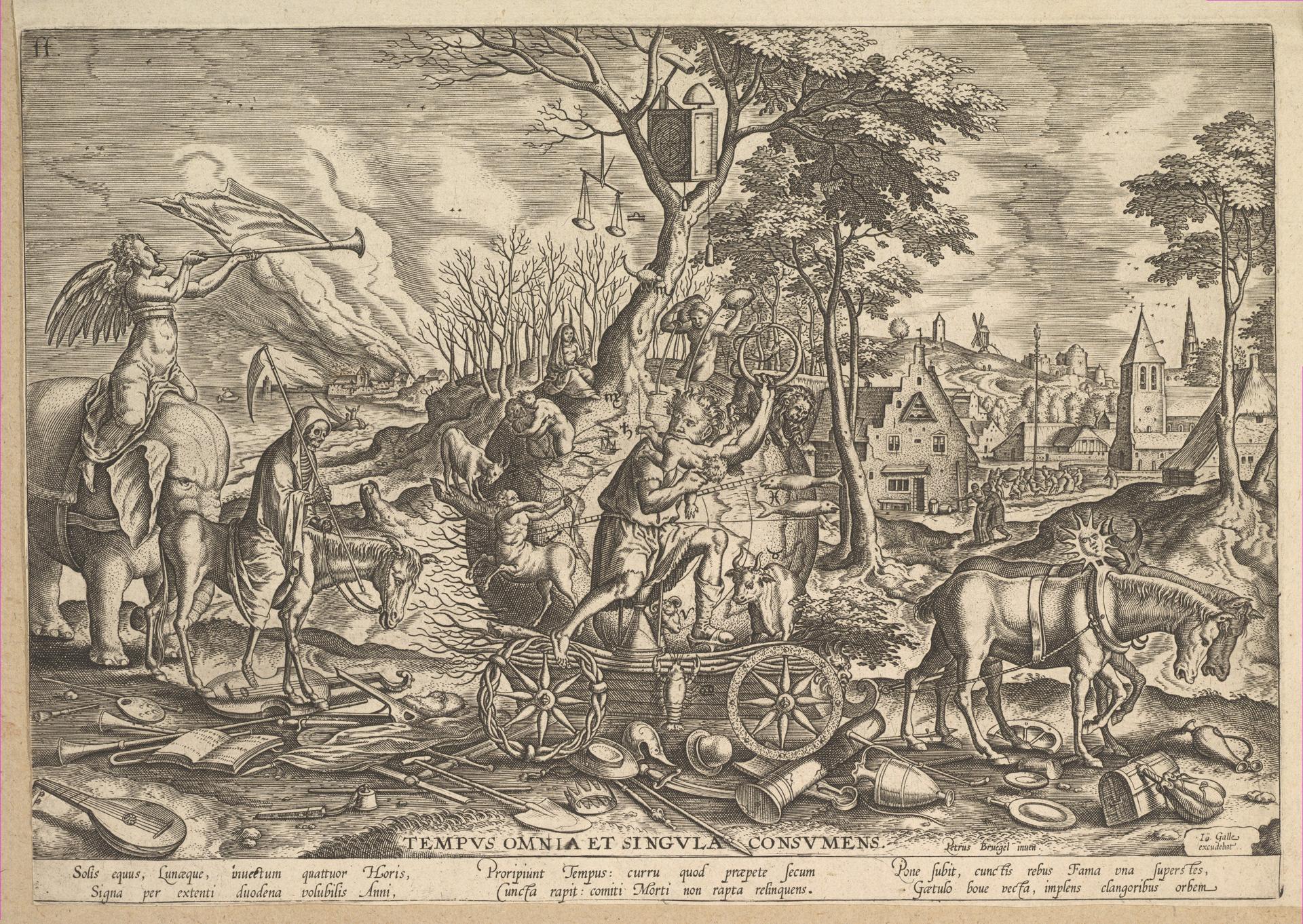
The Triumph of Time (1574, Met-Objekt 1933)
Original title: The Triumph of Time
kurzbeschreibung
This copper engraving by Philips Galle dates from 1574 and survives in its first of four states. An allegory unfolds: a winged angel personifying Time sits on an elephant, with a figure of Death at its side. Behind them, a cityscape with windmills and scenes of everyday life spreads out.
Description
A winged angel with a trumpet rides an elephant and proclaims the time; beside him stands a figure of Death with a skull and sabre. Behind this group, people animate a fountain, and beyond that rise buildings and windmills. The layout feels balanced and densely packed, worked with delicate lines and evenly distributed light. Clearly outlined figures arrange themselves in a precise manner indebted to the Renaissance.
Context
Made in 1574 in the Netherlands, the print entered an artistic landscape where allegories of time and transience were firmly established. This milieu was shaped by Antwerp printmaking, with its high technical standards and carefully conceived pictorial programmes. Galle often relied on designs by other artists; for this composition, he himself was responsible for the drawing.
Impact
The careful linework and the clear arrangement of figures give the sheet a calm, contemplative character. Because triumph and death are set against each other, the print takes on a serious, moralising tone and invites reflection on transience.
Technique
Lines are engraved into a copper plate and inked with printer's black so that they stand out in the impression. These even, fine strokes allow great precision and a monochrome rendering that does without light-dark contrasts. The present impression belongs to the first of the plate's four states.
AI-generated description text
Source: Metropolitan Museum of Art · Public Domain (CC0 1.0)