Patience (Patientia)
Original title: Patience (Patientia)
kurzbeschreibung
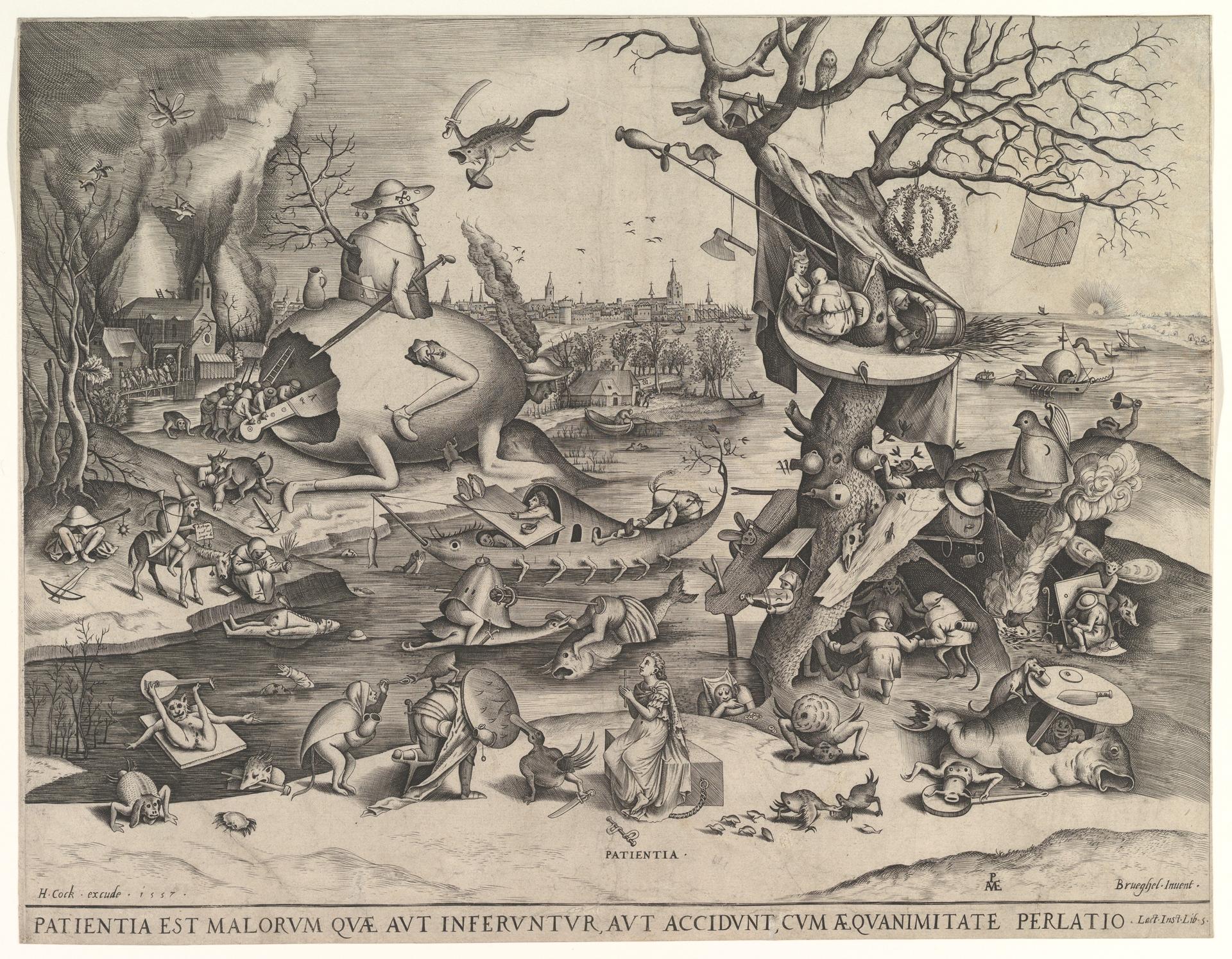
Pieter Bruegel the Elder made the etching Geduld (Patientia) in 1557, in which a central reclining figure embodies the virtue of patience, surrounded by many scenes of human suffering. This vertical print measures 33.9 × 43.7 cm and ranks among the outstanding examples of sixteenth-century printmaking.
Description
Your eye is first caught by a large, calmly reclining figure at the centre of the image, understood as an emblem of patience. Around it are scattered numerous figures in various poses and activities, presenting different forms of injustice and hardship. A richly articulated city view in the background suggests society at large. The layout feels crowded and multi-layered; delicate lines and graduated shading draw the figures out of the evenly distributed light.
Context
The etching was made in 1557, when the Netherlands were marked by religious and political tensions. Bruegel included it in a series of moralising allegories influenced by the Antwerp art scene and humanist thought. The print belongs to the tradition of virtue depictions common in sixteenth-century printmaking.
Impact
From the first glance, the print captivates through its narrative richness and the precise rendering of many individual scenes. The calm of the central figure stands out clearly against the restlessness of the surrounding details, giving the view a thoughtful, almost meditative mood. The careful linework invites you to linger and keeps revealing something new.
Technique
For this etching, the drawing was scratched into a copper plate and then etched with acid. The delicate lines and nuanced grey tones result from varying the strength of the etching and different printing methods. Bruegel used this technique to achieve high detail and a wide range of shading.
AI-generated description text
Source: Metropolitan Museum of Art · Public Domain (CC0 1.0)