The Peasant Wedding Dance
Original title: The Peasant Wedding Dance
kurzbeschreibung
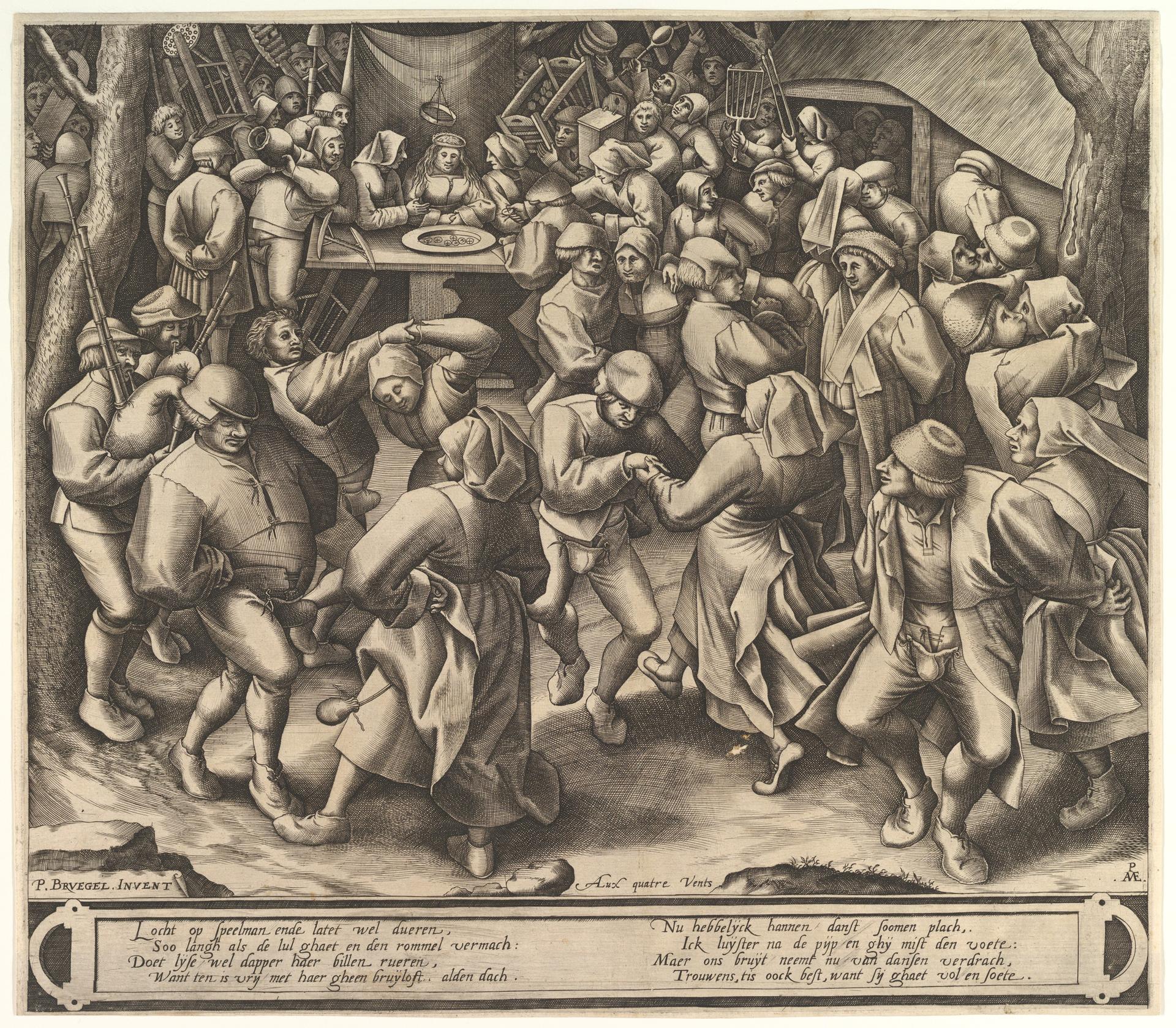
A couple spins in a dance, surrounded by other revellers: this engraving by Pieter van der Heyden, made after 1570, captures a peasant wedding dance. Figures in traditional dress fill the sheet. The present impression is the first of three states.
Description
Dancers and onlookers crowd the print, some with hands joined, others conversing at the edge. Hats and headscarves define the historical garments of those present. Behind the group, more spectators have gathered in a festive tent or hall. Movements run in various directions, lending tension to the layout. Even light spreads across the monochrome surface, and a line of text closes the sheet at the bottom.
Context
Van der Heyden, a sixteenth-century Flemish engraver, produced numerous reproductive prints after Pieter Bruegel the Elder. This sheet, too, derives from a Bruegel design dealing with rural festive life. Scenes of peasant merrymaking were highly popular in Netherlandish art of those years and often carried moralising or humorous intent. With the dating after 1570, the work belongs to van der Heyden's late period.
Impact
A boisterous mood emanates from the print, drawing the viewer quickly into the activity. Because each figure is drawn individually and the group is dynamically distributed, the event feels immediately close. The monochrome scheme brings the graphic structure to the fore and directs attention to patterns of movement and encounters between the dancers.
Technique
The work was made in engraving, an intaglio process in which lines are cut into the plate. The present example is the first of three states, which suggests later careful reworking of the plate. Even lines and fine hatching allow textures and shadows to be rendered precisely.
AI-generated description text
Source: Metropolitan Museum of Art · Public Domain (CC0 1.0)