The Fall of the Magician
Original title: The Fall of the Magician
kurzbeschreibung
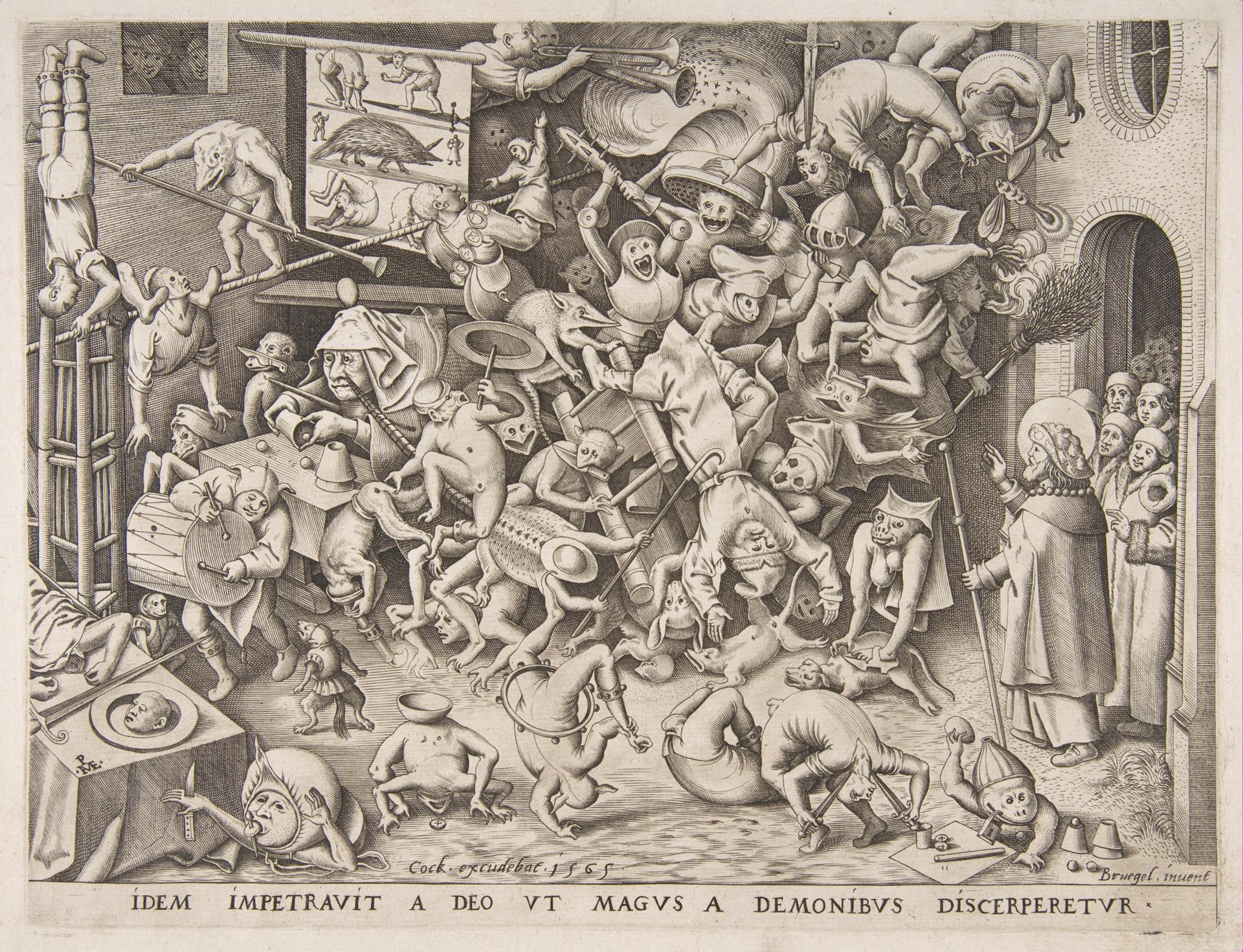
Pieter van der Heyden's engraving The Fall of the Magician, made in 1565, presents the sudden plunge of a sorcerer amid a swarm of demonic beings. A black-and-white print, it relies on delicate lines and graded shading to unfold an allegorical scene crowded with figures.
Description
Chaos and motion govern the layout: an old man, read as a magician, hurtles downward, surrounded by demons and evil spirits. Some figures float through the air or stumble, others take blows. Near the top edge a body hangs from a hook; on the right, people watch the commotion, and wild action also plays out in the distance—all held with precision by the engraving's dense lines and hatching.
Context
When Van der Heyden made this print in 1565, he was working as an engraver in Antwerp and often turned to designs by Pieter Bruegel the Elder. Magicians and demons were common motifs in the sixteenth century, matching the era's appetite for moral allegories and religious subjects. This sheet is the first of five states, suggesting careful handling and wide circulation.
Impact
The layered arrangement creates a disturbing yet gripping mood that pulls the viewer into the midst of the confusion. The very density of detail in the engraving heightens the force of the fall and gives weight to the print's allegorical message.
Technique
For this engraving the design was cut into a copper plate and then printed. Fine lines and precisely graduated shading yield a high level of detail characteristic of sixteenth-century printmaking.
AI-generated description text
Source: Metropolitan Museum of Art · Public Domain (CC0 1.0)