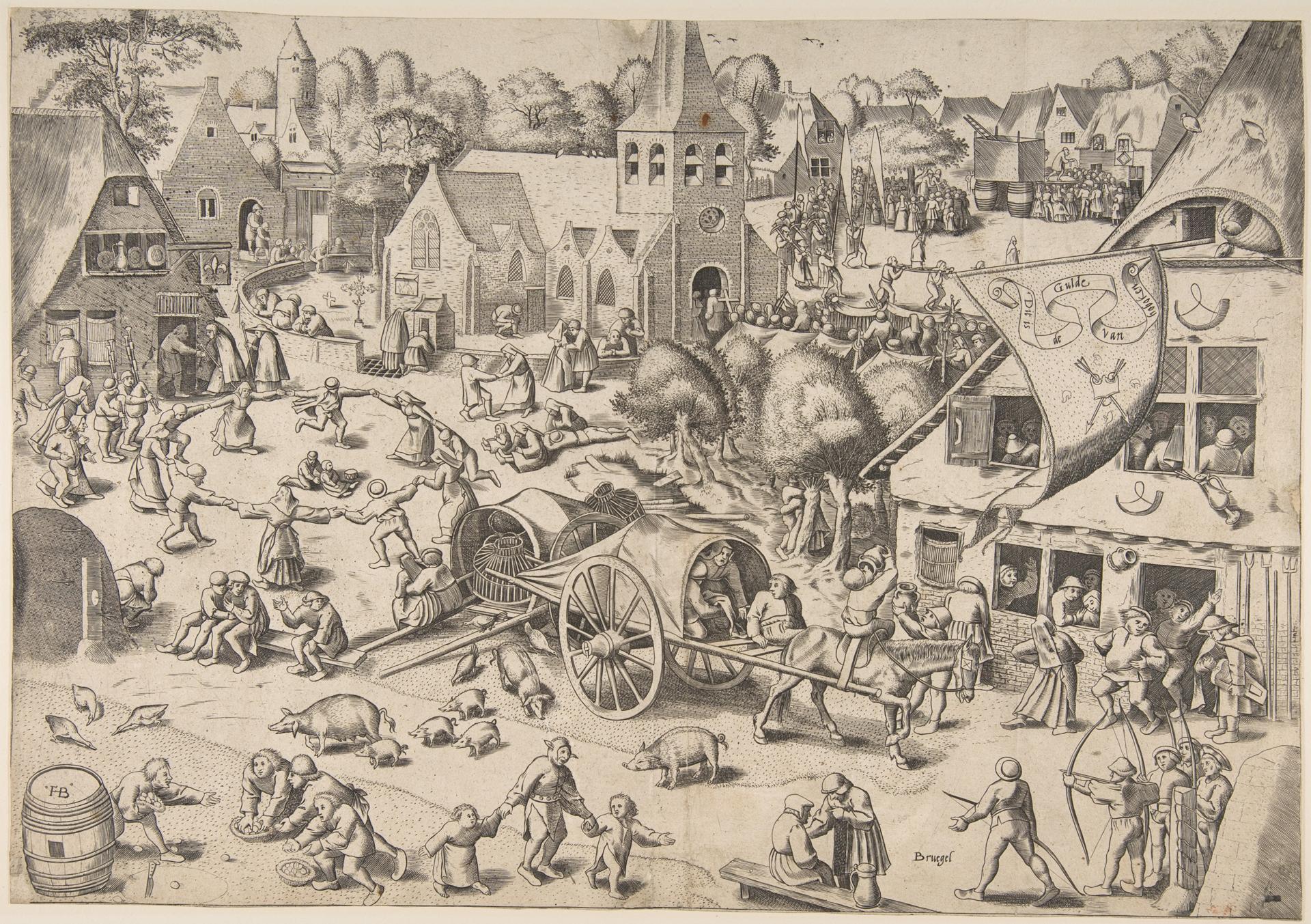
The Kermis at Hoboken
Original title: The Kermis at Hoboken
kurzbeschreibung
A boisterous village fair unfolds in this engraving by Pieter Bruegel the Elder from around 1559: market stalls, dancing couples and a multitude of figures animate a richly articulated landscape.
Description
The layout is broad and expansive. In the foreground people sell goods, spin in dance or chase after pigs. A church with a tower rises up, and behind it further buildings and a street busy with passers-by continue the scene. Activities are densely packed across the sheet, creating a lively atmosphere. Rendered in even gray tones, the view feels realistic and detailed.
Context
This print was made around 1559, during a period when Bruegel was deeply engaged with rural festivals and customs. It was published by Hieronymus Cock, an influential Antwerp publisher who made Bruegel's designs available to a wider audience. The subject of the fair was highly popular in the sixteenth-century Netherlands, offering both entertainment and an occasion for moral criticism of excess.
Impact
The sheer number of figures and the many simultaneous actions generate an almost overwhelming liveliness that draws the viewer straight into the bustle. Despite the moralizing undertones, the sheet appeals aesthetically through its detailed realism and clean linework, and it entertains.
Technique
The engraving is the second of four states. The technique allows for precise, fine lines and an even distribution of tones, which gives the complex scene clear structure. The sheet measures 28.4 x 40.8 cm and belongs to the series of prints reproducing Bruegel's designs.
AI-generated description text
Source: Metropolitan Museum of Art · Public Domain (CC0 1.0)