The Adoration of the Shepherds (ca. 1612–14)
Original title: The Adoration of the Shepherds
kurzbeschreibung
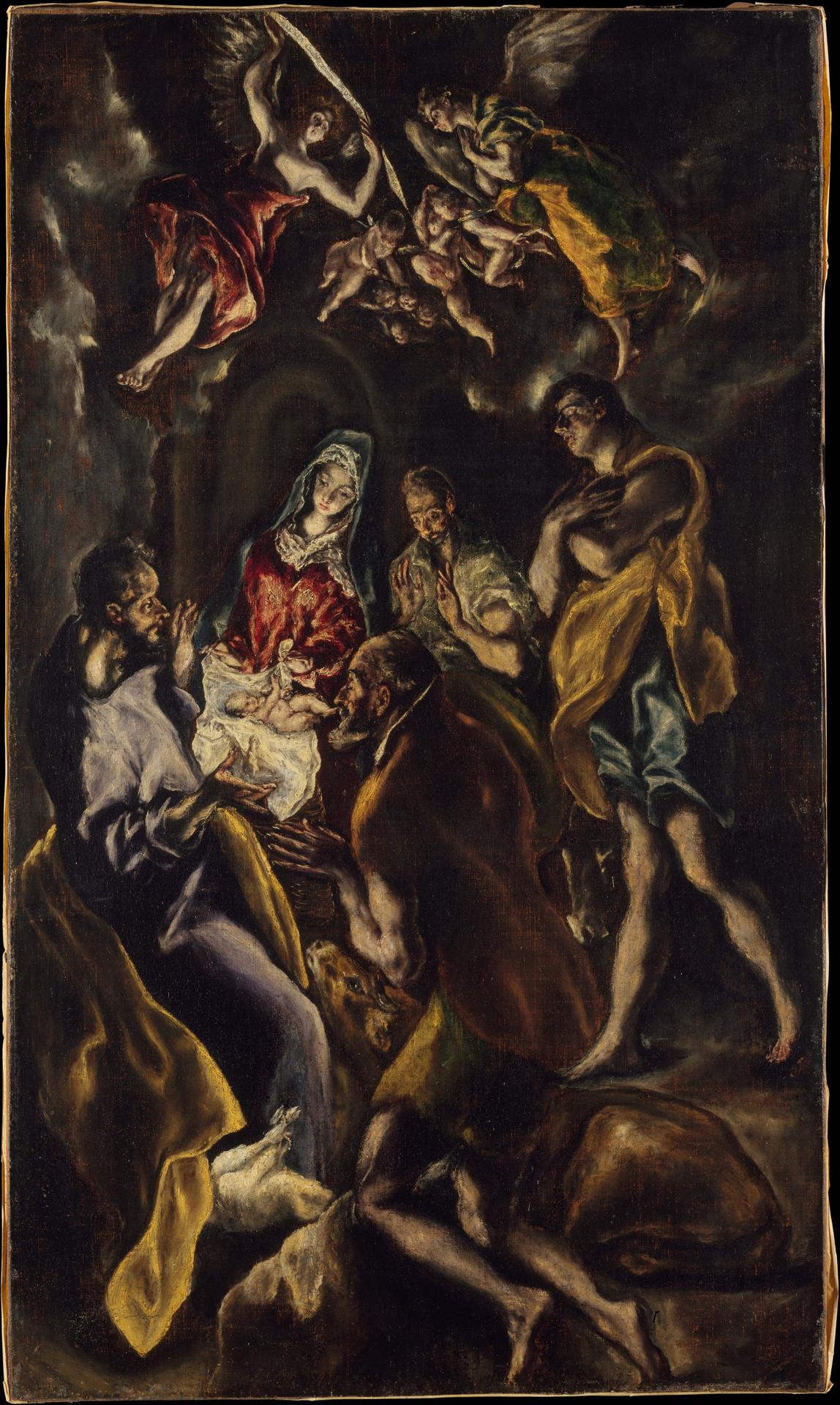
Unlike many contemporary Adorations of the Shepherds, this oil painting by El Greco and his workshop, made around 1612–14, relies on an almost detached, vertical staging. Mary, Joseph, shepherds and saints surround the Christ Child; the 110.5 x 65.1 cm canvas dates from the artist's final years.
Description
Mary with the Child on her lap forms the still centre, flanked by Joseph. On the left kneels a man identified as Saint Jerome, on the right one recognizable as Saint Ambrose; before them lies Saint Paul, also kneeling. Above, angels and other figures float heavenward. Dark tones dominate the palette, with red, gold and green passages shining out. A restless light separates the Holy Family and the angels from the darkness and drives the scene toward drama.
Context
El Greco (1541–1614) painted this work in his last years in Toledo, his home since 1577. It thus belongs to a late phase in which forms grow increasingly abstract and religious intensity deepens. The workshop contributed to the execution and continued the business after the master's death. The Adoration of the Shepherds was a favoured subject of the Counter-Reformation because it places the Incarnation at its heart.
Impact
Harsh light meets expressive figures, creating a dense spiritual tension. The dynamic layout and luminous accents draw the eye to the central event; devotion feels immediate. The tall format reinforces the upward pull that the heavenly apparition follows.
Technique
Oil on canvas, executed in a loose, impasto manner typical of the late period. Smooth layers of paint and carefully worked fabric and skin textures attest to the technical precision of artist and workshop. Contrasting tones model light and shadow to powerful effect.
AI-generated description text
Source: Metropolitan Museum of Art · Public Domain (CC0 1.0)