Boy with a Lute
Original title: Boy with a Lute
kurzbeschreibung
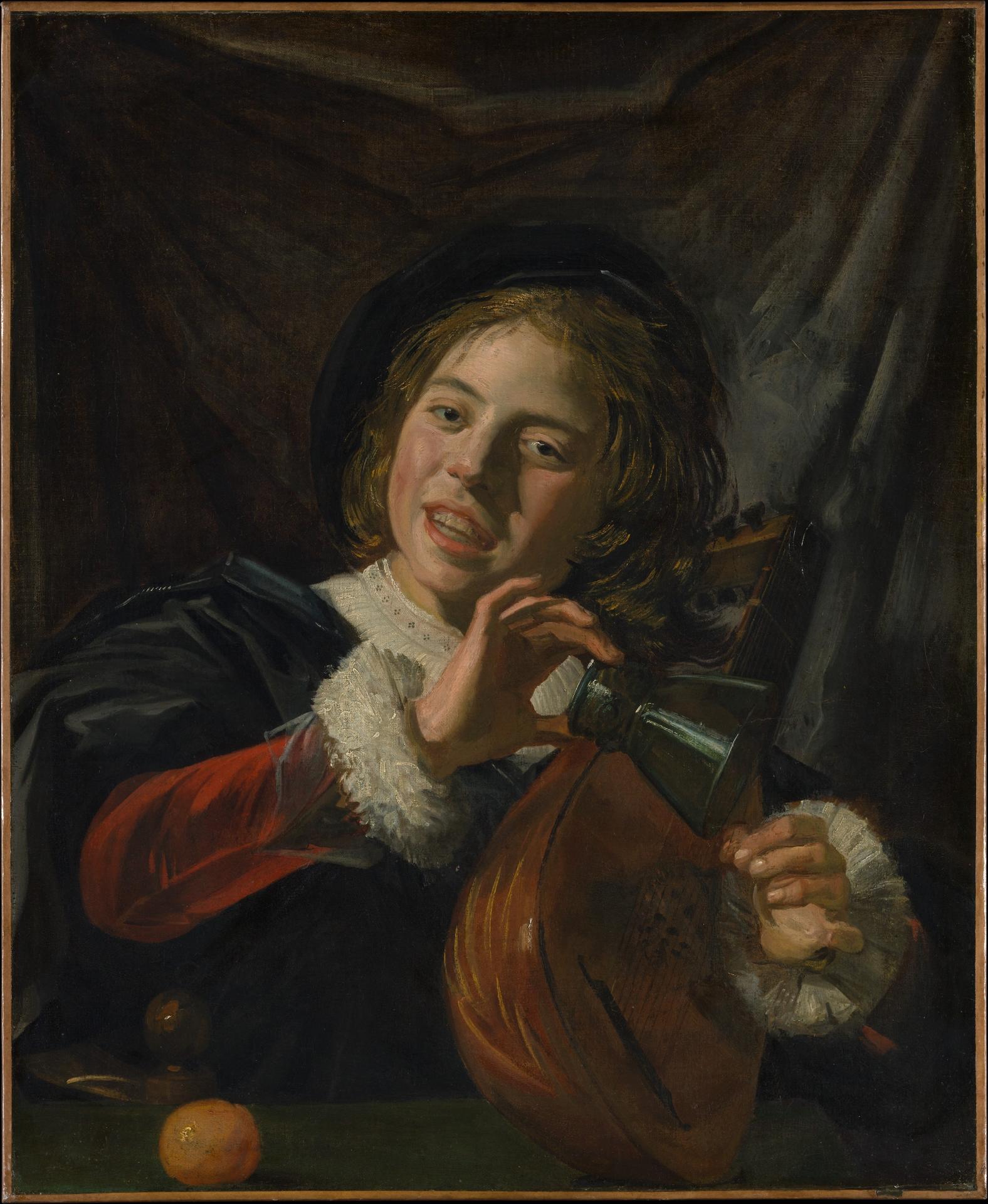
Around 1625 Frans Hals painted a young lute player. The oil on canvas measures 72.1 x 59.1 cm and presents the musician as a half-length figure against a dark ground.
Description
A dark doublet with a red sleeve and a white ruffled collar dress the boy; black curly hair spills out from under a black cap. Two oranges rest on the ground in front. The background stays dark and undefined, so that face and hands step forward through directed light. The palette is muted, the contrasts of light and dark are strong.
Context
The picture was made in the first half of the 17th century, when Dutch painting was at a peak. Musicians belonged to the usual repertoire of genre painting, which conveyed scenes of daily life or allegorical content. Hals was known for his loose brushwork and his gift for lively, unforced portraits. The painting may have served as a study or as a commission for a private collector.
Impact
Because the image puts the boy's face and hands at its center, it feels immediate and close. The opposition of light and shadow gives the scene something dramatic. Muted colors and the dark background create a quiet, thoughtful mood.
Technique
Oil on canvas. Hals worked with a loose, sketch-like brushstroke that stands out especially in the textures of clothing and face. The lighting with strong contrasts of light and dark corresponds to Dutch Baroque painting.
AI-generated description text
Source: Metropolitan Museum of Art · Public Domain (CC0 1.0)