Mary, Princess of Orange
Original title: Mary, Princess of Orange
kurzbeschreibung
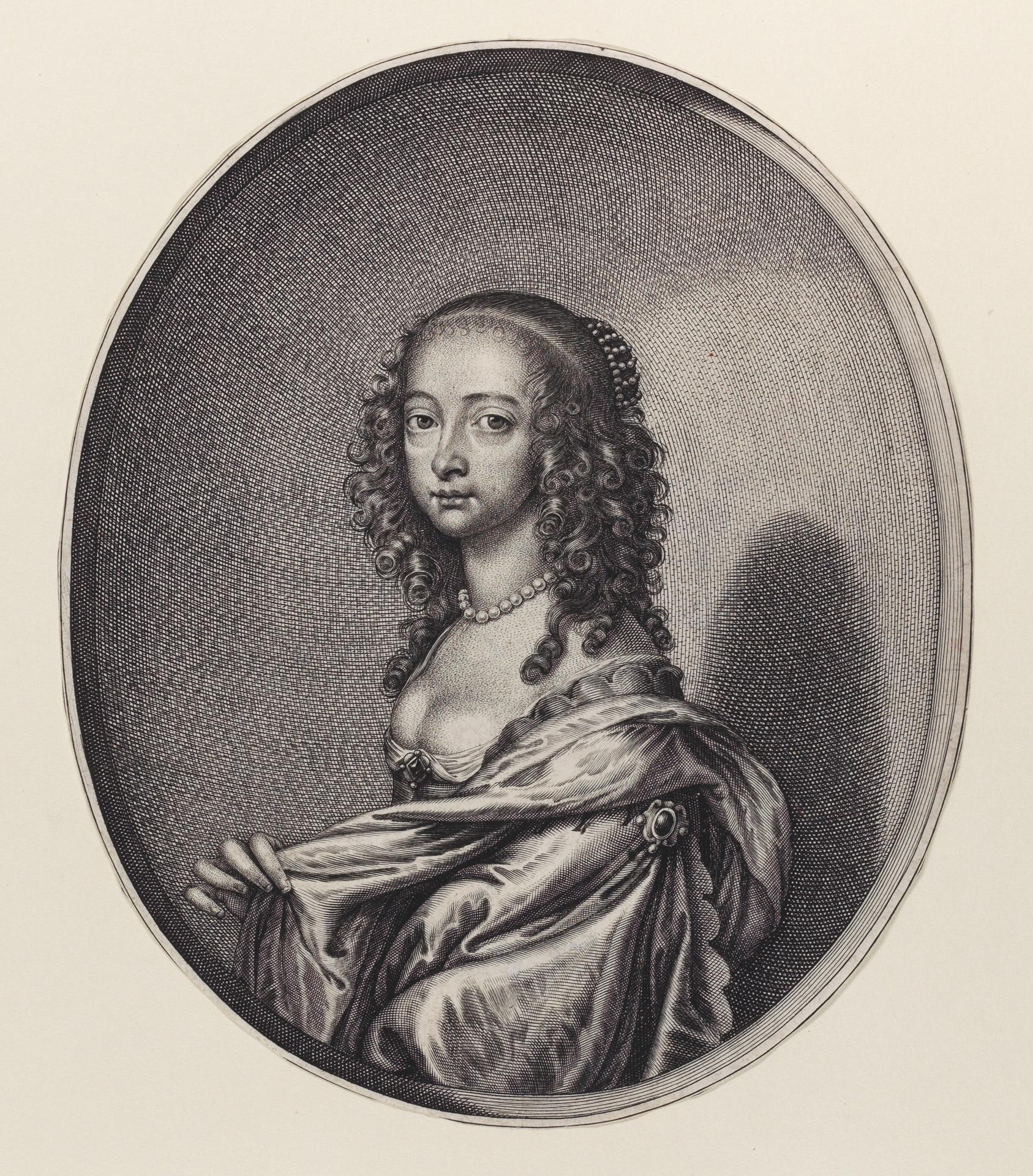
This engraving by William Faithorne the Elder, made between 1641 and 1650, presents Maria, Princess of Orange, within an oval frame. The print stands as a representative example of seventeenth-century portrait engraving.
Description
Maria wears an intricately worked dress, with a scarf falling over one shoulder. Her long, curled hair is adorned with a headpiece, and a pearl necklace encircles her neck. The layout centers on the middle, and her gaze meets the viewer directly. Even light spreads across the surface without noticeable shadows, so the contours stand out clearly.
Context
In 1641 Maria, Princess of Orange (1631–1660), eldest daughter of King Charles I of England, married William II of Orange. These were years of political tension in England that led to civil war. Faithorne, one of the leading English engravers of his day, portrayed members of the royal family repeatedly. The oval crop of the print reflects a common practice in portrait engraving at the time.
Impact
The precisely drawn line and the calm, frontal pose give the portrait a formal, dignified character. Because light and details of fabric and jewelry are rendered evenly, the image gains a clear, representative presence.
Technique
For this engraving, lines were incised into a copper plate and then printed on paper. Fine hatching and accurately captured details characterize Faithorne's working method. The oval crop of the print directs the viewer's attention entirely to the portrait.
AI-generated description text
Source: Metropolitan Museum of Art · Public Domain (CC0 1.0)