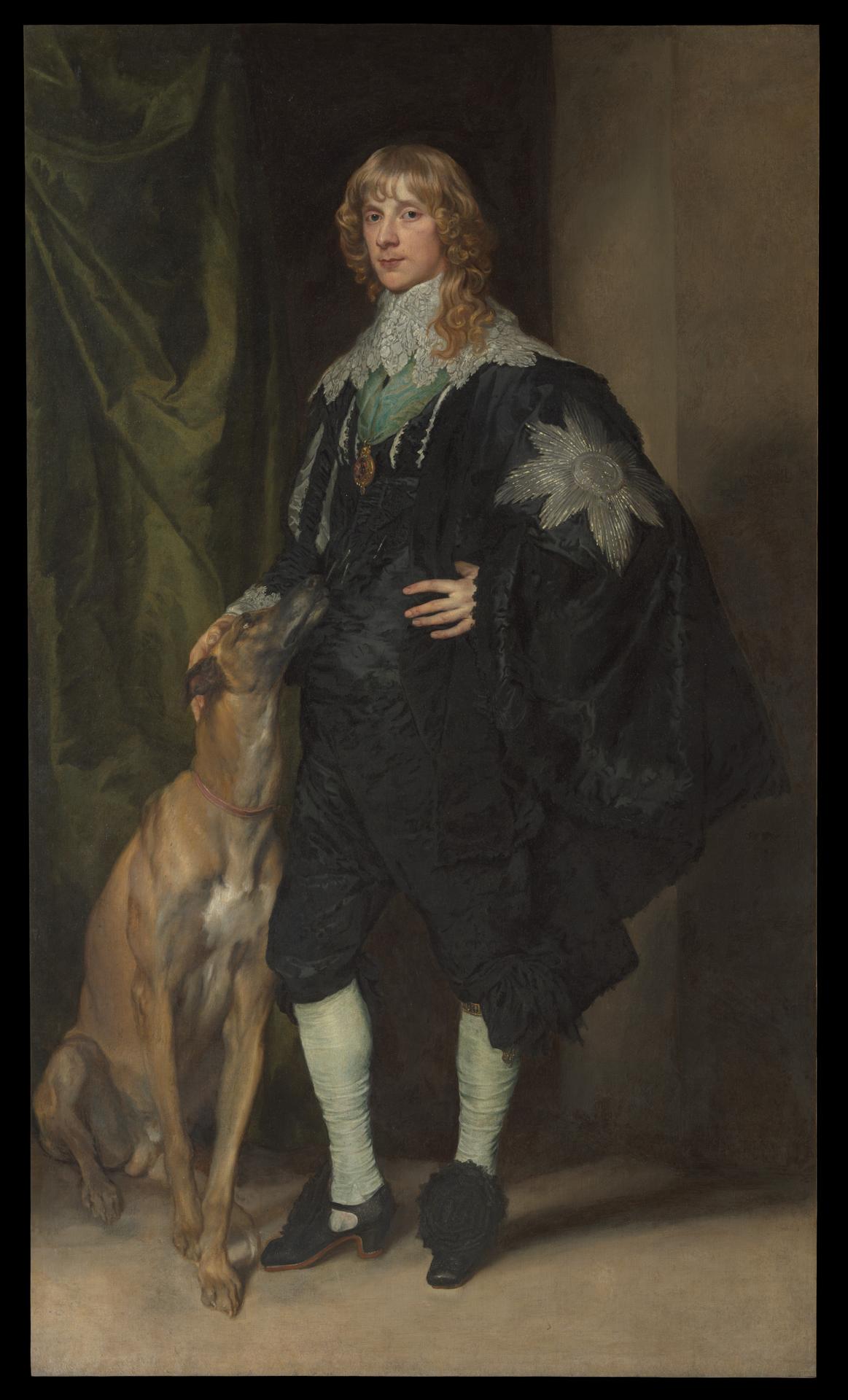
James Stuart (1612–1655), Duke of Richmond and Lennox
Original title: James Stuart (1612–1655), Duke of Richmond and Lennox
kurzbeschreibung
Around 1633–35, Anthony van Dyck painted James Stuart, Duke of Richmond and Lennox, in courtly splendor with a large dog. The portrait is executed in oil on canvas and measures 215.9 x 127.6 cm.
Description
The sitter stands upright, his stance assured. He wears a black robe adorned with a silver star and a medallion around his neck. Beside him stands a large brown dog, which he leads on a leash. The background remains plain and dark: on the left a green curtain, on the right a neutral wall. The light falls on the man and the animal, clearly highlighting both. The colors are restrained and natural, as was customary in 17th-century painting.
Context
James Stuart belonged to the inner circle around King Charles I of England and was created Duke of Richmond and Lennox in 1633. Van Dyck served as court painter to Charles I from 1632 and portrayed numerous members of the English nobility. This painting was likely made on the occasion of the duke's elevation and shows Stuart in a representative pose with a dog, which stands for loyalty and nobility.
Impact
The portrait radiates authority and distinction, reinforced by the duke's upright posture and direct gaze. The calm arrangement and muted colors give it a dignified, almost monumental presence that emphasizes the high rank of the sitter.
Technique
Van Dyck painted with oil on canvas, as was typical of his time; this allowed for fine transitions and realistic surfaces. Through graduated contrasts of light and dark, he brought out the figure plastically, and he applied the colors in multiple layers to achieve depth.
AI-generated description text
Source: Metropolitan Museum of Art · Public Domain (CC0 1.0)