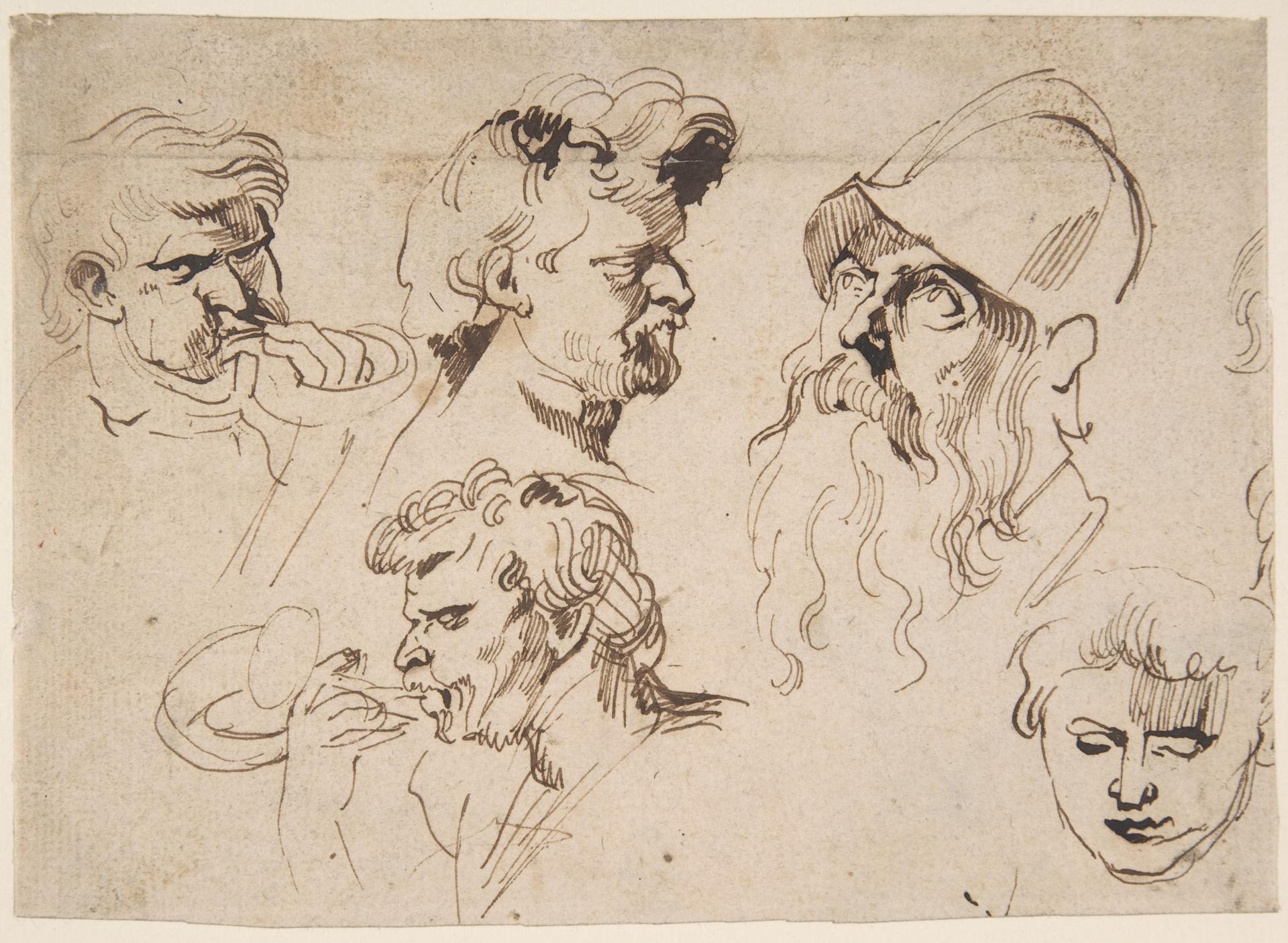
Sheet of Studies of Heads
Original title: Sheet of Studies of Heads
kurzbeschreibung
Anthony van Dyck made this sheet of head studies between 1615 and 1641. Six studies of heads, drawn in brown and black ink, show different facial expressions and hairstyles in profile or three-quarter view. The drawing likely served as preparation for larger paintings.
Description
Six heads are lined up horizontally. Each head appears in a different profile or three-quarter view, the faces bearing different expressions and hairstyles. Some heads have beards or full hair, others simple styles. The drawings are detailed and vary in the rendering of facial features and hair. Background elements are absent; the focus is solely on the head studies. The colors are monochromatic, various shades of gray from the ink on white paper, with even lighting and no visible shadows.
Context
Van Dyck made this study during his active period, which ran from about 1615 until his death in 1641. Head studies were a common working tool for Baroque painters to test facial expressions and physiognomies for larger compositions. Van Dyck, known as a portraitist, used such sheets to vary characters and forms of expression. The exact date of creation within this span is not certain.
Impact
The precise lines and the varied rendering of the heads make the study appear lively and expressive. Monochromatic ink on light paper creates a calm, concentrated atmosphere that draws the eye to the drawing's finesse. The row of heads forms a rhythmic sequence that emphasizes the individual characterization of each face.
Technique
Pen and brown ink on paper were used for this sheet, with a line quality typical of Van Dyck's drawing style. Brown and black ink allow fine gradation of gray tones. The drawing shows a confident hand that renders both fine strands of hair and distinctive facial features precisely.
AI-generated description text
Source: Metropolitan Museum of Art · Public Domain (CC0 1.0)