Albert de Ligne, Count of Arenberg, Prince of Brabançon (1600–1674)
Original title: Albert de Ligne, Count of Arenberg, Prince of Brabançon (1600–1674)
kurzbeschreibung
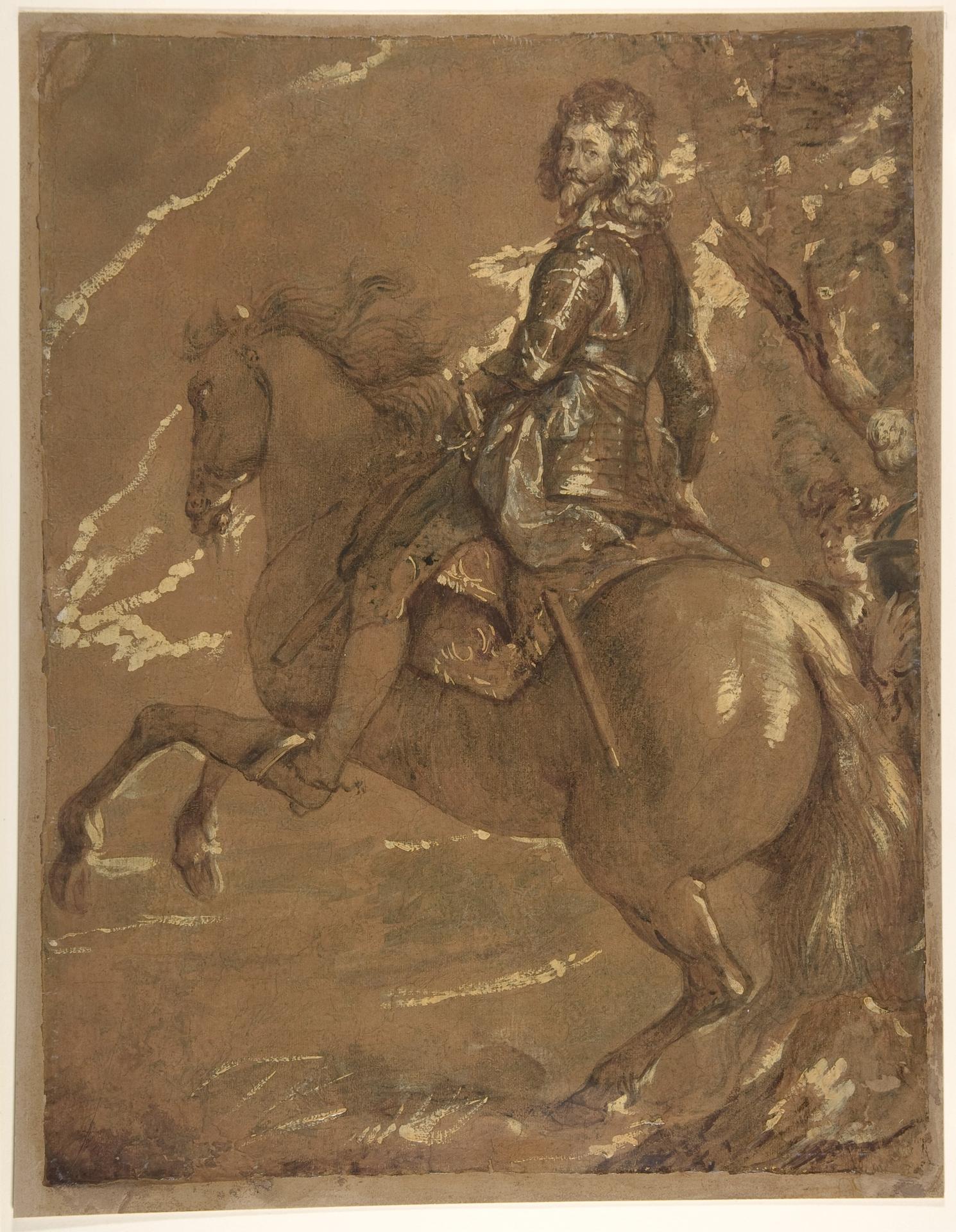
Albert de Ligne, Count of Arenberg, sits on horseback, portrayed by Anthony van Dyck in the 17th century. The mixed technique of watercolor and oil captures the rider in lively motion.
Description
A rider in baroque attire: the jacket has raised sleeves, the breeches are held by a sash, and long wavy hair and a pronounced beard define the head. The horse lifts its hind legs, its tail swishes — an impression of movement arises. Background: blurred figures and trees suggest a landscape. Brown tones dominate the palette, lighter areas on horse and garment provide accents, while light from the front highlights the contours.
Context
Van Dyck painted this equestrian portrait in the 17th century while working as a court artist in England and Flanders. Albert de Ligne belonged to an influential noble family of the Spanish Netherlands — hence the portrait's representational ambition. The painter knew how to emphasize his sitters' rank and status through dynamic arrangement and elegant rendering.
Impact
The horse's movement and the bright light give the rider a powerful presence. The frontal lighting directs the gaze straight to the figure, underscoring dignity and authority. Watercolor and oil together create a distinct texture that makes the picture appear vivid.
Technique
Watercolor and oil paints are combined here — an unusual mixed technique. It allowed both fine details and dense areas of color. Through the interplay of water- and oil-based paints on the support, light and shadow could be rendered with nuance.
AI-generated description text
Source: Metropolitan Museum of Art · Public Domain (CC0 1.0)