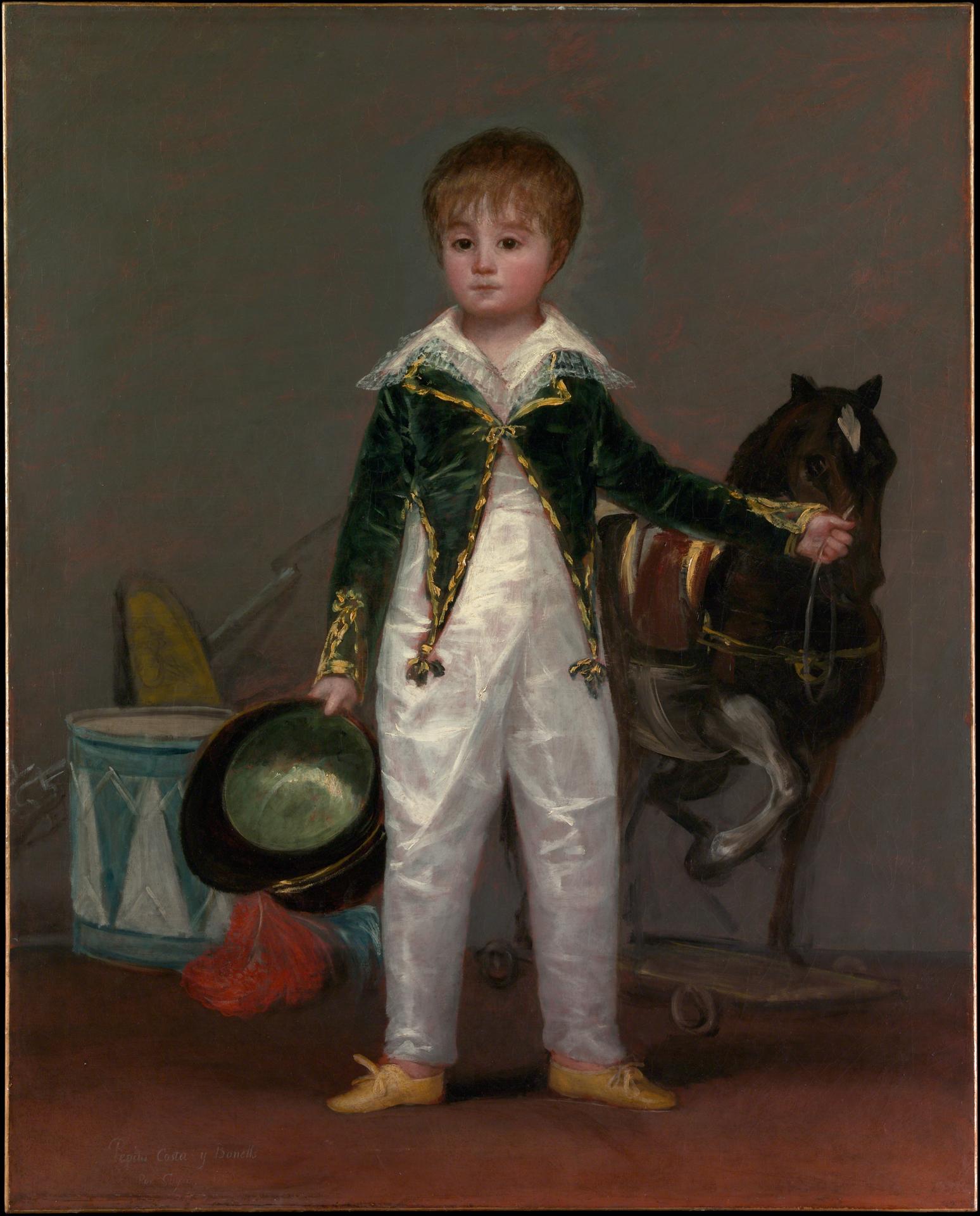
José Costa y Bonells (died 1870), Called Pepito
Original title: José Costa y Bonells (died l870), Called Pepito
kurzbeschreibung
José Costa y Bonells, known in childhood as Pepito, appears in this oil painting from around 1810 by Francisco de Goya dressed in luxurious clothing. The artist placed the boy in a richly appointed setting, creating a formal child portrait meant to impress.
Description
A green velvet coat with gold trim and white trousers define the child's appearance. His right hand grasps a sheet of music, while his left holds the reins of a horse standing beside him. A drumroll and another horse belong to the background. Muted colors and soft light shape the calm mood. Realistic features with a romantic touch show in the precise rendering of clothing and surroundings.
Context
The portrait was made around 1810, when Spain was politically shaken by the Napoleonic Wars. José Costa y Bonells belonged to a wealthy family, which explains the elaborate staging of the child with horse and musical instrument. Such portraits often recorded the family's social rank. Goya was already established as court painter and known for his versatile portraits.
Impact
The painting feels balanced and serene thanks to its quiet layout and gentle lighting. The exact description of fabrics and accessories gives the portrait a noble, almost ceremonial note. The viewer is transported into the courtly world of the early 19th century.
Technique
For this portrait Goya used oil on canvas, as was common for portraiture of his time. The careful rendering of textures—such as velvet and gold embroidery—demonstrates his skill in capturing materials realistically. Soft transitions in the facial features and a subdued palette characterize his style in this period.
AI-generated description text
Source: Metropolitan Museum of Art · Public Domain (CC0 1.0)