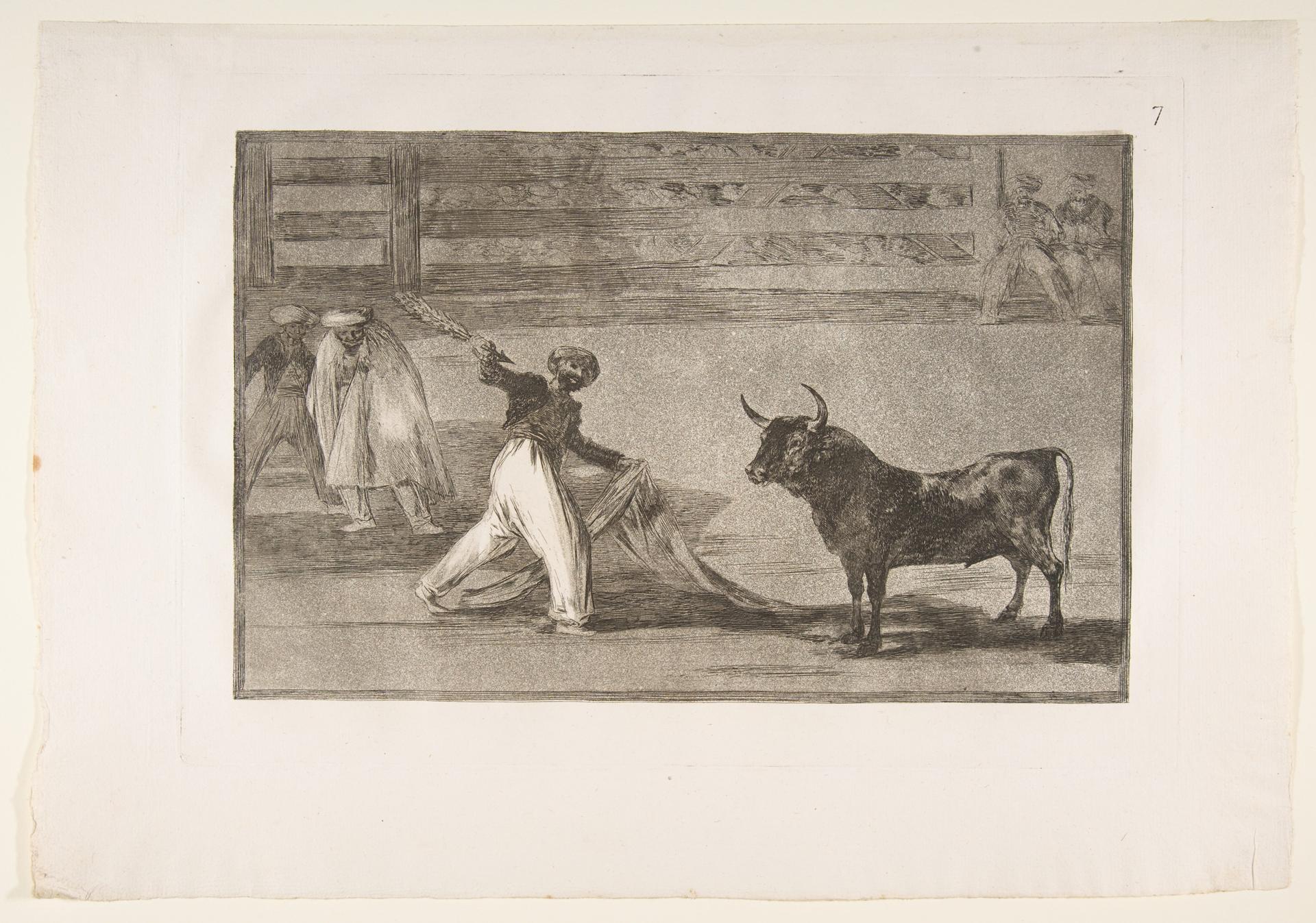
Plate 7 from 'La Tauromaquia': Origin of the harpoon or banderillas
Original title: Plate 7 from "La Tauromaquia": Origin of the harpoon or banderillas
kurzbeschreibung
Unlike later bullfighting prints, this 1816 etching focuses not on the climax but on the origin: as the seventh plate of his series 'La Tauromaquia', Francisco de Goya y Lucientes depicts the beginning of the banderillas. A figure with a cloth steps in front of a bull; behind him, other men stand at a wooden wall.
Description
In the foreground, a man in traditional dress performs a movement with a piece of cloth toward the bull, which stands on the right and looks at him. Two more figures in similar attire appear behind him in front of an ornate wooden wall. Black and white, with sharp contours and even lighting that reveals no shadows.
Context
Created in 1816, this print belongs to 'La Tauromaquia', in which Goya addresses various aspects of bullfighting. The series was published in Madrid and ranks among his most important graphic works. The origin of the banderillas shown here takes up a historical development rooted in Spanish tradition.
Impact
Clearly placed lines and abundant detail give the print a realistic yet dynamic quality. Because the light remains even and the contours distinct, the action between man and bull comes into focus; the tension of the moment is thus emphasized.
Technique
Etching with aquatint and burin on paper. The etching process, together with aquatint, produces fine tonal gradations and a nuanced gray scale, while the burin ensures precise lines. The plate measures 24.2 × 35 cm, the sheet 30.2 × 44 cm.
AI-generated description text
Source: Metropolitan Museum of Art · Public Domain (CC0 1.0)