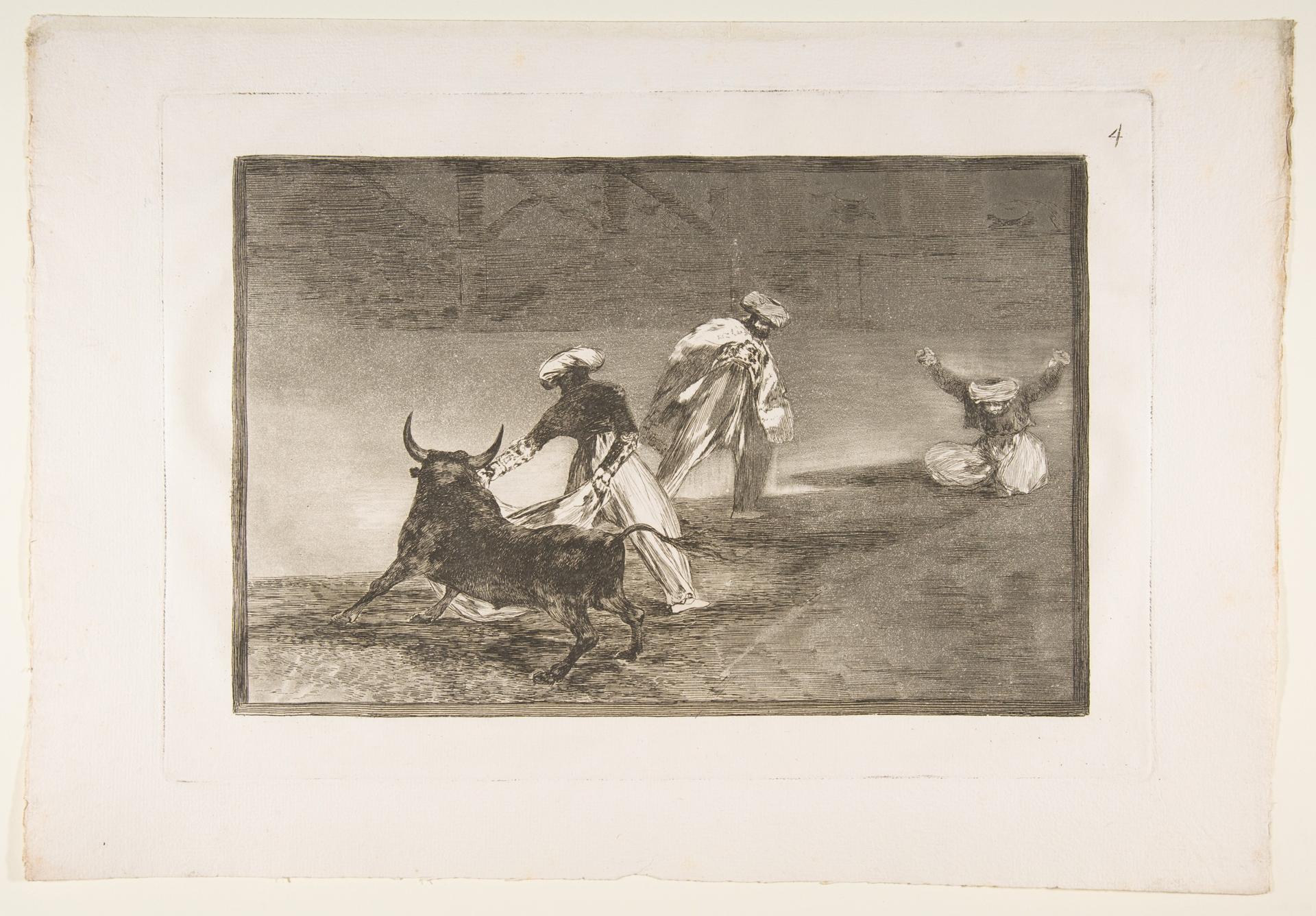
Plate 4 from 'La Tauromaquia': They play another with the cape in an enclosure
Original title: Plate 4 from "La Tauromaquia": They play another with the cape in an enclosure
kurzbeschreibung
Three men and a bull face each other inside a fenced enclosure — the fourth plate from Francisco de Goya's Tauromaquia of 1816. This etching with aquatint, drypoint, and burin measures 24.5 × 35.3 cm (plate) and captures the moment of the power struggle between human and beast.
Description
Two men in Spanish dress swing a cape while a third crouches on the ground, reacting defensively. The bull moves through the middle of the image; the interplay of the figures creates tension. The background stays plain and dark, and the light falls evenly without shadows, making the outlines of the figures stand out.
Context
Goya worked on the 33 plates of the series 'La Tauromaquia' between 1815 and 1816; it appeared in 1816 in Madrid. The series reflects the tradition of Spanish bullfighting, which Goya himself had practiced in his youth. Created after experiences of war and illness, the etchings often show the danger and cruelty of bullfighting.
Impact
The dark, high-contrast arrangement creates a menacing mood that hints at the danger of bullfighting. The animated layout and expressive linework convey an immediate tension that draws the viewer into the action.
Technique
Etching with aquatint, drypoint, and burin on paper. Aquatint allows fine tonal gradations, while drypoint and burin bring out precise lines and details. The even, shadowless impression of light is characteristic of this technique and gives the plate a flat, graphic effect.
AI-generated description text
Source: Metropolitan Museum of Art · Public Domain (CC0 1.0)