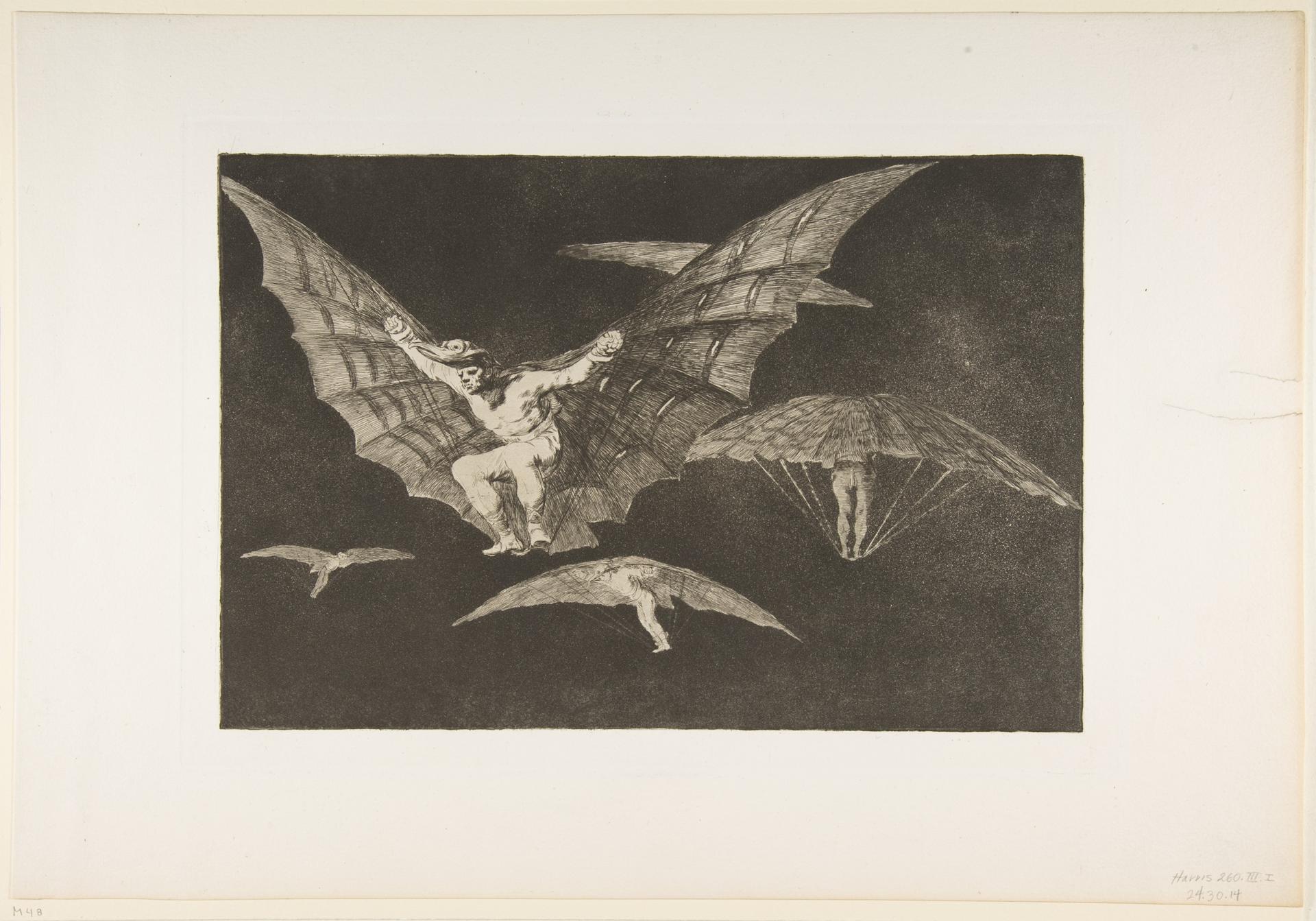
A Way of Flying, from "The Disparates" (Follies / Irrationalities)
Original title: A Way of Flying, from "The Disparates" (Follies / Irrationalities)
kurzbeschreibung
Francisco de Goya made the etching 'A Way of Flying' around 1815–16, though it was not printed until 1864. It presents several winged figures in various flight poses against a dark ground. The sheet belongs to 'Los Disparates' (The Follies), a series known for its fantastical and symbolic subjects.
Description
Several figures with broad, carefully worked wings hover in the air. Some stretch out arms and legs, while others hold quieter poses. The wings resemble the structure of bird wings or those of a pterodactyl. The gloomy background makes the figures stand out clearly, and the scene is dominated by a range of gray tones.
Context
The 'Los Disparates' series was created between 1815 and 1824, but the etchings were only published after Goya's death in 1864. They emerged during a period of political repression in Spain following the restoration of Bourbon rule. The series is often read as a critical allegory of society's follies and irrationalities. 'A Way of Flying' takes up the theme of human aspiration, which here tips into the grotesque and surreal.
Impact
The image feels like a dream and unsettles because the flying figures follow neither recognizable logic nor control. The combination of realistic-looking wings and absurd postures creates a disorienting, almost surreal atmosphere. The dark background intensifies the print's somber, enigmatic mood.
Technique
For this work Goya used etching, aquatint, and drypoint, producing varied textures and shading. Aquatint provides fine tonal gradations, while drypoint brings out the precise wing structures. The monochrome print uses only grays to model light and shadow.
AI-generated description text
Source: Metropolitan Museum of Art · Public Domain (CC0 1.0)