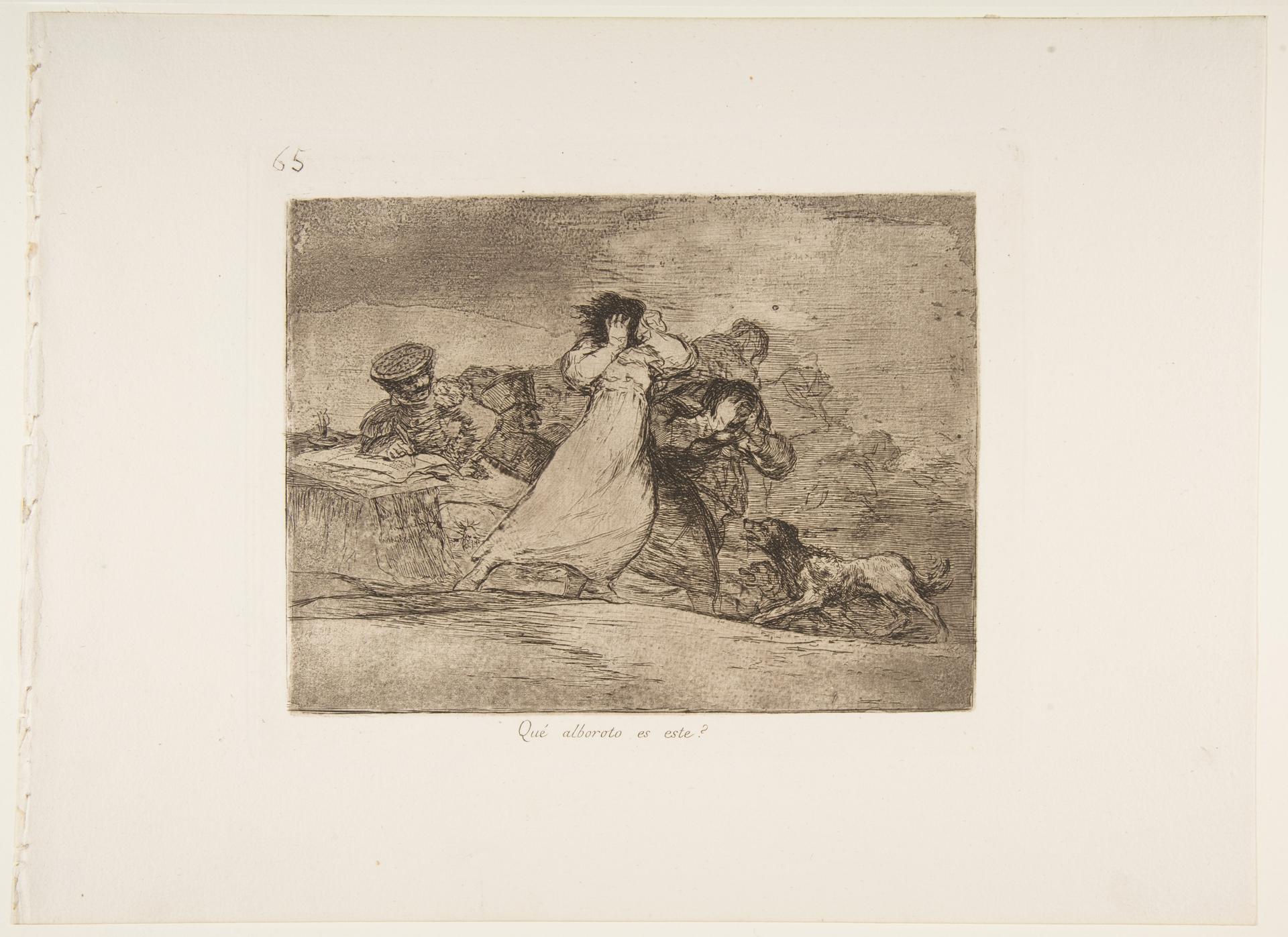
Plate 65 from 'The Disasters of War' (Los Desastres de la Guerra): 'What is this hubbub?' (Qué alboroto es este?)
Original title: Plate 65 from "The Disasters of War" (Los Desastres de la Guerra): 'What is this hubbub?' (Qué alboroto es este?)
kurzbeschreibung
Francisco de Goya made this print, plate 65 of his etching series 'The Disasters of War', in 1814–15, though it was not published until 1863, long after his death. A woman in a white dress is accosted by two men in a turbulent setting, while another figure sits at a table in the background and a dog runs toward her. The technique combines etching, burnished aquatint and drypoint.
Description
A woman in a white dress is the focal point, twisting violently to the left. One man has grabbed her hair, another seizes her arm. Behind her, a person sits at a table, apparently reading. A dog rushes at the woman, heightening the urgency of the action. Aquatint creates graduated grey tones that give the sheet a sombre, unsettling mood.
Context
Goya made this series between 1810 and 1820 in response to the Napoleonic wars in Spain and their aftermath. Plate 65 belongs to the third part of the series, which addresses the famine in Madrid of 1811–1812. The etchings were finally issued in 1863, 35 years after Goya's death, by the Real Academia de Bellas Artes de San Fernando. The cycle is considered an early example of modern war reporting in art.
Impact
Immediate threat and despair emanate from the scene, intensified by diagonal movements and the moment of restraint. Finely etched lines and soft aquatint tones coalesce into an oppressive atmosphere that draws the viewer into the violence of the event.
Technique
The print is an etching with burnished aquatint and lavis, further worked with drypoint and burnisher. Aquatint allows for subtle tonal gradations that model shadows and the texture of clothing. The plate measures 17.5 × 22 cm, the sheet 25.2 × 34.3 cm.
AI-generated description text
Source: Metropolitan Museum of Art · Public Domain (CC0 1.0)