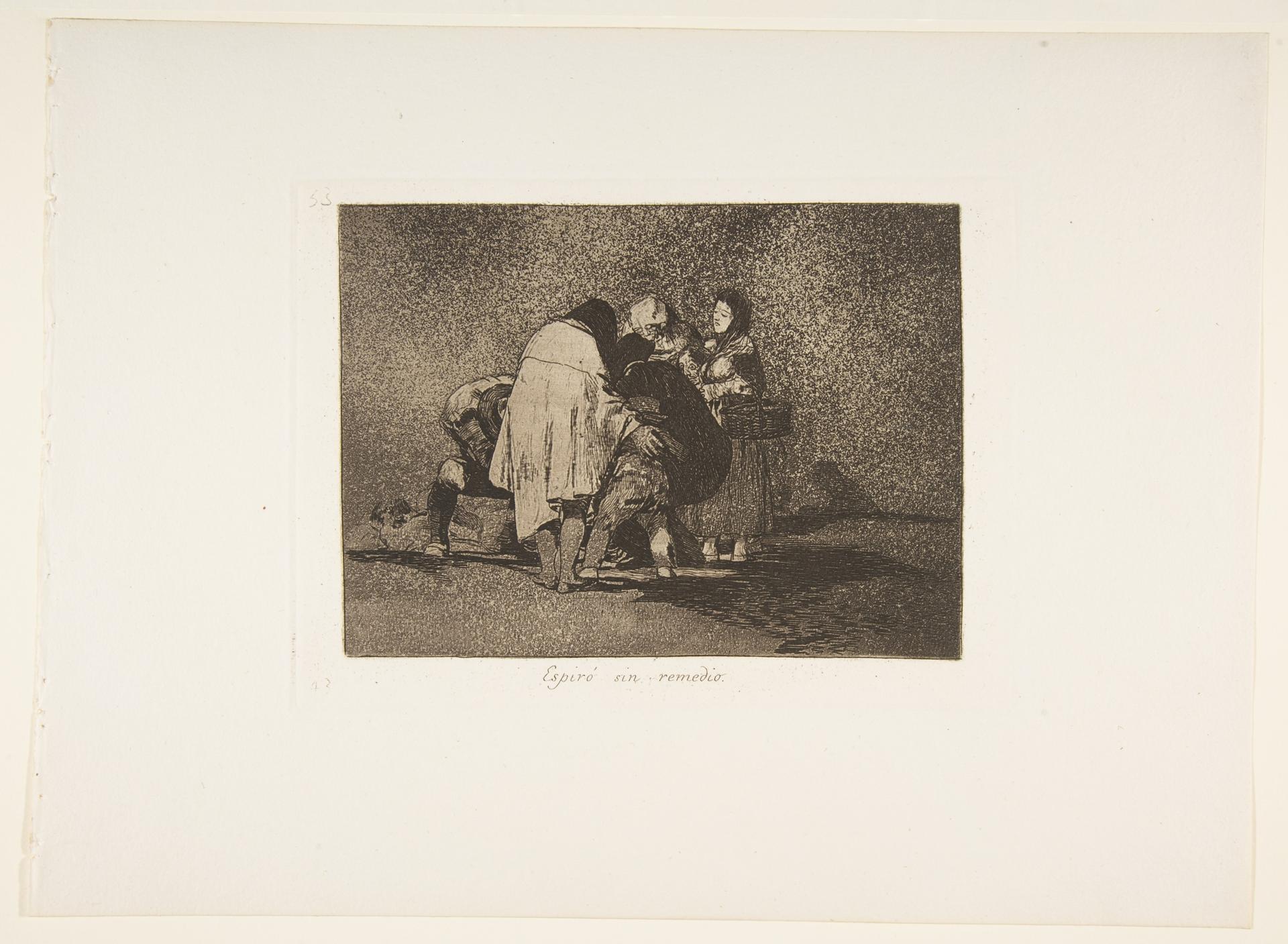
Plate 53 from "The Disasters of War" (Los Desastres de la Guerra): 'There was nothing to be done and he died' (Espiró sin remedio)
Original title: Plate 53 from "The Disasters of War" (Los Desastres de la Guerra): 'There was nothing to be done and he died' (Espiró sin remedio)
kurzbeschreibung
Unlike many plates from Goya's 'Disasters of War,' which present mass scenes or torture, this single print centers on a quiet death struggle: a man lies dying while four people stand around him, mourning. The work was created in 1811–12 but did not appear in print until 1863. It is executed as an etching with burnished aquatint, lavis, burin, and burnisher.
Description
The layout is circular, organized around the man on the ground, with the other figures arranged around him. One holds the dying man's hand, another seems to pray, a third carries a basket, and the fourth kneels. Dark tones and subdued lighting bring the mourners' faces and gestures of grief into focus. The traditional clothing of those present points to a historical situation. Goya's realistic hand, with dramatic accents, marks the entire plate.
Context
This motif belongs to 'Los Desastres de la Guerra,' a series Goya created between 1810 and 1820 but withheld during his lifetime. The etchings deal with the horrors of the Spanish War of Independence (1808–1814) and the subsequent famine in Madrid. Only in 1863 did the Real Academia de Bellas Artes de San Fernando print the plates posthumously. Goya used printmaking to depict the terrors of war without heroic idealization.
Impact
A somber, sympathetic mood emanates from the print and speaks directly to the viewer. The concentration on wordless grief and the helplessness of those standing by heightens the emotional force of the moment. The dark, high-contrast printing reinforces the impression of hopelessness.
Technique
For fine tonal gradations and deep shadows, Goya combined etching with burnished aquatint, lavis, burin, and burnisher. Aquatint allowed painterly effects, while the burin set precise lines for details. The print on paper, measuring 15.2 × 20.5 cm, joins drawing precision with atmospheric gloom, as is characteristic of Goya.
AI-generated description text
Source: Metropolitan Museum of Art · Public Domain (CC0 1.0)