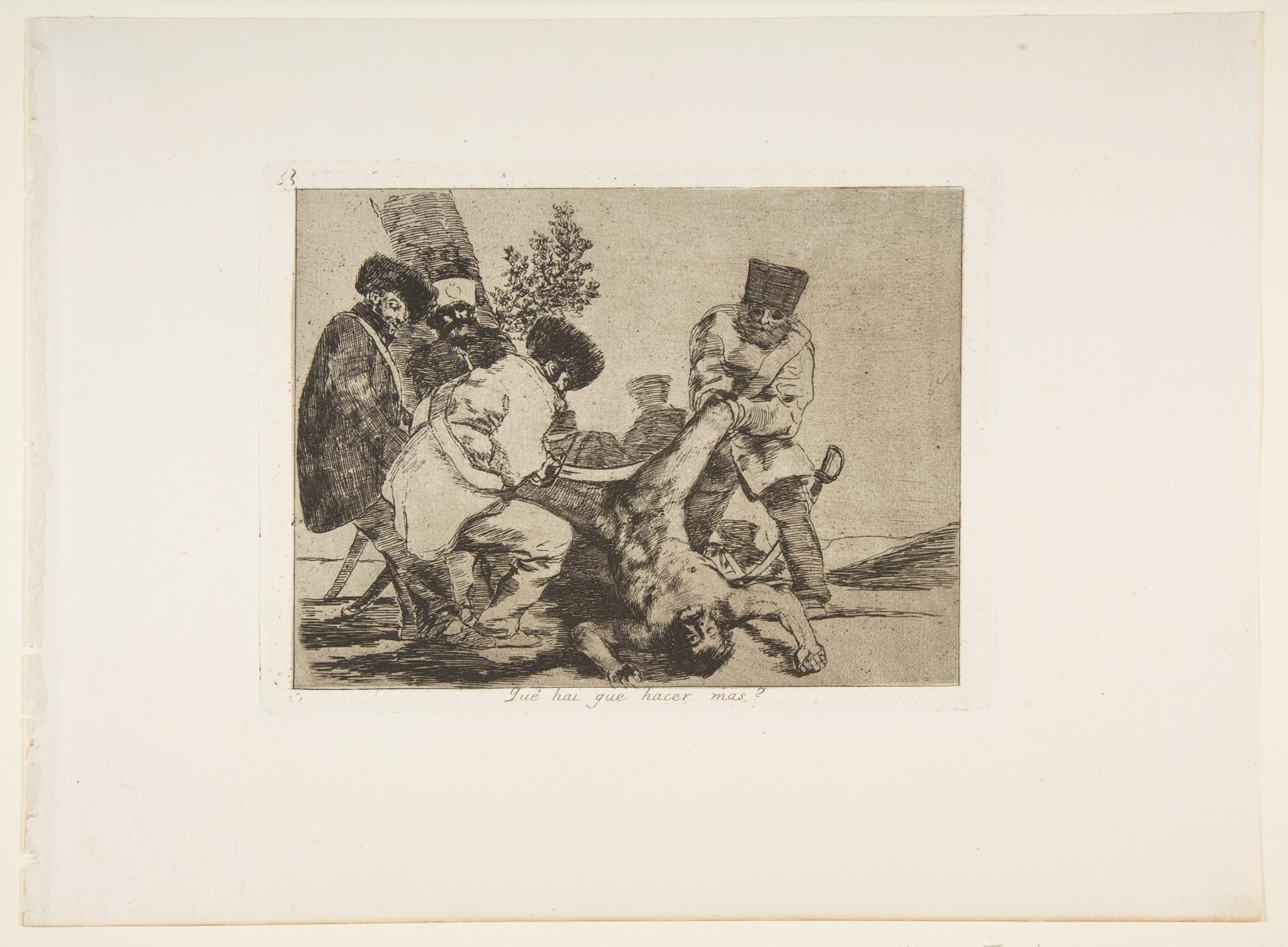
Plate 33 from "The Disasters of War" (Los Desastres de La Guerra): 'What more can be done?' (Qué hai que hacer mas?)
Original title: Plate 33 from "The Disasters of War" (Los Desastres de La Guerra): 'What more can be done?' (Qué hai que hacer mas?)
kurzbeschreibung
Francisco de Goya made this thirty-third plate of his etching series 'The Disasters of War' in 1810. Titled 'What more can be done?', it presents a group of soldiers tormenting a man lying on the ground. The work combines etching, lavis, drypoint, burin and burnisher, and belongs to a sequence that records the atrocities of the Spanish War of Independence.
Description
Several soldiers in varied uniforms surround a man on his back, clearly injured; they hold him down and strike him. Trees and a suggested landscape form the backdrop. The rendering is realistic and underscores the brutality of the event. Black and white with even, shadow-poor light, the layout draws the eye to the figures in the foreground.
Context
Between 1810 and 1820 Goya created his series 'The Disasters of War' as a response to the Napoleonic occupation of Spain and the ensuing guerrilla war. The etchings were only published in 1863, long after Goya's death, by the Royal Academy of San Fernando in Madrid. This plate 33 belongs to a group of images dealing with senseless violence against civilians.
Impact
Immediate threat and unsparing violence hit the viewer and stir strong emotion. Fine lines and a clear arrangement heighten the intensity without aestheticizing the scene.
Technique
The plate was printed on paper using a combination of etching, lavis, drypoint, burin and burnisher. These techniques allowed subtle gradations of tone and texture, thus emphasizing the dynamism of the event. The plate measures 15.5 × 20.5 cm, the sheet 25.1 × 34.4 cm.
AI-generated description text
Source: Metropolitan Museum of Art · Public Domain (CC0 1.0)