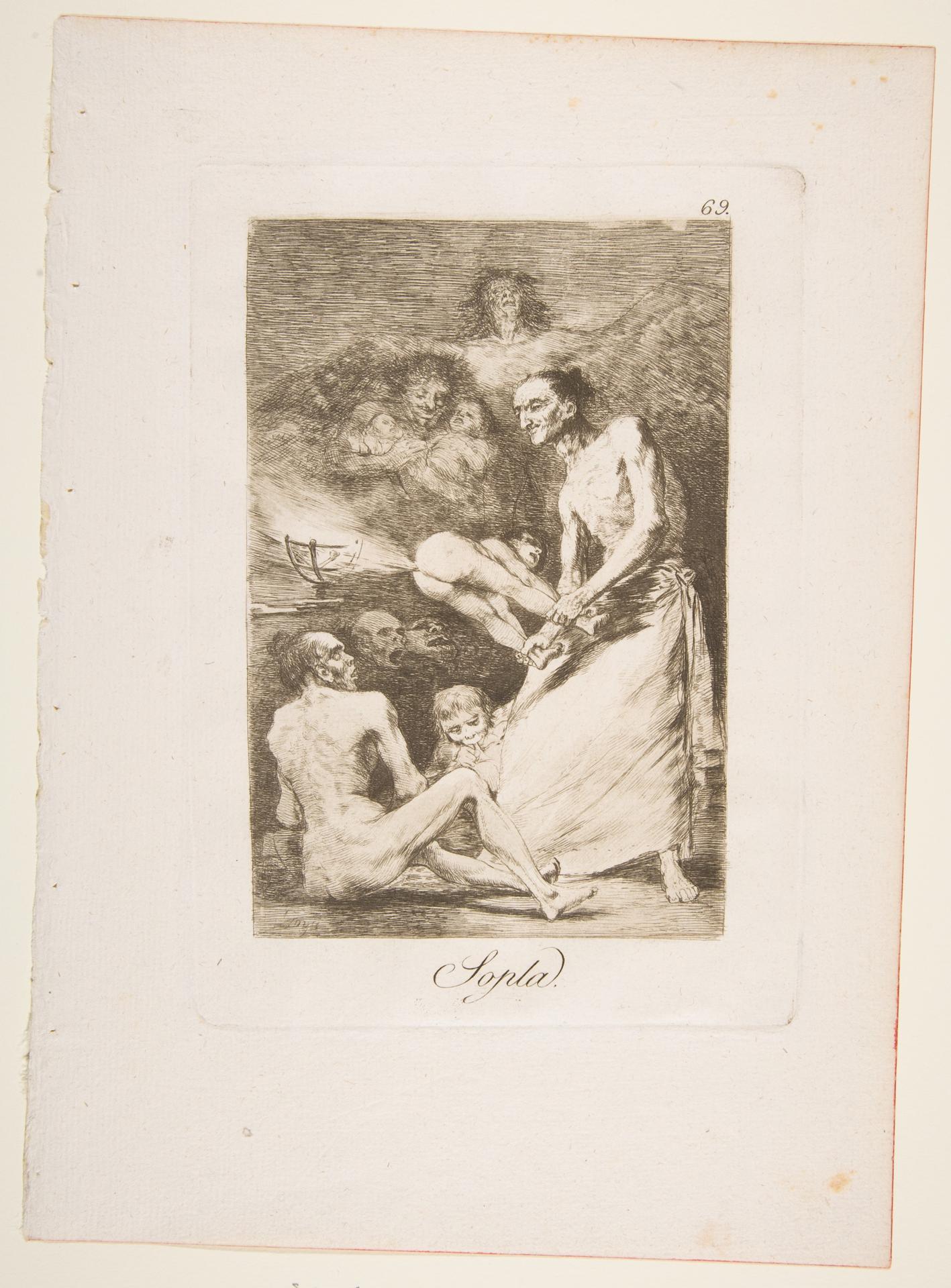
Blow (Sopla)
Original title: Plate 69 from "Los Caprichos": Blow (Sopla)
kurzbeschreibung
With 'Sopla' (Blowing), Goya presents the 69th plate from his 1799 series 'Los Caprichos'. This etching, combined with aquatint and drypoint, shows a woman with a child in the foreground, while eerie figures emerge from a dark setting behind them.
Description
A woman in a long, simple dress sits at the front, a child on her lap looking downward. Beside her lies a half-naked man who appears to be asleep. Behind this group, several figures appear in a gloomy, almost grotesque environment; one seems to float in smoke or mist. The layout is asymmetrical: the woman and child are the focal point, with the other figures staggered behind. Gray tones and delicate shading deepen the oppressive mood.
Context
Created in 1799 as part of the 80 plates of 'Los Caprichos', this etching attacks superstition, social ills, and the follies of Goya's time. The 69th plate is titled 'Sopla' (Blowing) and refers to the contemporary belief that witches and demons could spread harm or disease by blowing. After a brief announcement in the Diario de Madrid, Goya released the series but soon withdrew it from sale because of the Inquisition.
Impact
The dark gray tonality and grotesque figures evoke a stifling, eerie atmosphere. The sleeping man and the woman with child seem ordinary, yet the background figures distort the image into something unreal and unsettling.
Technique
The plate combines etching, aquatint, drypoint, and burin. Aquatint allows for fine tonal gradations, used for the shadowy, misty areas; drypoint and burin set precise lines and details.
AI-generated description text
Source: Metropolitan Museum of Art · Public Domain (CC0 1.0)