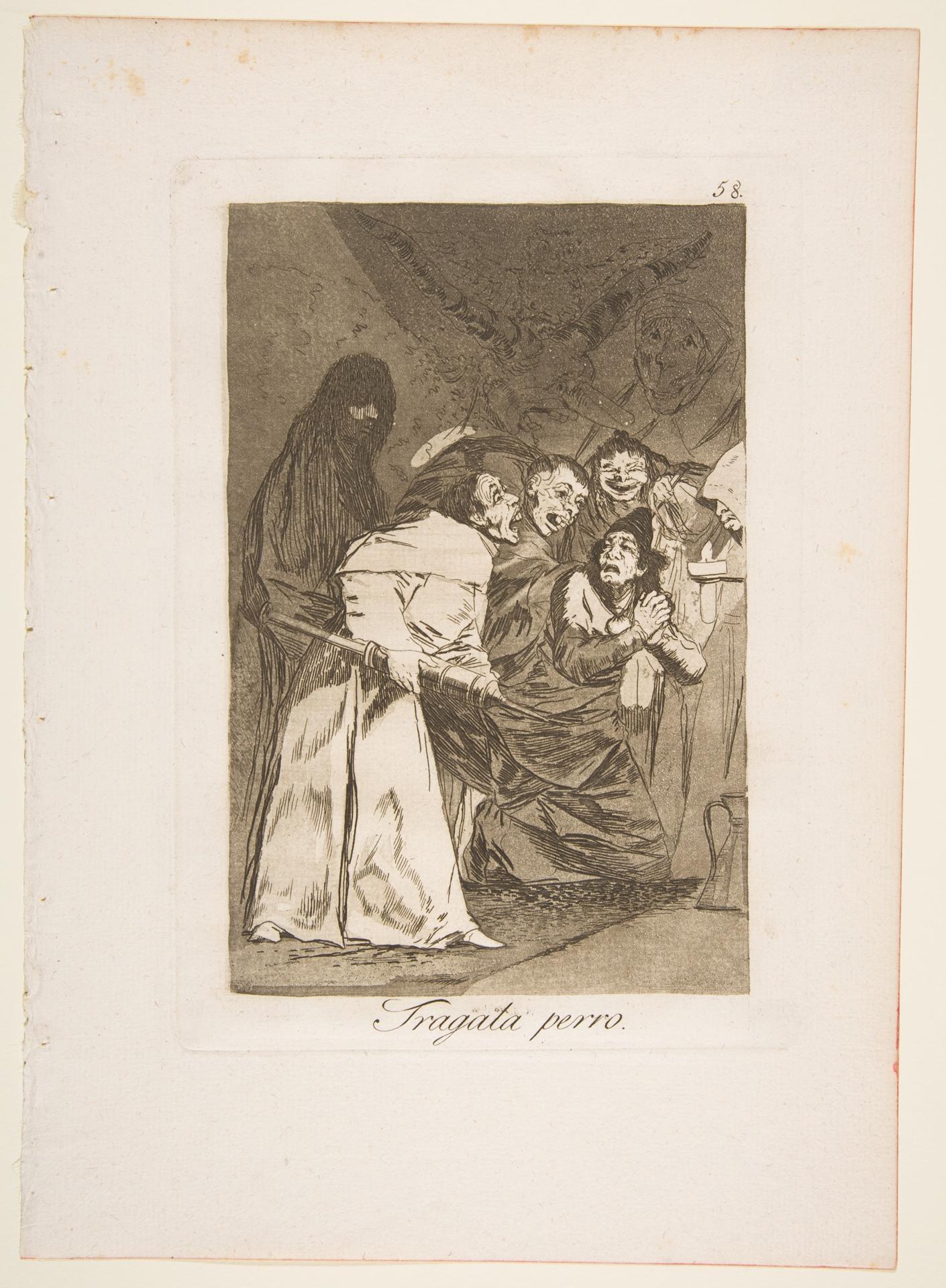
Plate 58 from "Los Caprichos": Swallow it, dog (Tragala perro)
Original title: Plate 58 from "Los Caprichos": Swallow it, dog (Tragala perro)
kurzbeschreibung
A figure of authority raises a staff at the centre of plate 58 from Francisco de Goya's 'Los Caprichos' (1799). Around it crowd grotesquely distorted figures. The etching with aquatint and drypoint measures 21.5 × 15.1 cm (plate) and in this arrangement delivers social criticism: warped faces, a sombre mood, an atmosphere of unease.
Description
In the foreground a person in a long white robe stands upright, staff in hand, gaze directed straight at the others. Behind, several figures huddle with expressive faces — some laughing, others appearing frightened; one hides behind a veil or mask. The layout is asymmetrical, the figures pressed close together, which heightens the intensity. Grey tones and diffuse light deepen the shadows and reinforce the menace.
Context
Created between 1797 and 1799, 'Los Caprichos' was published in 1799 as an album of 80 etchings. Goya used the series to attack superstition, social abuses, and the Inquisition. Plate 58 is among those Caprichos whose meaning remains open; the title 'Tragala perro' draws on a Spanish saying that denotes submission or the endurance of injustice.
Impact
The combination of grotesque masks and the upright authority figure creates an oppressive, almost surreal mood. The tight group and harsh contrasts make the image appear like a caricature of social hierarchies. The viewer is prompted to reflect on power and oppression.
Technique
The plate was printed as an etching with burnished aquatint and drypoint. Aquatint provides fine tonal gradations and soft shadows, while drypoint brings out precise lines and details in the faces. The burnished aquatint gives certain areas a shiny, metallic texture that underscores the sombre effect.
AI-generated description text
Source: Metropolitan Museum of Art · Public Domain (CC0 1.0)