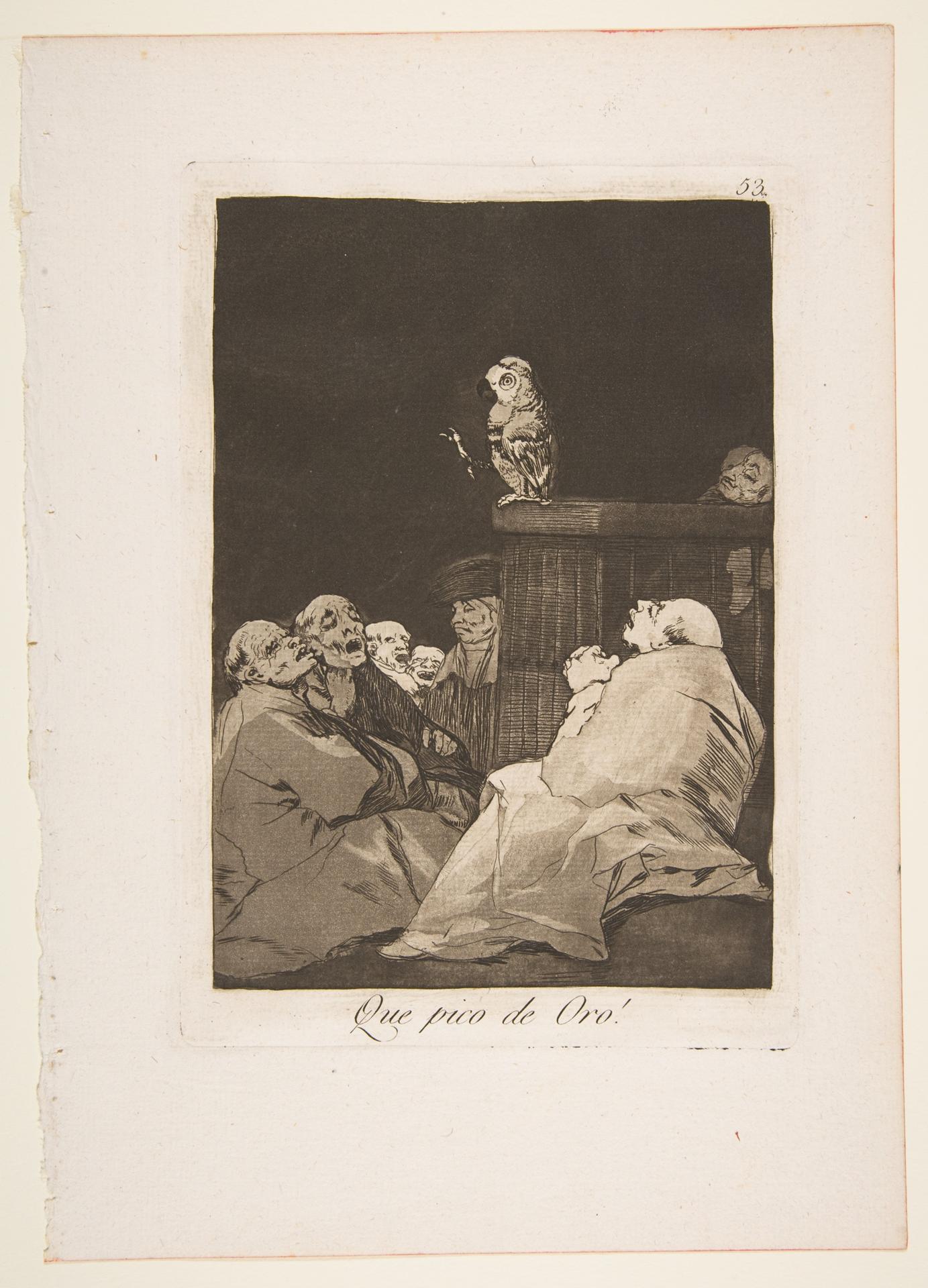
Plate 53 from "Los Caprichos": What a golden beak! (Que pico de Oro!)
Original title: Plate 53 from "Los Caprichos": What a golden beak! (Que pico de Oro!)
kurzbeschreibung
Unlike many other plates from Francisco Goya's "Los Caprichos" of 1799, "What a Golden Beak!" (Que pico de Oro!) turns its attention not to a single person but to a whole group gathered around a table. At the center sits a parrot with a strikingly golden beak. This etching with aquatint and burin belongs to the early works of the series and combines biting satire with delicate tonal gradation.
Description
A wooden table forms the middle ground, on which a parrot with a bright, golden beak perches. Around it several people have assembled, their gazes fixed on the bird. Their expressions waver between curiosity and unease. A dark wall closes off the space behind and makes the group stand out all the more clearly. The layout is strictly oriented toward the parrot, and the subdued light falls on the beak and the faces of those present.
Context
In 1799 the etching appeared as part of "Los Caprichos," with which Goya took aim at Spanish society of his time. The motif demonstrates how easily people are dazzled by outward appearances—here symbolized by the parrot's golden beak. The series was withdrawn from circulation shortly after publication, likely because of its biting criticism of the nobility and clergy.
Impact
An oppressive mood hangs over the scene, brought about by the tense faces and the gloomy surroundings. The shiny beak stands out sharply against the gray tones and draws the eye to the absurdity of the admiration. The viewer senses the narrowness of the room and the questionable fascination of the figures.
Technique
Goya combined etching, burnished aquatint, and burin. The aquatint creates soft, hazy gray areas, while the burin ensures clear contours. This achieves fine gradations and a precise rendering of textures and facial expressions.
AI-generated description text
Source: Metropolitan Museum of Art · Public Domain (CC0 1.0)